 6 minutes ago
Sage of Serbs towards Kosovo documents
Periskopi(4 years ago)
(4 years ago)Members of the Serb community from the north of Kosovo will have two months, starting on September 1st, to reregister their cars from Kosovo's KM Mitrovica license plates to the RKS Republic of Kosovo. For now, Kosovo Prime Minister Albin Kurti says determined in implementing this government decision [...]
For now, Kosovo Prime Minister Albin Kurti says firm in implementing this decision of his government. He has had to enter into force on August 1st, but has been postponed, as some Serbs in northern Kosovo, as a sign of discontent, have rebelled and set up barricades.
It has been planned, at the same time, to take effect even the decision to impose reciprocal measures against Serbia regarding personal documents. But the agreement on this issue has been reached within the framework of dialogue for normalising relations between the two countries.
In practice, however, there are a range of problems facing members of the Serb community during receiving any Kosovo documents. Similar problems could also be presented in the case of car reregistering.
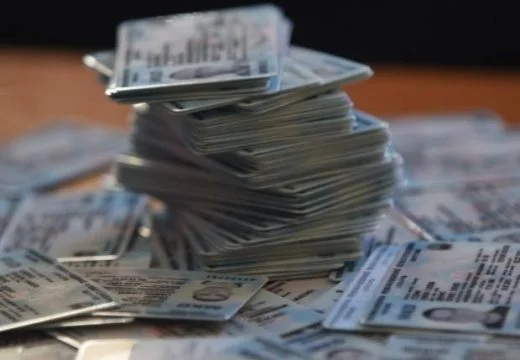
The fundamental thing a citizen should have when he wants to register his car is Kosovo's ID. And to extract identification, there has to be proof of citizenship a document called extract. This document contains two types of data from the birth certificate and the registry of citizens. And here, then, problems arise.
What problems?
Milos Subotic, from northern Mitrovica, says his wife, who is originally from Peja, cannot extract Kosovo's identification because after the 1998/99 war, was 13 years old, and responsible authorities have asked for her mother's identification, which has no personal documents issued prior to 1999.
Even children can't register and all our trips get complicated. I have documents from Kosovo's Mitrovica that release Serbia's organs, they have them from Belgrade. I have Kosovo ID. I don't even know what I have of documents and what I give at the border. Our life has taken twice”, Subotic says.
Serbs from Kosovo have the right to dual citizenship, and most of them use Serbian citizenship. But if they want to establish any rights before Kosovo institutions, they should also have Kosovo documents.
On the other hand, Kosovo and Serbia's system do not recognise each other, so Kosovo institutions often do not recognise documents issued by Serbian authorities.
Some Kosovo citizens he talked to REL, say no marriage certificates releasing Serbia's organs, no death certificates, court documents, and so on.
Documents from the Serbian system, Serbs from Kosovo take them mainly to police departments, which, after the war in 1999, have moved to the cities of Serbia.
For example, the Pristina Police Department is located in Banja, Nis, the Peja Police Department is located in Kragujevc, the Mitrovica Police Department, and so on.
Kosovo authorities consider these organs to be parallel and illegal, but official Belgrade refuses to close, as Serbia does not recognise Kosovo's independence, which was declared in 2008.
Problems, despite the Recording Agreement
To overcome such problems, Kosovo and Serbia have reached agreement on civil registrys in 2011, but the civil sector says it has “vrima” in this agreement.
By agreement, the two sides have had to create “registration officer in Kosovo”. This meant that Serbia would hand over to Kosovo verified copies of the native books, which it took with him after the war.
The EU Mission for Rule of Law in Kosovo (EULEX) has been mediated in implementing this agreement and has verified over 12,000 copies of native books, with information about births, deaths and citizens' marriages.
In the report of Kosovo's non-governmental organisation “Local Initiative of Northern Kosovo”, which was published in 2018 under the title “Civil Registering in Kosovo: bureaucratic nightmare”, it is said the Amza Book Agreement has had to close “the” in the civil registry of Kosovo citizens, which at that time has been renamed, but without original data for the civilian state of citizens.
Unfortunately, the agreement has only covered records between 1945-1999, leaving out records and records of the civilian state of citizens that Serbian institutions in Kosovo have continued to register, even after 1999”, the report said.
The author of this report, Milica Andric Rakiq, who has been dealing with these issues through the civil sector for years, tells Radio Free Europe that Serbs from Kosovo still hold marriage before Serbian authorities, who are later not recognised by Kosovo institutions.
What does the law say?
Taking over Kosovo's citizenship is regulated by special law, where, among other things, it is said to be won <x0m eastern, naturalisation and under Article 32”.
This article stipulates that citizens of Kosovo are considered all persons who, on January 1, 1998, have been citizens of the Federal Republic of Yugoslavia and who, on that date, have had permanent residence in Kosovo.
The same article says sublegal acts define the criteria, with which the citizenship of the Federal Republic of Yugoslavia is proven, as well as residence in Kosovo until January 1998.
Some governments have issued administrative guidelines that have made possible “legising” of Serbian documents in Kosovo, respectively, copying in the Kosovo registers. However, the problem arises again because of the “parallel system”.
In the law, it also says that every person, who is registered as permanent resident of the Republic of Kosovo, in accordance with UNMIK rule, is considered a citizen of the Republic of Kosovo.
But, Andric Rakiq says there are Serbs from northern Kosovo who, after the war, did not want to register in UNMIK administration UNMIK ▪ the United Nations's Acting Administrative Mission in Kosovo because they considered it a “understanding”.
UNMIK has issued IDs after the war, but later civil registration responsibilities have transferred Kosovo institutions.
“Persons who are not registered to UNMIK, although they were born before 1998, are issued birth certificates, but the section where citizenship should be written where Kosovo should be written is covered with ix”, says Andreq Rakiq, and adds that those citizens should start the process of applying for citizenship APU instead of vetting for documents that cannot be issued again.
Who else has problems?
The difficulty in obtaining Kosovo documents also has those citizens who “exactly” were born in a Serbian town.
They too are required to initiate the citizenship application procedure instead of verification.
In addition to the citizens in the north, there are also south facing such problems. They're mostly turning. This confirms for Radio Free Europe Bringing Raskovic from the Community Office in the Cline municipality.
This is one of the biggest problems. They get their birth certificate, but they don't get the extract. No one can deny they're from Kosovo, but to take citizenship, they must have the registered residence, which returning displaced people don't have”, Raskovovic says.
Free Europe is directed to the Kosovo Ministry of Internal Affairs under which the Civil Record Agency operates, with the question of whether it is aware of the problems Kosovo Serbs face during the release of Kosovo documents, and if it is thinking of facilitating procedures, consider that in the coming period it is expected to re-register their cars with Kosovo license plates. But until the publication of this article, there is no answer.
The answer has not even been answered if the Interior Ministry plans to set a new deadline for citizens to replace driving permits issued by Serbia's authorities.
Serbs from Kosovo have largely permission of driving issued by Serbian authorities, but the Kosovo Interior Ministry, in some cases, has allowed them to change with Kosovo's ones. The last call for such a thing was published about two years ago. / REL












