6 minutes ago
Without progress first meeting: Waiting for Kosovo talks to continue
Periskopi(4 years ago)
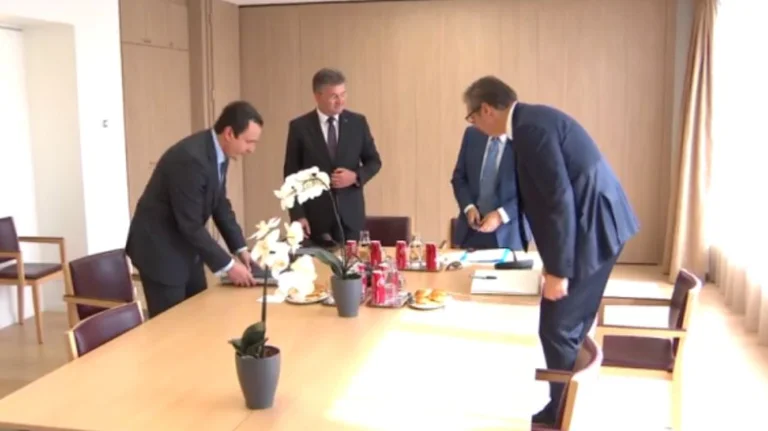
(4 years ago)Thursday's talks between Kosovo Prime Minister Albin Kurti and Serbia's president, Aleksandar Vucic, with the European Union's mediation, did not mark any progress, but all sides agreed only on one thing to continue talks to avoid tensions on the ground. On July 31st, roads in northern Kosovo were blocked [...]
On July 31st, roads in northern Kosovo were blocked by Serb groups to challenge Prime Minister Kurti's government's decision that identification documents and license plates issued by Serbia are not valid on Kosovo territory.
Belgrade implements similar measures for Kosovo citizens who pass through Serbia over the past 10 years.
The Kosovo government decided to postpone for September the implementation of its decision at the request of American diplomacy. On Thursday, the parties failed to agree, but European Union Foreign Policy chief Josep Borrell said Kosovo and Serbia leaders agreed to continue discussions.
There is still time until September 1st. Today there is no agreement, but we do not give up. We need to keep talking. We must seek the solution for the process to continue”, Borrell said.
Serbia's president, Aleksandar Vucic, said late Thursday in a social networking presentation it was a difficult day for Serbia.
“I cannot say that the talks marked success, but I refrain from all comments, because I hope and believe it is possible to reach a compromise in the coming days with some miracle. I will continue to fight for peace and stability and will address you for the next 48 hours with all facts”, the Serbian president said.
On Friday, the head of the Serbian office for Kosovo in Serbia's government, Petar Petkovic, said the Serbian president's speech was postponed for Sunday afternoon, when he will expect Kosovo Serb representatives in Belgrade. He said the Serbian president is continuing to work today to find solutions, while accusing Prime Minister Kurti of refusing to accept any compromise proposals.
Even during the night last night, discussions of Western diplomats with both sides, including American envoy for the Western Balkans Gabriel Escobar, have continued.
For analysts, the inclusion of Western diplomats became more pronounced after the last crisis in the north, and this could mark a new period in Kosovo talks, Serbia. Kosovo Institute for Policy Drafts Director Lulzim Peci said diplomatic engagement does not happen only for license plates and personal documents, but becomes the process moving towards a comprehensive agreement.
I think we're going into that phase now, but do we get to the deal, I don't know because both sides have to agree, but one thing is obviously moving in that direction. Even the international community, we talk here about the West such as the United States and the key countries in Europe much earlier said that continuing tensions in the Balkans and unresolved issues helps only Russia and no one else, because Russia has been using this for years very well to destabilise the Balkans for its own goals, which it has in what is called nearby neighbourhoods, and this witnessed even with the war in Ukraine<0>, he told the Voice of America.
In Kosovo, American involvement is seen as necessary.
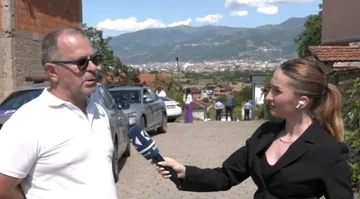
There's been progress every time if America is involved in this job, because as far as Vucic's concerned, he killed us for letting something help us. Only America is the one who has the potential to do something”, said Hashim Maloku, a citizen in Pristina.
The greatest and most comfortable expectation for Kosovo is America with our allies who are always to resolve the issue of talks. Without America we can't solve anything, Europe has been 20 years, 30 years, that 100 years have left us like this, I expect nothing from Europe. The only chance, the only solution is America”, Fadil Sahiti said already.
It is still not known when the talks, which began 11 years ago, were aimed at normalising relations between Serbia that accounts for Russian support in its opposition to Kosovo's independence, which the United States and most Western countries recognise.