11 minutes ago
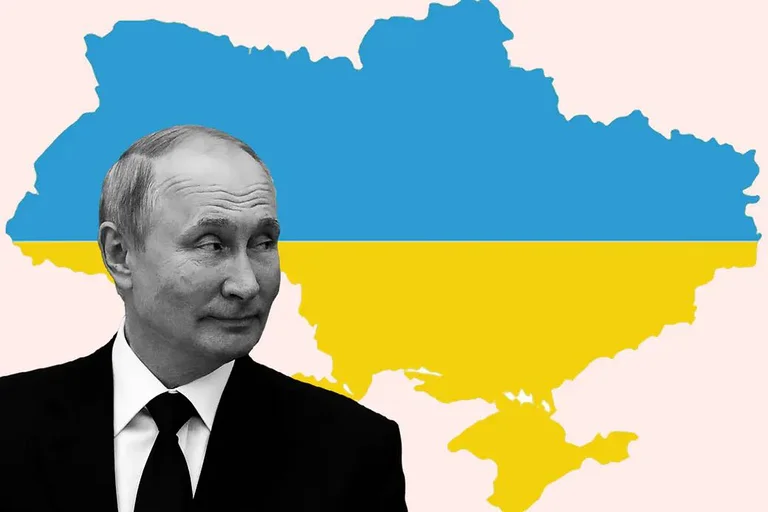
Six months since the Russian offensive in Ukraine: Five Forecasts seen on the horizon
Periskopi(4 years ago)
(4 years ago)Just before the dawn of February 24, everything changed: for Ukraine, first of all, but also for Russia. Things are increasingly changing for most of Europe in terms of peace and prosperity since World War II. Russian occupation a escalation from war to [...]
Just before the dawn of February 24, everything changed: for Ukraine, first of all, but also for Russia.
Things are increasingly changing for most of Europe in terms of peace and prosperity since World War II.
The Russian invasion ʹa escalation from war to the lowest degree that was continuing east of Ukraine since 2014 was unforeseen by many.
The exception here was the United States, the state that warned that something like this could happen.
Six months after that, the conflict has now turned into a devastating war, according to military expert Lawrence Freedman.
He described the war this way: “Two drunken boxers, trading blow after blow, but unable to knockout rival”.
But what are the chances that there will be a iknokaut in the days, weeks, or months to come?
This may depend heavily on what happens outside the boxing ring as much as on what happens inside it.
“in the next six months, the war is likely to enter a stage of boiling, with economic and military losses that will drain both sides”, said Maria Shagina, researchers for economic sanctions, standards and strategy at the Berlin Institute of Strategic Studies. “Conversations for finding a compromise will become more vocal”.
Below, you can learn about the five things to look at in the near and distant future:
It's economies, of course.
In the latest forecast, published on August 17th, Russia's Economy Ministry predicted that Bruto Local Production would shrink by 4.2 percent by the end of the year and that inflation will be 13.4 percent.
These and other forecasts are better than the preliminary predictions made by the International Monetary Fund and other institutions that have predicted the contraction of the Russian economy.
The skin can still happen.
Russia's Central Bank has been entrusted with a quick and effective move to ease the effects of Western sanctions imposed following the 24 February invasion.
But for many experts, sanctions have not yet fully affected the economy.
Cuts in the supply chain, freezing credit market, closing foreign markets, blocking imports, increasing unemployment, lack of consumer goods: The full impact of sanctions is expected to be observed in the coming months.
The size and severity of these actions vary greatly, and their full effects on the Russian economy are still not being fully observed, as are the implications related to economic activity with other states”, Chad Brown, economist and senior associate at the Institute for International Economics, Peterson, said in Washington.
The amount of consumer goods that are available, even food products, will fall. Inflation will hit even further wages. The factories across the country will stop work and workers either leave work or suspend”, said Daniel Treisman, politicalologist and Russian policy expert at the University of California.
“This is expected to generate discontent, which can have a negative impact, add this feeling that war is going wrong, if that's what it really is,”, he added.
And then there's Ukraine's economy. Destroyed by Russian attacks, Ukraine's Interior Production will shrink in half, according to the World Bank.
These estimates are expected to deteriorate as long as the fighting continues.
Agricultural exports, which were banned until recently due to the Russian blockade in Ukrainian Black Sea ports, have resumed recently.
Government budget deficit in May reached $4 billion. Meanwhile, in June the deficit increased to almost $6 billion.
Western states and financial institutions have pledged billions of euros in support for Ukraine's budget, but only part of this promised amount has so far been given to Ukraine, said by the Institute for World Economics, Kiel, headquartered in Germany.
Ukraine's ability to have fiscal stability and to be functional as it continues to finance war will largely depend on the willingness of Western states to open their wallets.
In May, Ukrainian Prime Minister Denys Schmyhal said that rebuilding the state after the end of the war would cost approximately $750 billion.
Such assessment can be taken to the heart if war does not go on indefinitely.
Winter is coming
Last week, many European states were stunned after Russian state-owned gas giant Gazprom suddenly announced plans for a three-day supply ban through the North Stream pipeline.
Apparently, the reason for the break was “maintenance”. But it followed an earlier 10-day suspension of gas supplies that slowed European consumers' efforts to fill gas reserves before the winter season. Gazprom's announcement also raised concerns that the Kremlin is really aiming to use its dominant position as Europe's main gas supplier, but also oil, to a lower level to punish the European bloc for supporting Ukraine and imposing sanctions on Moscow.
Some European states may face a difficult situation during the winter. Germany is trying to reduce energy consumption and is asking public buildings to reduce thermostats. He is also demanding that swimming pools and gyms do not use hot water, and he is considering the possibility of reactivating nuclear power plants.
“expects a very critical winter”, said German Economy Minister Robert Habeck, during the visit to Canada along with Chancellor Olaf Scholz. “We should expect that [Russian president, Vladimir] Putin to reduce gas supplies” even more, he added, according to Bloomberg.
The executive body of the European Union has called on member states to prepare for a complete break in Russian gas supplies.
However, some experts stress that Russia also depends on Europe to sell gas and generate export revenues, something the Kremlin needs very much, and to protect the economy from contraction, but also to continue financing war.
Revenues from exports could prevent Gazprom's readiness to order full supply suspension.
“Kremlin is aware that there is limited space to benefit from energy supplies, especially natural gas”, Shagina said. “Can't completely rule out the possibility of Gazprom completely suspending gas supplies to Europe. But, most likely, this strategy is being used to exacerbate European states by reducing gas supplies without advance notice”.
Local politics
Before February 24th, Voldymyr Zelensky who had won convincing victories in the 2019 presidential election was facing a decline in popularity. Ukrainians were angry with his leadership amid concerns that the state was not doing enough to fight corruption and end the conflict in the country's east, which had begun in 2014.
Since Russia's invasion, Zelensky's popularity has increased. Polls conducted in May showed that almost 90 percent of Ukrainians had a positive opinion of his leadership; 85 percent of respondents claimed that they fully trusted him as president. However, support for his party, according to polls, was extremely low.
“This is a support based on his policy, courage and ability to gain Western support for Ukraine, especially for obtaining weapons supplies”, said Rice Lutsevych, Forum Manager for Ukraine at the Russia and Eurasian Programme at Chatham House in London. “Retorics and Zelensky's actions are in full accordance with the way Ukrainians imagine victory over Russia”.
However, she said that Ukrainians will once lose patience, especially if the war continues and winter becomes challenging.
“Ukrainian is like a ship during a storm that needs to be repaired so that it does not sink”, she said. “This winter will be very difficult for many families, and this may create political pressure. But, as long as the active war phase lasts, all of the key political players currently focused on war efforts and will not challenge Zelensky. The society remains united against the foreign enemy”.
For Putin, however, accounts are different.
Even before the invasion, the Kremlin gradually began to crush Russian civil society, independent media, and anyone who did not comply with Russian politics. After February 24, Russia's slide toward complete authoritarianism accelerated as citizens were imprisoned only for asking questions about the war in Ukraine or criticized it.
But the Kremlin is still sensitive to public opinion. A number of Russian regions will hold elections for governors in the coming weeks, but Putin's presidential administration has taken measures to ensure that its favourite candidates will come first, and that these Kremlin efforts are being challenged little by the public.
“Srike, the Kremlin will react sharply to any protest”, Treisman said. However, in terms of economic aspect, they may feel more limited, knowing that a great majority of Russians share the same discontent. The crackdown on economic issues could turn them into martyrs. So things will get even more complicated”.
I do not expect that, in short term, to pose any significant political threat to the Kremlin, but, however, we cannot exclude this option”, he said. “In any case, management of exacerbated economic trends, public opinion, and perhaps even the military position will require more skill and care. This will not be easy”.
In Germany, Scholz has been experiencing a decline in popularity at the lowest levels since he took office as Chancellor in December.
In Britain, the ruling Conservative Party is trying to find the deputy prime minister, Boris Johnson, who resigned from the Government leadership, as he also warned of a lack of gas for heating houses due to possible gas cuts from Russia.
Meanwhile, the United States has been Ukraine's largest supply of weapons for years, and supplies have increased dramatically since the invasion began: nine billion dollars of military equipment since February 24th.
But the American president's popularity, Joe Biden, has largely fallen due to American discontent with record inflation rates, fuel prices, and because of restrictions against COVID-19. The American leader may also face the loss of control by the Democratic Party during the November elections.
A growing number of experts have warned that Western support for Ukraine is endangered if the war grows longer. This risk will double whether there will be large power cuts in Europe during this winter or whether there will be any significant increases in US fuel prices.
This winter will test Europe's determination and show how much war fatigue is in Ukraine”, Shagina said. “The economic problems increase, Russia will attempt to raise costs for Europeans by sowing disagreement and trying to reduce military and economic assistance for Ukraine”.
In a poll conducted in May, attended by 8,000 European respondents, the European Council for Foreign Relations found that most Europeans supported Ukraine and sanctions against Russia but were divided for long-term goals. The survey found that 35 percent of respondents wanted the war to end as soon as possible, while 22 percent expressed the opinion that Russia must be punished more.
In Sweden, Germany, Poland, and Finland, the survey found that there was great public support for increased military spending.
But this survey was conducted three months ago.
As for Americans, a survey released by the Chicago Council for Global Affairs found that 80 per cent of respondents supported US economic and diplomatic sanctions against Russia, 72 per cent supported the delivery of more Ukraine's weapons and military equipment, and 71 per cent said they supported economic assistance to Ukraine.
Even if the Republican Party takes control of Congress in November, strong support for Ukraine will most likely continue.
The most important thing to see in the coming months is: Who wants to win?
On the battlefield, front lines have moved a little over the last few weeks. In the eastern region of Donbas, Russian forces claimed to have seized the entire region of Luhansk and attacked several major cities, including Bakmut. But Ukrainian defenders have largely resisted the Russian offensive.
One explanation is that Russia is moving several tactical battalions southwest to prepare for Ukrainian counteroffensives in the region of Herson.
In Herson, Ukrainian forces, armed with very precise American weapons, known in the HIMARS shortcut, have hit bridges, ammunition depots, command points and other important targets. A series of crime areas, the Ukrainian peninsula Russia occupied in 2014, have also been hit, but Ukraine has not claimed responsibility for the attacks.
Russia is also widely believed to have major problems with personnel, while commanders are having trouble replacing the ranks without the proclamation of a general mobilization.
The exact question, according to analysts, is not who will win but: What will victory look like?
For Ukraine, the answer to this question would be regaining control over all of Donbas, including parts that have been under the control of pro-Russian separatists since 2014, and taking control of the Crimea. During a recent address on August 10th, Zelenxy asked: “When will the war end?
This question actually depends on how much loss Russia will experience. The more losses the Occupyr experiences, the sooner we will be able to free our land and provide security in Ukraine”, he said. “To that end, all who defend our country and help Ukraine should think about how to cause great damage to the occupator so that the war can end sooner”.
For Russia, the answer to this question is more complicated for the fact that the Kremlin continues to change its excuses for the start of the war.
Initially the excuse was “demilitarisation and denotation”. This excuse refers to the Kremlin's false claim that the Ukrainian government is led by neo-Nazis -- a claim that Moscow has been regularly used since the 2013-2014 Maidan protests, which culminated in the fall of Ukraine's pro-Russian president.
The second authority refers to what Moscow said was a serious threat to Russian security if Ukraine would join NATO, or allow the alliance to deploy troops and weapons to the state.
But Russia has also been justified by claiming that <x0-genocide” is being carried out against the Russian-speaking population east of Ukraine, a claim that has been repeatedly rejected.
“The goals of this operation are clear and well defined: They are to provide security for Russia and its citizens, to protect residents in Donbas from genocide”, Putin said during the security conference in Moscow held last week.
During the same speech, Putin said the conflict was not between Russia and Ukraine, but between Russia and the West. That claim was also stated openly by many senior Russian officials.
In a writing, Freedman, professor of War Studies at the Royal College of London, predicted that the moment in war is on the side of Ukraine.
The Russian Army's “position is deteriorating and Western support for Ukraine has not yet faded”, he wrote. Therefore, these trends favor Ukraine”.
The Kremlin “must understand how long it can continue to claim to be on its way to victory”, he said. /ToopChannel/