4 minutes ago
KEK has exported 74m euros in electricity and deposited 100,178 megawatts in Albania
Periskopi(4 years ago)
(4 years ago)Since March onward, KEK has been producing electricity, always telling it according to daily and monthly plans and projections, fulfilling the country's consumption needs in most summer days with electricity. Similarly, without any significant disorder in the production process, he has developed jobs in planned remontes, [...]
Despite the summer with high temperatures and the difficulties of planned but surprising problems that are daily in Kosovo's electromagnetic system, KEK managed the period very well and successfully since the big energy crisis. More specifically since March here, KEK has been producing electricity, always speaking according to daily and monthly plans and projections, fulfilling the country's energy consumption needs in most summer days.
Similarly, without any significant disorder in the production process, he has developed jobs in planned remontes, many capable of producing from 5 blocks of A's and 2th power plants, somewhere around 750 megavat per hour on average. This amount has generally met the summer needs of consumption, while surplus electricity production, in many cases, especially during the night, have been exported and a considerable amount has been deposited as lending to Albania's Elekternergy System (KESH).
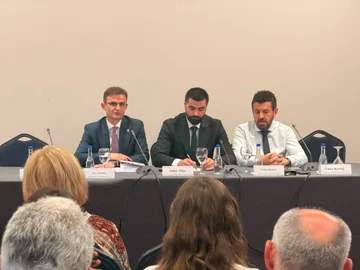
Skender Bucolli, spokesman for the Kosovo Energy Corporation (KEK), has announced the Economic Bulletin that KEK by the end of July has exported around 74m euros in electricity. While in the same period, by the end of July, in Albania's Electronic System (KESH) has deposited about 100,178 megavat hours of electricity as loans. Currently, KEK is operating with 2 Kosovo units A and one of Kosovo B blocs, with exactly B 2, in which the planned remont has been completed over the past month, while in the B1 bloc since August 7th, re-detoning jobs have begun, which, according to predictions, will last about 25 days.
While, as it has been warned, Block A 5 of the Kosova A thermal power plants is already practically located in planned remonts. The Remont in A5 started in 20,07,2022 and was prepped to be completed by early August.
However, information obtained from limited scrutiny of turbines in a way suggests that this generation unit does not provide further operation, so it is conditional on money to become a capital remont in block A 5, which, as envisioned, will last from 01.09.2022 to 30.1122. Capital remonting in turbines, generators and furnaces will take place in this block, while remake jobs will be entrusted with any foreign witnessing job.
Skender Bucolli has announced that all necessary and necessary measures have been taken to ensure that this remont is realised on time and successfully. Simpler remonting jobs, such as remont, revision, are common to KEK teams, while in capital remont, such as the case with bloc A5, include teams of foreign companies known for good revitalation and verified by similar previous jobs in our thermal power plants. So, in business around A5 capital remont, we're going to engage teams of foreign company employees.
The operating state of KEK's production units is currently stable, yet it must, in light of the fact that these operating units, especially the blocks of Kosovo A are already outdated and such as these can't predict any perfectly safe performance, as unforeseen technical defects in outdated stabilisations are easily possible and unpredictable. However, KEK, as Skender Bucolli said, is conforming the plan is making all preparations (planned preparations) to build security in production facilities for operation during the winter season.
As for providing electricity, this responsibility by law belongs to the public supplier ( KEDS and KESCO. At this pace of electricity production until this month, according to Bucol, KEK has borrowed an amount of electricity also for Albania's consumption needs, based on the agreement with KESH for exchange of energy, with the aim of mutual support, and in order to create additional energy opportunities during the winter period.
KEK is offering the Albanian electromagnetic system all the energy surplus produced during the hours of the night (after meeting the needs of local consumption).
From the power offered, KESH is receiving the current it needs and which has transmission capacity.
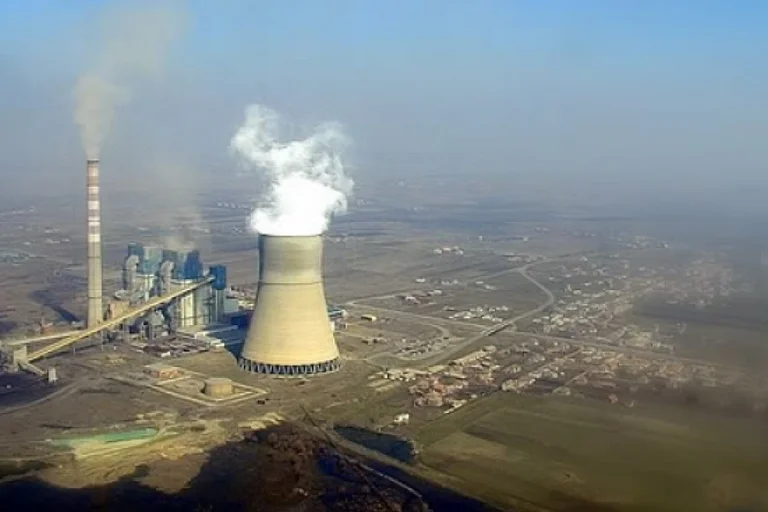
Remember, the capacity of active blocks in Kosovo thermal power plants (two Kosovo blocs B and Kosovo's three blocs A-A3, A4 and A5, are down to about 1,000 MWs. 070 megavans).
Blocks of Kosovo B thermal power plants jointly have a capacity of over 600 megawatts in the generator, while their capacity is 520 megawatts in the network. Each block, so it has the capacity to network 260 megawatts.
On the other hand, Kosova A, since the post-war operation has operated with three blocks of A3, A4 and A5, which together have a network capacity of 550 megawatts. A1 capacity is 200 megawatts in the generator, while on grid 180. A4 capacity is completely identical to A3. While, A5 has capacity at the 210 megawatt generator, while on the 190 grid. But these common blocks produce less energy. The capacity of production these days of the Kosovo blocs is: A3 and A 4 in the 150-megawatt-hour generator, while on grid 110, while the A5 capacity in the generator is 150 and on the 130-megawatt grid. These are the current capacities at the Kosovo A thermal power plants, already over-extended and beautifully-extended Kosovo B. B, as it is known, started production in 1979.
Meanwhile, Kosovo's current consumption behaves more or less about 600-700 megawatts, while during the winter season, Kosovo's consumption has gone to 1280-1300 megawatts per hour as well. How Kosovo will secure this year, in the following months the electricity it will lack remains to be seen. But, at least so far, it has not been made public by the country's decision-making institutions any more concrete action, undertaken eventually, to prepare for the expected cold months, which are still here in some way, to ensure in any way, the amount of electricity that is now quite clear that will be missing in the winter period.