5 minutes ago
Joseph: Serb license plates, documents issue is resolved
Periskopi(4 years ago)
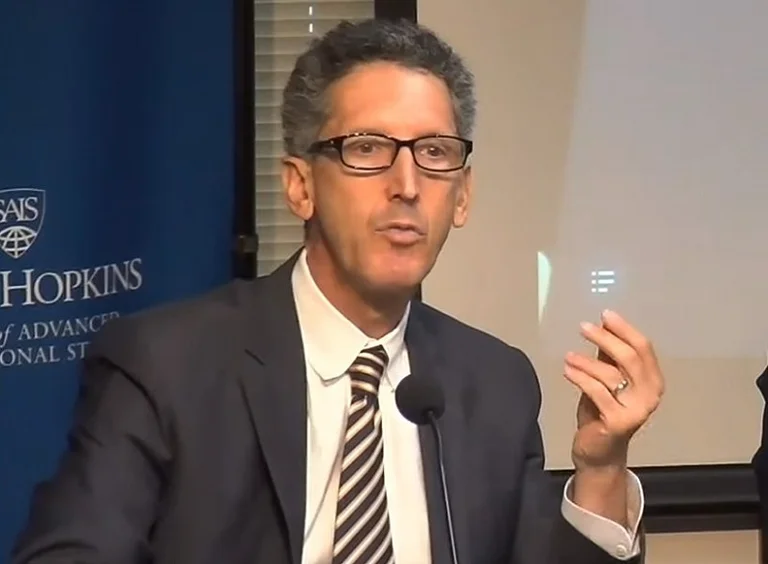
(4 years ago)Even after several hours of negotiations, Kosovo and Serbia under European Union mediation reached no agreement on Serb license plates and documents. However, Professor Edward P. Joseph from Johns Hopkins University in Washington has told Radio Free Europe that, technically speaking, Kosovo and Serbia can quickly reach agreement on these [...]
However, Professor Edward P. Joseph from Johns Hopkins University in Washington has told Radio Free Europe that, technically, Kosovo and Serbia can quickly reach agreement on these issues.
According to him, it is enough to have political will, since these topics are not new to the parties.
Although he has declined to comment on what an agreement between the two countries may look like, he has said he is convinced that a host of proposals have been made at the August 18th meeting.
This issue is completely resolved, and there should be no doubt in it. Car license plates have been on the agenda for a long time, so there can also be a solution, with the goodwill of both sides”.
European Union High Representative Josep Borrell has said at a news conference that although no agreement has been reached, negotiations will continue.
Asked who could face more pressure in the upcoming negotiations, Joseph has said all this would depend on the proposals.
It depends very much on what proposals there are on the table. If one side has made constructive proposals and the other side has not responded, then the latter will become more pressure, and rightly. With Serbia's goodwill to live with Kosovo as neighbours, and with Kosovo's goodwill to live with Serbia as neighbours, this issue can be resolved. There's no doubt about it.
He has reaffirmed the US Ambassador's statements to Kosovo, Jeff Hovenier, that Kosovo's step towards implementing the decisions on license plates and Serbian documents is in line with Brussels agreements.
“I can say that the American ambassador to Kosovo has said that Kosovo's stand on documents is backed up, and is in line with what has been achieved in Brussels long ago”.
Although Joseph sees this issue as quickly resolved, he highlights the rhetoric used by Kosovo and Serbia leaders in recent days.
President Vucic's “Retoric for the liquidation of Serbs is beyond any acceptable level. Such language has been used in times of war, especially in Bosnia and Herzegovina, used by Serbs to justify ethnic cleansing. On the other hand in Kosovo, the opposition is criticising Prime Minister Kurti for doing something like that. But the question is, is anyone criticising Vuciqi in Serbia for the language I'm using?
On 11 August, the Serbian president has said he has information on plans related to Kosovo's north.
“They are preparing the liquidation of our people in the north”, has declared Vuciq, warning against such a thing.
A day later, Kurti has said that when officials in Belgrade, including Serbian President Aleksandar Vuciq, speak of violence and murder in Kosovo, they speak for themselves, “speaks of their imaginations and opinions”.
According to Professor Joseph, the parties will be able to exploit divisions, which, except exist, before positioning themselves on specific topics.
What was said after the meetings between Kurt and Vuchy?
European Union High Representative Josep Borrell has said that the August 18th meetings in Brussels between Kosovo Prime Minister Albin Kurti and Serbia's president, Aleksandar Vuciq, with the EU's mediation, have not been the usual “meetings”, but “meetings for crisis management”.
Meetings in Brussels were called after local Serbs on July 31st and August 1st set barricades as a sign of dissatisfaction with the Kosovo Government's decision to implement two decisions -- for license plates and Serbian documents.
Kosovo and Serbia have free movement agreements since 2011.
Serbia has implemented it immediately.
Kosovo has implemented the decision on August 1st for a few hours . . . . . . . . . . . . . the point for the entry/ outline document and has postponed implementation of September 1st, with the aim of reducing tensions in the north.
Meanwhile, Serbs have removed the barricades.
The United States and the European Union have also urged such a postponement, though they have said Kosovo has the right to implement those decisions.
Prime Minister Kurti is not declared after the meetings.
The Kosovo government has said that Prime Minister Kurti has discussed two topics at meetings on August 18th about the overall framework of the final agreement and current issues.
President Vuciq has said 18 August has been a difficult day in Brussels, but will refrain from any comment.
Through a video message in the Instagram, he has warned that he will be declared in the next 48 hours.
A difficult day is behind us, it was a difficult day for all citizens, and for our entire country, I cannot say that it was successfully completed, but I keep from other comments, because I hope it is possible to achieve a compromise solution by some miracle. So I will continue to fight for peace and stability”, Vuciq has said, among other things.
Vuciq ) as meetings in Brussels were held, he has called a meeting with representatives of Serbs from Kosovo, which will be held Sunday, August 21st, in Belgrade, according to the media in Serbia.
The chief of the Office for Kosovo in the Serbian Government, Petar Petkov, has told reporters that Vuciq will remain in Brussels for a while, and that he will address the Serbian public on Friday, August 19th, in Belgrade.
Even EU officials have told Radio Free Europe (REL) that they are optimistic that a pact could be reached in the coming days.
Speaking on anonymous terms, they have said that “this appointment round will not be considered finished without the” agreement reached.
In the EU building where dialogue has been developed, there has also been US envoy for the Western Balkans Gabriel Escobar.
The American side does not participate in dialogue, but the US fully supports EU efforts in the process of normalising relations between Serbia and Kosovo.
A day earlier, Kurti and Vuciq have also met separately with NATO chief Jens Stoltenberg.
Stoltenberg has said it belongs to Belgrade and Pristina to avoid escalation of the situation and that the mission NATO in Kosovo, KFOR, is monitoring the situation and is willing to intervene in the event of destabilisation.
Dialogue between Kosovo and Serbia started 11 years ago.
More than 20 agreements have been reached in areas such as energy, telecommunications, justice, customs, freedom of movement, but not all have been implemented.
Kosovo insists that dialogue on normalising relations be closed with mutual recognition between the two countries.
Serbia, on the other hand, seeks compromise solutions.
Residents of the Kosovo and Serbian capitals -- Pristina and Belgrade -- believe an agreement between the two states is possible, but are aware that the road to it is difficult.