19 minutes ago
How Germany Has Changed in Six Months of War in Ukraine
Periskopi(4 years ago)
(4 years ago)The war in Ukraine, initiated six months ago, has also greatly changed Germany's stance. German attitudes have changed in many ways, security, politics and the economy. Sometimes big changes can be seen in small things. For example, a 30-second clip on YouTube, the first promotional video of Bundeswehri in five [...]
Sometimes big changes can be seen in small things. For example, a 30-second clip on YouTube -- the first promotional video of Bundeswehri in five years -- was released in early August. In the first 17 seconds, you see uniformed soldiers in everyday situations - playing with their children, buying a newspaper in the stern, walking through town. In the last 13 seconds alone, the soldier's role is highlighted in ball-gun style with images of fighter aircraft in dangerous flight maneuvers, offshore warships, soldiers coming out of helicopters under the motto: “
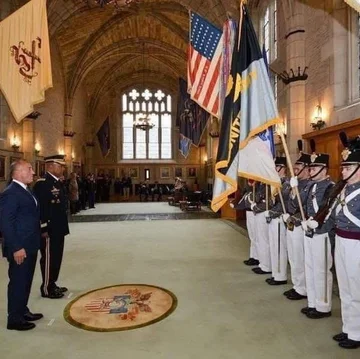
Two world wars and two dictatorships in the 20th century caused deep distrust of all military in Germany. The uniforms were not part of the street scene. The fact that uniformed soldiers are portrayed as a perfectly normal phenomenon can be read as a sign of a tectonic change: as a result of the war in Ukraine, Germany makes its peace with the army and is preparing for potential conflicts.
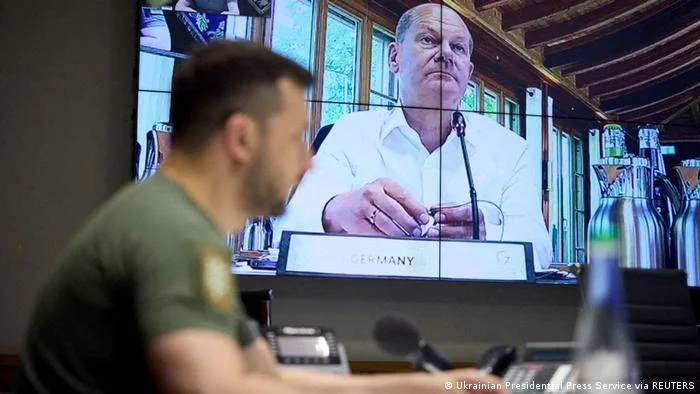
Chancellor Olaf Scholz prepared the grounds for change and only three days after Russian aggression in Ukraine. On February 27th, he gave a speech that could be called “turning points”, when he declared: Goodness (German army), which has been neglected for decades, must be brought back into the spotlight. It called for the creation of a 100 billion-euro arms fund and the best preparation of the German Army. What was required in NATO since 2014 ʹ in response to the Russian annexation of the Crime ʹ to divide at least two per cent of Bruto National Production for Defence Needs will be realised in the future. And that made Germany's largest arms budget in Europe. The Chancellor promised to protect every inch of NATO's territory.
Six months later, American expert Josef Braml declared for Deutsche Welle: “The Return Word drew Washington's attention. And the German government really did this. What Americans particularly like is that Germany is investing a large part of the sum in Lockheed Martin and buying F35 fighter aircraft. This is a very expensive solution. That way we'll be obsessed and dependent on American technology for decades. ”
The new German government took office in December, under the ambitious motto “we courageously move forward”. But war and crisis have forced politicians in the SPD, Greens and FDPs to sacrifice a whole bunch of holy political cows from party headquarters temples and to enter the real policy slaughter.
It was Robert Habecek, the minister of the ecologist party for Economic Affairs and Climate Protection, who was forced to seek the restart of coal-bound power plants because of limited energy supplies from Russia. A breach of ecologist taboos due to high CO2 emissions.
The ecologist's replacement will probably be forced to extend the operating time of nuclear power plants. The last three reactors should be shut down according to previous plans at the end of the year as part of Germany's departure from nuclear power, which is a very important question for the Greens.
Even the SPD is doing things they couldn't even imagine a few months ago. In a speech in late June, Lars Klingbeil, co-director of the SPD, not only formulated a claim to Germany's leadership in Europe. But he openly admitted: “for me, peace policy also means seeing military force as a legitimate political instrument”. Hard Things for a Party Whose DNA traditionally went towards disarmament.
Suddenly, shipments of weapons to crisis areas that formerly opposed German doctrine are also acceptable to Germany. The Green, in particular, strongly condemned arms exports, for example in Saudi Arabia. Now they are demanding that even heavy weapons be sent to Ukraine as soon as possible. Even the SPD has changed in this direction, although the left-hand side of the party is still trying to curb the delivery of heavy weapons.
Political scientist Volker Kronenberg of Bonn says that given the point of the historical twist, the common political arithmetic is no longer in force. This shock has created a momentum, where there is much room for policy shaping. Such times of crisis are executive time” Kronenberg says about the DW.
Out of the country, people sometimes rub their eyes in amazement. By mid-August, British news magazine “The Economist” spoke of a new “German on its first page. The text was illustrated with a powerful federal eagle coming out of its egg. Ukraine's war shocked a self-dignified and self-friendly Germany, writes the Economist's authors. They hope for a stronger, bolder and more determined “that will take the wheel towards a more unified Europe”.
According to politician Kronenberg, there are different expectations and prospects abroad. In the U.S. or France, what has been achieved is kindly noted. Someone sees positively that the Federal Republic is getting involved in real policy and is finally leaving behind very delicate reserves when it comes to the needs of defence and security policy”. But Kronenberg also stresses “that people in Central and Eastern Europe would like to see more and faster”.
Under the age of crises, past concessions become very clear. Delayed digitalisation hinders business and administration. The already chronic distrust of railways is just one example of neglect in infrastructure. Above all, it becomes clear what fragile legs remain the prosperity of Germany.
The business model of the past few decades has worked very simply: with large amounts of free energy from Russia, preliminary products from China became high quality products while exports went mostly to China. China is Germany's most important trading partner. All economy sectors are dependent on the Chinese market, the supply chain of many industrial branches depends on China.
A pillar of the system is already wavering: trade with Russia is drastically limited. First substances such as gas, oil, and coal flow less and less from Russia to Germany. Before the war, the country imported more than half of Russia's gas needs. Now things have changed. The Chancellor and ministers are trying to find new energy sources worldwide recently in Canada. Politics, business and population are waiting for the coming winter. And this winter will clearly show what the state of solidarity is in Europe.
Second column, trade with China, is still important. But even concern about being dependent on the Chinese market is growing. This is happening even under US pressure to turn back some globalisation processes. New blocks are now being created under Chinese and western symbols. And that will also make it difficult to do business between the parties.
In terms of crisis and numerous current conflicts, the government in Berlin has started working on a new national security strategy. For the first time, because Germany so far has not considered it necessary to be clear in its geostrategic goals and ways of achieving these goals. / DW