19 minutes ago
Borrell seeks compromise on visa issue for Russians
Periskopi(4 years ago)
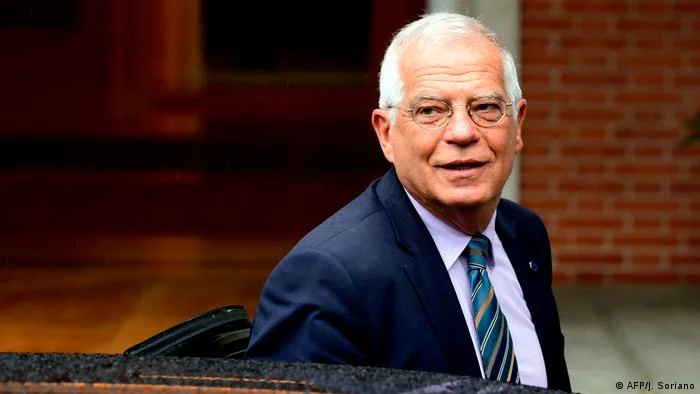
(4 years ago)European Union foreign policy chief Josep Borrell called on 27 member states to compromise and leave their anger behind, while the bloc is debating whether to stop issuing tourist visas for the Russians as sanctions for the unprohibited Russian invasion of Ukraine. Speaking to reporters on August 31st [...]
Speaking to reporters on August 31st after arriving on the second day of the EU foreign ministers' meeting in Prague, Borrell said that “should reach an agreement and a political decision”.
I will work for unity... We cannot allow ourselves to be divided over such an important issue, dealing with reports between people, between Russian society and European population”, he said.
The issue of visa restrictions for the Russians has been currentised by several bloc states, but for a deal to be reached, the unanimous decision of the 27-nation bloc is needed. This decision would then become the newest sanctions against Russia due to its unprotested invasion of Ukraine.
States that share the border with Russia -- the states of Baltic, Poland and Finland -- have led the cause for establishing a restrictive visa ban on Russian tourists. Due to EU sanctions for flights from Russia, most travelers use land borders to travel to EU states.
A 2007 agreement on easing EU visa criteria for Russians was temporarily suspended at the end of February, targeting people close to Russian President Vladimir Putin, like official Russian delegations and diplomatic passport owners.
But sanctions ruled out the usual <x0 minus1>, which still continue to enjoy the extenuating benefits of this agreement, such as reducing the time and cost of the visa, but also presenting less documents for application.
Germany and France have said that visa restrictions for Russians would be counterproductive, as the EU attempts to gain “hoft and mind” of those Russians who do not support Moscow's aggression against Ukraine.
Kiev has called on the bloc to stop issuing visas to all Russians, except for political dissidents.
Ukrainian Foreign Minister Dmytro Kuleba told Radio Free Europe on August 30th that “the selection of this war as Putin's problem and not the problem of Russian society, which mostly supports its president, is the only one to 31x1>.
The 27-nation bloc must agree so that the measures for limiting visa is applied in all EU states.