9 minutes ago
War in Ukraine: BEC's dark forecast for Kosovo economy
Periskopi(4 years ago)
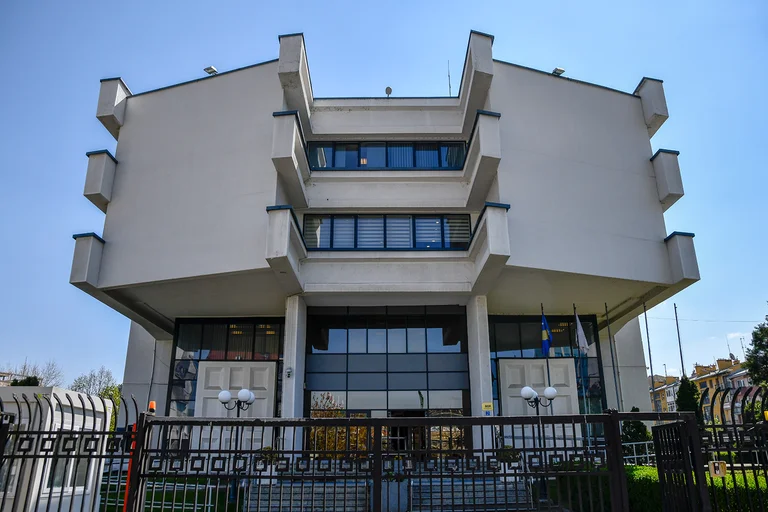
(4 years ago)Kosovo Central Bank - The CEC has made a prediction about the impact of the war on Ukraine on Kosovo's economic activity. The bank has made the prediction according to basic scenarios and two alternative scenarios, writes Periscope. The CEC has predicted that there will be price hikes in this year, and that inflation will be closed in a [...]
The CEC has predicted that there will be price hikes in this year, and that inflation will be closed at an 11 per cent quota, until that next year is lower.
The CEC launches its own analysis, saying the war in Ukraine has affected increased risks to economic prospects for both the eurozone and the region and Kosovo. According to her, Kosovo has very low exposure to the countries involved in the conflict, so even the direct impact of the war on the economy remains limited.
Taking into account the high uncertainties the war has caused in Ukraine, both in terms of the conduct of international markets and expected monetary policies to avoid stagnation, the CEC has revised economic forecasts due to proportional and designed two more serious additional scenarios that will be analysed.
These scenarios, the BQC has listed them in the document “Financial Stability Report”.
The CEC's basic scenario is built on assumptions that the negative effects of this war are temporary and that the chains of global supply are not significantly affected. Projections carried out in early 2022 are projected to slow economic growth and normalisation in the average five-year growth of 3.3 percent for 2022 (10.5 percent in 2021). However, increasing overall macroeconomic risks with the start of the war and the consequences it has produced, especially through increased inflationary pressures, have resulted in revision of the basic production of 3.0 per cent. As far as inflation is concerned, the CEC has initially projected an inflation rate of 5.1 per cent for 2022. The change of dynamics and the steady rise of all price indexes in the country has forced the CEC to review the basic scenario at 11.0 per cent for 2022 and 6.2 per cent for 2023.
The rise in basic goods prices in international magnitude markets that have continued to exceed the expectations of the ECB and the banks of Western Balkan countries have significantly increased perception of the overall macroeconomic risk in the country. As a result, the CEC has designed two alternative economic prospects scenarios for 2022 and 2023 (moderate scenario and heavy scenario). These scenarios suggest that war will last longer than in the basic scenario, even reaching 2023.
Moderate BQK scenario
According to the CEC, the impact of the war in Ukraine combined with additional sanctions on Russia and the Russian gas and oil embargo from EU countries is expected to create significant supply restrictions. Such lack of supply is expected to affect much higher prices of basic goods in the coming months (food, oil and gas), with negative effects on industrial production. The slowdown of economic activity in the eurozone, in addition to the direct impact on external demand, will also be reflected in domestic demand, since it is expected to affect one of the main sources of economic activity financing ʹ revenues from the diaspora.
“As far as price design is concerned, simulations have been developed on the basis of assumptions based on the communication of central banks, international financial institutions and other relevant agencies such as the Food and Agriculture Agency of the United Nations Organisation (FAO). In Kosovo, interviews have also been taken on the basis of relevant bread prices, sunflower and oil oil, such as products influenced by the effects of the war in Ukraine. According to moderate scenario, the price of bread would be at 9.3 percentage points higher compared to the base scenario in 2022”, the CEC says, Periscope reports.
Ukraine and Russia are the leading producer of sunflower oil in the world. Limitations in the bid by other production or mediation countries on these products to maintain the overall demand in their countries have increasingly affected the further of these basic products. According to the CEC's moderate scenario, the price of food oil would be 58.2 percentage points higher compared to the basic scenario. As much as required for the oil derivatives, the price would be 23.2 percentage points higher compared to the basic scenario.
According to the CEC, U.S. administration plans are to encourage domestic production growth, and until this growth occurs, it has decided to supply the market with about 1 million barrels of oil on a daily basis from strategic reserves.
Overloaded scenario
Apart from assumptions involved in moderate scenario, a greater and continuing increase in prices in the aftermath of war and intensification of risks has been simulated. The scenario of continuing reduction of stocks and reserves in years involved in scenarios as a result of the risk of failing to replace basic products from Russia and Ukraine in the coming months (the gas, oil, and key inputs in agriculture) seems more likely. As a result according to the CEC, the market will be balanced to higher price levels and in a general inflationary environment materialise even greater effects of the second round of inflation. At the expense of this scenario, it was supposed that the price of bread would be 27.9 percentage points higher compared to the basic scenario, while the price of oil and oil would be for 66.9, respectively, at 43.5 percentage points higher than in the basic scenario.
If these assumptions were materialised, inflation would reach very high levels in 2022 in the two scenarios, but would progressively drop to a level of 3.2 per cent in the moderate scenario and at 4.3 per cent level in the heavy scenario. The inflation rate is significantly higher compared to the basis scenario, since Kosovo consumer basket has a high share of categories, which are marking higher price increases. More than half of Kosovo's consumer basket consists of the two more categories influenced by the food (41%) crisis and transport (18%), so the weight these categories have in the general consumer basket has influenced the inflation rate in Kosovo to be higher compared to countries which have a lower share of these products. “In this way, inflationary effects due to price hikes manage to be higher by 8.5 percentage points in 2022 in moderate scenario and 13.3 percentage points in the scenario burdened compared to the basic scenario. In 2023, inflationary pressures are lower than in the basic scenario mainly because of the highest base in 2022. In addition, price hikes are expected to affect the weakening of overall demand in the country and, as a consequence, weakening economic activity”, the CEC says.
So, as it turns out, the overall impact on real BPV growth is obviously negative on both scenarios, with a greater effect on the heavy scenario. Under the moderate scenario, where external demand is weaker while the risks associated with the production and prices of basic goods are high, the decline of the real BPV would be around 6.3 per cent in 2022 or 9.3 percentage points lower compared to the basic scenario. In 2023, BPV's growth under this scenario would be around 6.5 per cent, or 2.5 percentage points higher than in the basic scenario. In the heavy scenario, additional assumptions in moderate scenario, higher prices lead to a markedly higher decline of real BPV in 2022 (-11.0 per cent) while in 2023, The BPV would return to a 5.5 per cent increase.
However, these scenarios do not take into account other important factors that may have significant impacts on economic activity and the inflation rate. In particular, these scenarios from the CEC are prepared according to the same fiscal assumptions. In addition to goods included in scenarios, prices of other goods and several metal prices could also be affected by the conflict given the role of Russia and Ukraine in global supplies of these goods. /Periscopi/