2 minutes ago
Unknown history of Durres Beach: “How the State Security Watched the new German-Western pair
Periskopi(4 years ago)
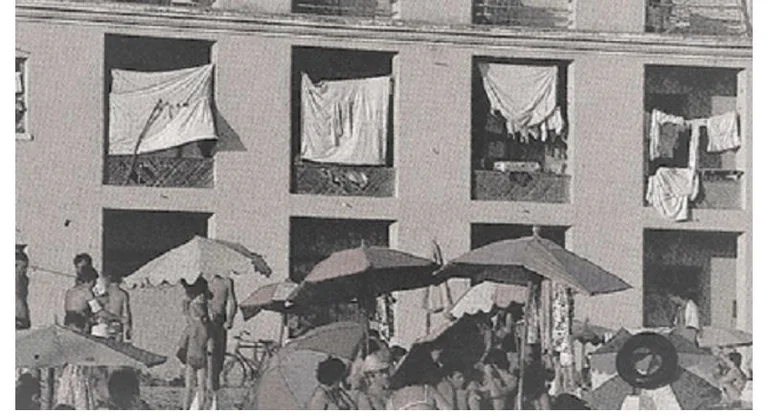
(4 years ago)What have been the favourite beaches and how did Albanians vacation before and after the '50s, especially those who preferred the sea? Durres, the main one, in the three summer months, frequented by aristocracy, the rich, but also by King Zog himself. Then the 1960s period ʹ70 ʹ80s was [...]
Durres, the main one, in the three summer months, frequented by aristocracy, the rich, but also by King Zog himself.
Then, the 1960s period ʹ70 ʹ80s has been unique to Albanians, individuals or families who enjoyed the sea.
At those beginnings the beaches were few, and Durres, Vlora, Saranda were the main ones. The mark began to be preferred later, as did Divjaca, while The Giver, or the Ionian coast, though popular, was limited by the long journey, difficult and low access to systems.
In the first few years, the detention center was only “Raild”, which focused most of the capital and long-term beachers. Then came the area called “iliria”, “Teuta” and “Apolina”, the second money with which the entire beach area started, built years later, was less popular. The last was “iliria”, after which the area of “Block” (of the PPSH top leadership), then two rest camps or the Army and Interior Ministry Conventions.
Then he would join the Pioneer Camp and stop. The Cavaja Rock was known as a geographical name covered with pines, and it was not even about the beach. Just Goleem, five kilometers. After the school, where the train stopped, it was an unlikely, unknown area with a few daily vacations and several board booths. The length from “Teuta” to “iliria” was about 1.2 km. A distance that sets, since each light pole with neon lamps, was 100 meters apart.
Meet me at the <x0...
And we meet at “It's been for a long time as the most important point of meeting, attitude, attendance for all but mainly for patience and tyranny. One reason was, as the closest to the train station, another was the only restaurant-bar in that area. So from the sea that was very close, directly to the restaurant, or to the bar, find a glass of beer standing, or sitting, where you were allowed to enter the restaurant, both boys and girls. In front of him was an open restaurant track that worked day and night with a fun orchestra.
But “Bresca” was also located near the “Adriatic “, where foreign tourists came and stood. At first the hotel was used for foreigners, and until 1950, on its second floor, in those 7-8 rooms, Russian technicians and specialists coming for the opening of the Shkozet tunnel. Initially, taxis made of daily board, built by Rexhep Breska, were preserved and used long, but amortised were replaced or remade by bricks, changing their destination: from day to day they were transformed in two weeks.
On the south wing, Hotel “Breska”, was limited by a pie shop, as well as Hotel “Adriatic”, while behind were hotels “Butrit” of “Kruja”. On the north side, there was a pastry with ice cream, and across the street, there was a runway and a small board bridge next to it with the cabin delivering daily boats. With the state of the building, the restaurant passed the N.T.U.S. company. The Social Food Trade Company, while rooms on the second floor, no longer served for the hotel, but were given as beach rooms for officials, sportsmen, artists, family and well - known personalities.
“Bresca” of the love of...!
Even today, after many years and when you find no trace of it, to say “Bresca”, immediately you get your mind from the famous beach bar at “Few know the true story of this building: It was called “Bresca”, not for form, not because it took someone's name or symbolized something special. Nor did its own builder, Rexhep Chuckry, ever think about what fame she would have given her noble and wise animal. Before that modest two - story building, the beach season has begun and ended for many decades. Right in front of it, the most famous love of youth of the day has been written.
There was fashion, there were the timely cavips, famous art and sports people, but even the unrecognizable and popular. There's no vacationer at that time not to go through the “Bresca”. The “Brodutists” of Tirana were its main protagonists. It's just in that bar, or the floor in front of it, that the Southeast dances were organized when the youth of the '60s-70s had its peak. It was in that local place, that place, at “Bresca”, that the first glimpses broke out, and then the legendary recognitions and loves that come in today, in a very old age.
Switch to “
This too has been very important for time. Just opposite “Its construction was completed in two stages. Initially, what was used was used, then it was built with concrete. At dinnertime there was the peak stream. Getting a table at lunch or dinner was impossible. Family members picked up wooden tables a few hours ago. Bees were served, bowls of snacks, brandy, and orchestras were also in operation at night, and they were dancing with great satisfaction and passion. By the 1960s, the coast area was guarded or controlled by the famous Sergeant (cop) Hasan. For the disobedient, he had a isolation chamber on the right arm of “Bresca”, where he kept those who broke the rules one night, especially the dancing boys with foreign girls. Then, keeping order and quiet was more organized.
Oscars, music and entertainment until midnight...!
It was the one who had been having generations of beachers during the summer months. There were two, one on the track at “Bresca” and the other standing on the bar of the hotel “Andriatic”. Both were made of calibre instruments, such as “Adriatic” with Sul Tufe in contrabas, Hamit Cara in batteries, Spiro Kalemi sax, John Simoni piano, V. Reybine clarinet and Rifat Dedja in the accordion, or the famous Bebek Koci. That of the “Bresca” floor called “Dursaka <xanx9> consisted of Genc Cara, Petit Myschketa, Isuf Jumri, Kochi Driza.
All the band players were masters, professionals, real artists in some tools, known in that environment, and preferred by customers, dancers, especially foreigners.
Also well - known were the songs of time, at first they were executing the songs or pager of Domenico Modunjo, Paul Anques, Louis Armstrong, Elvis Presly, with famous songs Petit Fleur, Volare, Azhurro, Tequila, Marina, Speedey Gonzales. They play parts of German Polish, Italian, French and scarce Albanian music. In those years, the track of “iliria” was built, but there was no permission for the orchestra to dance, as the music was considered concern for the senior party and state leaders, resting at their “Block”, not far from there.
“Adriatic”, love hotel under surveillance...!
It's between the '50s and '60s, when the new Durres Beach started building several massive buildings like: complexes, hotels with visible Soviet architecture, in which, the hotel “Adriatic”, and four more: <xt>Apolonia”, <x> The first, the one in the sand and near the sea, with the “Brescan” on its side, reserved mainly for foreigners, the diplomatic body, the most rare for Albanians.
Unlike villas, cabins, hotel tourism guaranteed or could only plan a ten-day break on them. The reservation had to be made with telegrams, and for this reason, on the first day of the year, January 1, after 24 when everyone celebrated the new year, one of the family had to run to the Central Post, to start the telegram at the Durres Directorate, at a ten - day reservation. On the contrary, finding a room over the summer was difficult.
The hotel-tours were comfortable, with modern conditions, and a room cost $3,600 for the couple. Little children were not allowed, and couples often put them in their windows or other ways not to be noticed by the athlete. Hotels also provided food at restaurants, some large facilities where waitresses were served. Among the hotels was a dance floor where music from an orchestra was played in the evening.
To secure a table, one of the family members had to leave at noon and go to catch one. Always from the top floor of “Andriaticus”, state security workers, were searching with vacationers, foreigns and any Albanian attempting to approach, befriending one of them. Although the area before the hotel was limited by umbrellas and shezlongs for them alone. Knowledge, conversation, provocation, friendships, and so forth were realized in the depths of the sea.
The passionate dances...!
Such have been in that period on the two already famous tracks, the one of “Adriatic” and “Breske”. Dance music began at 20.00 p.m. and peaked at 12 o'clock at night, then not allowed. In those years, Albanians and foreigners without borders have danced on these two tracks. Every night, all dance types, all the way to madness. Tourist groups were present, and along with Albanian ones, enjoyed at the sound of orchestras. The roof is one night in July 1964. Along with East German groups, there was also a German-Western couple.
They danced so beautifully that the audience, in order to create conditions, removed the tables, expanding the runway, and the orchestra on foot accompanied the dance. Dressed in a red dress, the girl surprised everyone with the extraordinary dance. The music on the roof drew the attention of the police who came, stopping everything. The couple cautiously left to join the group of tourists in their large tents. After this moment, the double - track orchestras were orient in controlled programs and not to get out.
Albanian Friendships With German-lish Groups
By the end of the '60s, the beach period has been a golden time. Young men and women from democratic countries, mainly from East Germany, came on vacation in Durres. even setting up the tent camp near “Bresca”. For two months their arrival was intense and numerous in attendance. For communication with them, German began to be learned and expressions “Wie geht”, “Alles”, were systematically heard every moment of the day. Then the parties were the most impressive ones. He danced at beach establishments from where he started his acquaintance, exchanges, first meetings, then love between Albanian boys and German girls, ties that even after their departure continued with exchange letters and promises to meet again.
But more intense, this flow was about the '70s, when tourists were also from other European countries. Situated at Hotel “Adriatic”, most of them were under state security control, which he closely followed their movements. Every attempt to communicate with foreign girls was done in secret. Initially, a blanket in English or Italian in the sand, then as they entered the sea, the depth was used to avoid being followed by dybby from a hotel room “Adriatic”. Otherwise, meeting with them could be easier. For a few years, then their numbers began to decrease, and the few that came were isolated, controlled, and stayed in front of the hotel. However, those who have lived will look back on that time, those years.
The board boats facing the turtle
They've been one of the most fun boats ever. There was even a line for taking them. They were positioned only at “Curved”, opposite “Breske” and were the product of the Marine Port Company. There were shovels, but there were engines, as well, “who were named”. Exhausted, though painted and looked maintained, were the same ones served over the years. For two persons or more, they were rented for 60 bucks an hour.
The person, authorized to give the boat, had the cabin on the bridge and an hour that precise the departure time. By use, however, systematic neglect, and consumption, boats were put in water, forcing people to use a can to remove water from the boat. They were not many in number, they were harmless, since you could not get far off the coast, nor could escape be imagined. The bottom line was that a distance was exploited by lovers.
Years later, a cruise ship was set up for vacationers, “iliria”, which was initiated by concrete bridge at “Teuta”. It was expected to be filled, and in one hour it moved with vacationer “Teuta” “Washing at sea was limited, since empty barrels had been placed evenly off the coast, such as the border of departure. But the favorite one was the two - story iron trampoline, deep in front of “Bresca”.
You could go swimming, stay having fun. Once a day, each vacationer enjoyed going to the trampoline, or “zadra”, as the patients called it. There was also one in the “; the cell”, but the favorite one was that at “Heckura”. At the weekend, it was packed, completely occupied by beachmen who spent long hours there.
“Bresca”, what end...?
He shouldn't have it, for what he served, for the pleasure he gave the beachmen for the history of homesickness he carried in many years. It was called “Brescal” for the reason we showed above. But it did not resemble the noble animal, the life span, and the symbol of many civilizations and empires, which they have considered sacred and immune. By the early 1970s, when it peaked, it began to fade. Many passions prevented him, held back, restricted, and the building itself, along with the restaurant and the runway opposite, gradually lost their splendor. She started to absorb, get old, and nobody cared about her anymore. Aggressive changes after the 1990s, attacked by hitting “Bresca”, which could not resist the hardness of her people's time, dipped and lost in the depths of the sea, from which it came without a trace, though it never deserved such an end.
Syncron radio: With the ear of High Parade, Lelio Luttaz
It was a very interesting device that synced hand radios into the sand, under the umbrella of music. There were not many in circulation, as the transistors had just emerged and the opportunity to bring them to Albania was small. They brought those families of Italian origin, sailors, or people going out, sportsmen, artists, drivers of Export Park, diplomats, and so on.
I remember one we heard, brought by the team's famous volleyball player “Dinamo” and representative, Aslan Russia. It was mostly the property of the doublesak. Over the years, however, they increased in number and were present and as a very important part of the beaches.
But, synchronizating them, during the musical shows, such as Monday and Friday at 1: 00 p.m. or 13,20 “Het Parade” of Lelio Lutazit, or “Disco per le stete”, automatically and immediately, to be at the same frequency throughout the entire beach length, was extraordinary.
Listened passionately to Adriano Celentano, Gianni Morindi, Lucian Battisti, Papalardo, Tsouto, Albano, Mal, Reitano, Massimo Rantier, Little Tonny, Gianni Nazzaro, Endrigo, Nikola Di Bari, Leali, Don Backy, Mina, Pat Pravo, Vanua, Zanici, Cinquetti, or bands from Nomadi, Dick, Camalon, Equip, 84th, song of the famous <xtoHocto> L atore”, “Una ferita in foundationso al curo”, Canzone, Story d amore, IlRagazzo della Via Glock, Il Sole, “Cure matto”, Lisa dagli occhi blue”, Occhi in”, etc.
But also Albanian music, singers Vace Zela, Rita Vako, Nikolin Gjergji, Kemal Kertisha, etc., etc., were very familiar. It was a time when it felt like a breath of openness to the world, a youth passionately passiond away from any censorship and, with great hope toward the West. The day's lap, but dinner.
It was and remains unique. Everyone in the water, but also in the famous lap. The previous afternoon was to take a walk, a group walk along the coast first at a short distance, then from “Teuta” to “iliria”. Of course at “The crowd flooded without border, under the sun, the heat, with or without a protective hat. Favorite and attractive were those beautiful boys and girls, well-known characters, athletes and artists in the first place.
In those rides, look, harassment, or sympathy were exchanged. Even at night, in the light of the neons, the ritual was repeated with the same intensity until late hours. Then one section preferred orchestra tracks, others asleep. Dursracts returned by bicycle or last train to Durres, the tyrants dispersed to the sites they had secured.
Saturday and Sunday, the flow doubled. Especially during the time of the beach, “parade” had its systematic and well-known protagonists. They were modeled Hollywood diaves, especially Steve Ravenes. A handsome male was preferred by the girls and the subject of daily discussions, which became an obsession for everyone. Then the end of the season: As with a knife, the beach was emptied and it looked like a real desert.
The coast was missing people, there were no more noisy evenings in particular “Bresca” remained lonely. September brought another atmosphere, started schools, universities, all returned to daily work, leaving behind a summer season, with a thousand memories, waiting for each other. /Remember. al