9 minutes ago
Turkish
Periskopi(4 years ago)
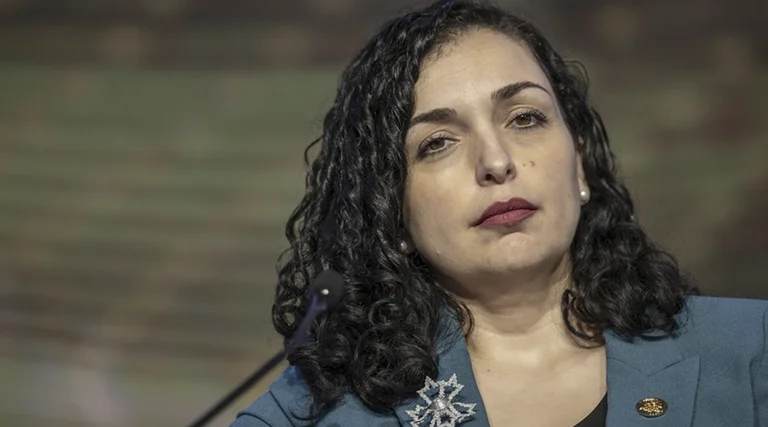
(4 years ago)Last night, President Osmani had chosen KTV's interactive to prove that she was back alive and healthy from Thailand and Singapore. As usual, he gave an angry interview éurbi et orbiʹ, on his way testing the limits of patience to a correct journalist facing him. It says: Periscope a few weeks earlier, a Turkish host [...]
Last night, President Osmani had chosen KTV's interactive to prove that she was back alive and healthy from Thailand and Singapore. As usual, he gave an angry interview éurbi et orbiʹ, on his way testing the limits of patience to a correct journalist facing him.
It says: Periscope
A few weeks ago, a Turkish host paid jail for the algoric use of an old folk saying that when a horse enters the palace, it does not become a king's horse, but the palace turns into a stable. The journalist was told that he had alluded to the president of Turkey, who had personally felt offended.
Perhaps its statement was inappropriate in Turkey's political context, but it certainly remained in focus as a very useful wisdom. Indeed, in the Balkan sub-heaven's social and institutional culture, there are numerous situations when the institution fails to discipline and normalise the individual, and when it becomes the opposite: the institution takes on the characteristics of the individual who leads it. Let's call this the individualization phenomenon of the institution that doesn't sound so bad, on the surface.
However, the purpose of the palace is not to turn into a stable. You know, it's not impossible, but it wouldn't be right. Institutions, especially ruling ones, are created in the name of public and political norms that govern society. With both appearance and restraint, they are representatives and doers of these standards. So one of the main conditions for becoming part of these institutions is to accept and submit to those standards, not to suit them. Maybe, they can even suit yourself, but then they turn into mud. To be clear?
It was this dilemma that brought us to the head as we watched Osman's interview in KTV's interactive. What does the office and institution of the president mean today? How many times has this supreme institution been forced to adapt to the characters, desires, traumas and complexes of individuals who temporarily occupied it? How powerful are our political and public norms, embedded in the appearance and content of the President's Office?
So last night, we had the chance to see a new coat of office of the president of the Republic of Kosovo adapted to the character and desires of the person who currently inhabits it. What we saw, for more than an hour, was a new presidential form: aggressive, contentious, full of opinions and emotions, full of local, regional and international conflicting findings all wrapped up in the obsession on personal invisibility. This, since Osman is now presidential.
Meeting in the midnight interview, Osmani confirmed the personal/presidential dissatisfaction with Albania's Government, with Brussels' mediator, with the Kosovo opposition, with the controversial media of the past regime (otherwise, including this news portal) and continued to remind us of the historic enmity we have with the regime and the Serbian state, both yesterday and today.
Standing firmly in line with the current government, Osman made sure there was no guilt for anything alive on this earth. All of today's harm and yesterday's ills were that of someone else. Like Prime Minister Kurti these days, Osman last night made sure to prepare the public for any bad decision that might be taken in the future, the blame must be sought elsewhere but not at her address. And, like Kurti, he gave no clear answers to even Eraldin Fazliu's most concrete questions.
Here, for starters, we'll explain only two: the question about implementing the Constitutional Court's decision on the holdings of the Decani Monastery, as well as the question about the (renewed pardience) position of the EU mediator in Dialog, Miroslav Lajcak, on the necessity of implementing the Serbian Communist Association Agreement. In both questions, Osman answered with his tails. On the matter of the monastery, he said the constitutional court's decisions are specifically supporting him for something, yes, and for something not, and that, of course, he does so. And as for Lajcak's statements he cut short: he said he is not the president of Kosovo and the point. Zajednica will not pass.
On the other hand, for Osman, the Balkan Open regional initiative is one of the most insignificant issues in the Balkans, while the newly signed agreement by Kurti on the north flow of Kosovo differs greatly from the old, and, of course, is better and clearer. Anything else for Mitrovica? Osmani said he knows the individuals who in June 1999 had pushed the Mitrovicas back to their homes in the north of the city, but he did not want to name names to flee the fetus. We are grateful, of course.
Otherwise, during the entire interview, Osman felt hampered by the questions of journalist Fazliu. I can't answer it if you stop constantly, he told the man who has daily work (or nightly) to ask questions.
At times, Osman stressed the Constitution as sacred guidelines in its day-to-day affairs, but re-edited it also that it has problems with Constitutional Court decisions. Indirectly, it formulated an ultimatum: either the Constitutional Opinion on Association will be accepted or the decision on the Decani Monastery will not be respected. According to her, there can be no selective application of two similar decisions. Likely right now, interviewer Fazliu failed to remind the President that it is not about two decisions, but about an opinion and a decision.
Next, followed the already stabbered logic of the Change Government, characterised by confusing the cards as replacing for answers: why isn't the international community dealing more with criminal Serbia and parallel structures, but with association? Why aren't you media getting more involved with Serbia, but you're discussing the Decani Monastery? Why aren't we talking about 20 years of ignorance of corruption, but we're focusing on (even without need) issues of currentity? Even, according to Osman last night, the interests of Kosovo's international partners and the interests of Kosovo leadership are not necessarily the same. They stand out, and they can often be contrary. Okay, if so, can we at least not call them partners any further? Maybe it'd be better to label oponents, competitors, or even rivals?
All in the end, if there is something worth mentioning, is that, according to Osman, the Republic of Kosovo is currently in the service, where the process of repairing it by 20-year damage is under way. Her answer to Fazliu's question to correct the length of this repair was typical of a service Ustah: What question is that? When done! )
Hot air. For an hour and sixteen minutes, the June 30 ' s landing.