19 minutes ago
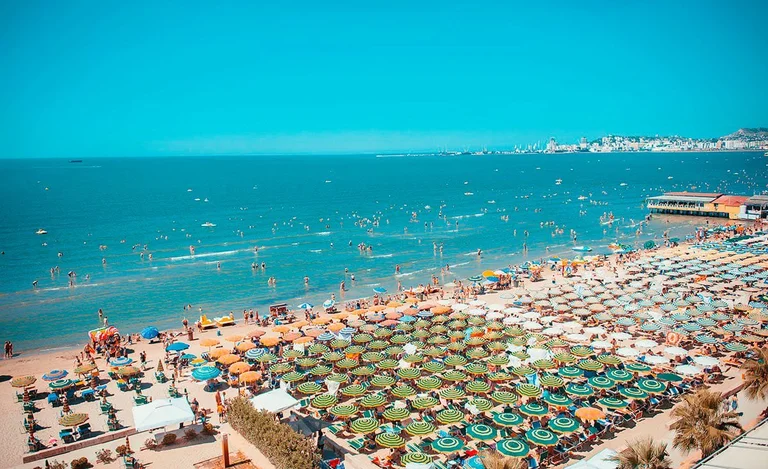
Number of Serbian tourists up 110% in Albania
Periskopi(4 years ago)
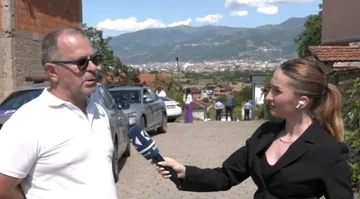
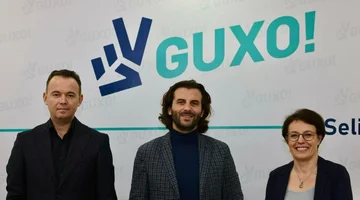
(4 years ago)Mirela Godbarlo, Tourism and Environment Minister in the Government of Albania, from Belgrade, has declared that the number of Serbian tourists visiting Albania in 2021 has increased by 110 percent compared to 2019. As he has unveiled Albania's tourist potential during an interview with Radio Free Europe service. [...]
As it has unveiled Albania's tourist potential during an interview with the Radio Free Europe service in Serbia, Godbarko has stressed that Serbian visitors to Albania are an important step of emancipation, which, according to her, implies open minds. Godbarto points out that this is the new philosophy corresponding to the Open “Balkan” and that all of this is the result of this initiative.
Asked whether the obstacles to the development of tourism between Albania and Serbia may be political disagreements about Kosovo, Godbarko said there are no such differences, adding that “this is the perception coming from our history” and which needs to be changed.
Radio Free Europe: How would you explain the increasing number of Serbian tourists in Albania? You said at the conference that this number was 20 percent higher than last year and more than 100 percent from 2019.
Goodla Godfather: In 2021, compared to 2019, we had 110 percent increase in tourists from Serbia. Normally I think COVID-19 has changed all its routes. On the other hand, don't forget we started the spirit of the “Balkan Open”, if I can say so, but also the initiatives last year.
The frequent visits of personalities from all three countries have created this new atmosphere. And in different sectors we're seeing different results. We have this number in tourism, and this trend is continuing in 2022, because in the first four months of the year, we have 20 percent more (Turkish) than last year.
We have been in constant contact, ministers on the sidelines exchanged visits, but also two national tourism agencies have been in touch and we are committed to promoting our states on both sides. At the moment, bloggers from Serbia are visiting Albania.
They are posting photos, services, hotels from Albania on the pages of their social networks every day, which brings more followers, and I think we can see a number of Serbian tourists who have been to Albania, when they returned to Serbia, have been a bit like ambassadors, perhaps even not knowing it. And this is what tourism produces, because everyone knows that 70 percent of tourists worldwide receive information through social networks more than through official channels.
On the other hand, our commitment to the Memorandum of Understanding that we have recently signed between three states of Albania, Serbia and Northern Macedonia is a commitment to strengthening this trend, uniting our forces.
I think what needs to be done is not to create a new market, but to support that existing one, because the private sector is more advanced than political. Therefore, this is our duty and we must be wise and follow through with this new trend. Although there are political talks with Albania, Serbia, Northern Macedonia, Montenegro, Kosovo, we are all small states, so we cannot pretend to create separate tourism markets.
In this direction, we need to open our borders and increase our access to the circulation of tourists, such as birds that circulate, fly from one country to another. We are helping the economy, we are giving tourists more satisfaction, we are attracting tourists from distant nations like Asia, Australia, the United States, but above all, we are creating a new thought of emancipation.
This is the biggest and most important result for our region. And, I think tourism cannot only contribute to the economy, but also to a better recognition of each other. We need this issue and tourism is another tool on the table.
Radio Free Europe: What do you think are the biggest obstacles to Serbian tourists in Albania? Are political reasons, say, political disagreements about Kosovo?
Goodla Godfather: No, we don't have political differences on thick lines. Even when we have disagreements, we agree to disagree, which means that there's still a reconciliation. Let's say it's a perception and perception it's not created by the Understanding Agreement, nor is it changed by it. The perception is something that comes from our history, so we have to change perception in every tool, every instrument, every goodwill in education, tourism, economy. And sometimes this is the biggest challenge we have.
It is very easy to change borders with political decisions, but it is much harder to change the tencms inside our heads. That's why I'm stressing the effect of tourism emancipation. So every tourist coming from Serbia to Albania is another step forward in the emancipation process, each meeting is another step in the emancipation process.
Emancipation implies open minds. This is the “Open Balkans”, corresponds to this new philosophy that we want to introduce in other states. It is not enough to have it only in the heads of our leaders, Prime Minister Edi Rama or President (Aleksandar) Vuciq, or other leaders of our region, it is important to present itself in the minds, minds and minds of people.
This takes time, but we are here to take this challenge as a task, as a duty to our children.
Radio Free Europe: What is this perception that we are actually fighting, Serbs and Albanians?
Goodla Godfather: Interestingly, this question is asked more to Serbs because I can confirm that we don't have complex, we don't have bad perceptions. Albania, coming from a long period of isolation from the communist regime, is a state that has fought to be open, more than others, because we have been isolated more than the states of the former Yugoslavia. That means we are open and we welcome everyone who wants to come to Albania.
So let's see maybe the Serb perception. I think that sometimes when we have some positive publication on Serbian media or social networks, which talk about tourism in Albania, there are always more noisy individuals about it, who talk about it. This is the communication process, the only way we can change that perception.
So I think it's the extremism of some nationalists who exist everywhere, not just in our region, and the only way to fight against nationalism is to be open-minded, to accept history, to accept the other one with “T<x1. The other “ ” is inside of us, so the other “ ” is myself, I have to accept it and to accept it I have to change my mind. The only way to do this is through communication and emancipation.
Radio Free Europe: You mentioned security issues at the conference...
Goodla Godfather: Albania is the safest country. You are safer in Tirana in Albania than in Rome, Paris or London. So maybe it would be interesting for you as media to do some kind of survey with Serbian tourists who have been to Albania.
No one complains, everyone is happy to be there (in Albania), to discover food, because of course we offer a lot (food from) the tradition in gastronomy, but we also have many differences. This, because being part of the region, but at the same time part of the Mediterranean area through Albania, we can have more interesting experiences to show in the Balkans where Serbia is.
Radio Free Europe: What does Albania offer Serbian tourists?
Goodla Godfather: First, cultural heritage. Albania is pre-excellence the state of three religions where everyone is happy to be with everyone. I myself am of Muslim origin and my husband is Orthodox, which is not a unique case, but we are all so- mixed marriages.
And this is one of our originals, a state where three Orthodox religions, Catholics and Muslims live together, marry and build together, not just today but throughout history.
Third, the cultural archaeological heritage where all civilizations are cross-crossed and you can find cultural heritage sites that are part of world cultural heritage, part of the U. NESTO, such as Gjirokastra and Berat. It's the two most visited cities, but we also have Butrint Archaeology Park and Apollonia. You can visit and be more than happy.
We have religious routes called the <x0-way of faith” with old Byzantine and post-Byzantian churches, with old mosques. We have a new trend now that is gastronomy. You can be in Albania only to enjoy food, from fish to meat, from vegetarian kitchen to kitchen chefs, who are now combining traditional recipes with modern ones you may find in Serbia now.
We, too, have protected areas, which are a great potential for Albania. Finally, we have taken 21 percent of the territory (Turkish) under government decisions. By 2023, we aim to have 30 percent of our territory under protection, which means we can have tourism not only in summer time in the most attractive part of the coast, but also in winter, spring and autumn, which is one of the best periods in Albania.
Thus, we offer variety, shelfing (sport of river flow), walking, climbing mountains and forests. We have proposals for all the wishes of Serbian tourists, but others.
So what's important is that wherever you go, you can find something new. Also, we have folklore and music and we have some of the biggest music festivals during the summer, such as “Kala-Festival” in southern Albania, in The Song of the Ionian Sea, we have had three weeks of this festival coming from Britain.
Festival “U n NUM” is another musical event that collects more than 20,000 people over a week in Strygin ] another coastline in Albania. “Kala-Festival” returns in September with two more weeks. Tickets are already sold, but perhaps for some friends from Serbia we will always have the opportunity to welcome them.
Every week and every weekend we have big events, from south to north. And that's why I'm in Belgrade, not only with the official delegation, but also with representatives of the private sector from the five-star hotel “Marina Bay in Vlora”, with one of the largest operations companies in the region, Landways and a private academy providing training for human resources in the private sector in tourism, which is important.
Let's say we have a lot of people from management staff in the tourism sector from Serbia working in Albania, as five-star hotel managers, big restaurants, Serbia's private sector is already in Albania. So let's also invite tourists for entertainment (which Albania offers) but also eagerly to welcome them as guests.
Radio Free Europe: How does the Open Balkans “impact tourism and co-operation between Serbia and Albania?
Goodla Godfather: What I'm saying so far is the result of new philosophy, new political initiative “Open Balkans”. “Open Balkans” has started as a new initiative of the three political leaders of our countries and is now becoming an economic strategy, is becoming a new trend in tourism, and I think more importantly, I am re-increasing the new emancipation instrument.
As for tourism, we are dedicated to the last summit of the “Balkan Open” in Ohrid to apply new instruments, new digital platform that will start from Belgrade and split with others. And, second, the new initiative for food and wine fairs, which will initially be in Belgrade in next September and will continue for years with other capitals, Tirana and Skopje.
So the idea is to create the new slogan, the brand new for the Balkans, which does not belong only to three countries in the “Balkan Open”. I'm sure it will be separated from other countries, because we're seeing what's happening in Europe and the world. The region is becoming more important every day and we have to support each other because it is the best way to overcome difficulties like COVID-19, the war in Ukraine.
So these crises must be sustained, not just by politics, but even more by communication among peoples. People have longer life spans than politicians.
Radio Free Europe: Where you see the space for improvement in Serbian tourists' prejudices for Albania. Where do you see that space to improve that image?
Goodla Godfather: Communication. Governments are committed to promoting each other. I think, and I'm re-increasing that we need to communicate more, the media has to communicate more, the media has an important role to play, because professional media is challenged by social networks and the more we are present on social networks with our results, with our realities, there will be less room for extremism.
I think in 2022, it's important to promote new aspects, new ideas. Prejudice is part of mankind, human history, with which we must live, but not passively. We need to be more active than prejudice and extremist perceptions. So this is the task of civilized societies and our duty as politicians to do as much as we can in order to fight them through education, books, media, television and through economic sectors, such as tourism.