8 minutes ago
Which Rahman is the most difficult: Is it Muslim or Christian?
Periskopi(4 years ago)
(4 years ago)Many religious beliefs have a view of the afterlife, which includes a dark side. But there are many misunderstandings about what different religions say about hell. It is rare to find a consensus among followers of a religion with those who have abandoned faith in it altogether. Is Hell [...]
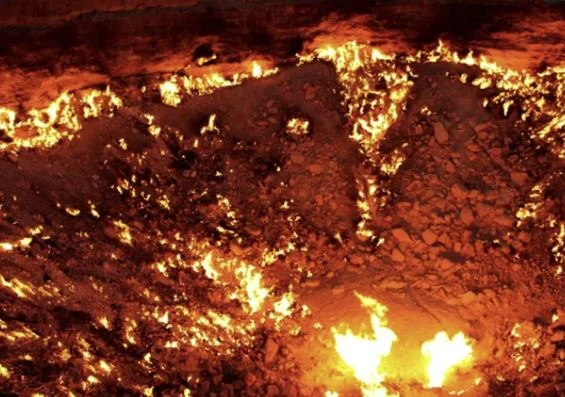
Is hell a scary idea designed to control people through fear, or does it provide the sense of justice that is often lacking in our physical world? If so, is it an eternal punishment, or a place from which to be saved through good works? Does fear of divine punishment serve to move people to act in a more ethical way? Here are some of the ways the world's major religions describe Hell:
Hell According to Ancient Religions
The idea of a kingdom of eternal punishment comes from Egyptian mythology since the millennium IV Before Christ. Hell or “Dut”, viewed as a place that covers the earth, supervised by a deity with a jackal head, Anubis. The road to the day of judgment was long and hard.
The dead were to cross 12 regions of hell, and a host of fire - breathing snakes and demons were to survive before reaching their judgment. Those who failed could be destroyed without hope of forgiveness. During the trial process, their souls were put on a scale against the weight of a pen.
The result determined whether their life was right or wrong. The hearts of evil men were torn to pieces by demons as the good were sent to “The home of happiness”. Greek mythology described the afterlife as the underworld, Hades, a maze of darkness and despair preserved by the scary Cerberus dog. Roman mythology tells of the souls of the dead passing through the Styx River. Bad people went to the fields of torture, Tartarus, and the good in the Elysian fields.
Christianity
Most of the traditional Christian imaginations about hell come, not from the Bible, but from medieval literature. Like by Dante's masterpiece, from the book “Lost Paradise” by John Milton and later artists like Hiernim Boc and Michelangelo. The New Testament contains little reference to Hell.
conservative Christians, like theologian Daniel Straindge, say that the mention by Jesus and Gehenna, a real place on the outskirts of Jerusalem where children's sacrifices took place and where fires were always lit, refers to a place in the afterlife where wicked people ended up, including those who rejected Christ.
Christians are generally divided whether Hell is a real place, or whether Jesus ' main focus was on the importance of people's lives on Earth. Liberal Christians tend to describe hell as a spiritual condition that represents alienation from God with people who choose to leave Paradise. But the possibility of reunification with God is always there, and hell is perceived as a place of reformation and not a place of endless punishments.
Catholics describe Purgator as a place where those who are not considered sinners enough to end up in hell take the path of penance until their sins are settled and eventually enter Paradise. Many progressive Christians, such as the Unitarians and Universalists, say that hell does not exist and that all will eventually enter Paradise.
Hell According to Judaism (The Book and Talmud)
Within Jewish theology, there is a debate on the concept of hell and afterlife. Many Jews do not have strong faith in what happens after death, while some insist that hell does not exist. But various sacred texts in Judaism refer to hell as a kingdom of repentance and punishment.
The passages from Samuel and Ezekiel refer to a day when God will reheat “the bodies from the graves and when in his “dry skulls” of the dead will grow again flesh and skin at his command. Anyone who dies for the glory of God's name must receive his reward, which means that all righteous beings will be given new life at the end of the day when He resurrects humans from death.
The Talmud, the book of Jewish Law, refers to an afterlife that sees all but the most wicked, being sent to a fiery place where people are temporarily burned and cleansed before being taken to Paradise by Abraham. Nowhere else, the Talmud's text describes how instead of going to Paradise, humans no longer exist after they make up for their sins.
The descriptions of Hell at the Talmud describe a place called Gehinnom, where the soul spends 12 months cleaning up before it is launched at Olam Ha-Ba, in the world to come. Incorrigibly wicked ones are either punished by punishment or brought to nothing. Moreover, the Talmud speaks of a future in which the dead come back to life, and it describes their conduct in Gan Eden, a place of equality and justice where they enjoy a position exalted in the presence of God.
Islam
The major schools of Islamic knowledge about the afterlife promote the idea that human beings will one day face judgment when Allah brings them all before him. At that time the dead will be resurrected, sinners will face fire when they cross the divine bridge, and the righteous will be sent to Paradise. His judgment is supposed to be final, but he can show mercy if Muhammad intervenes. According to Islam, hell has 7 gates, each reserved for a certain group of sinners based on their bad deeds in life.
Hinduism
Hinduism teaches that instead of being a place of eternal torment, hell is a kingdom made up of 28 layers, where individuals make up for crimes committed in a previous life. This process is known as “Naraka” or “Yamaloka” is monitored by Yama, the God of Death. Sinners may be tortured, while after cleansing of sins, they eventually go to Paradise or “Moksha”.
Buddhism
According to Buddhism, there are six spheres of existence, one of which is a kingdom that acts like a hell. There are eight hells inside. There the souls are cut down, they are burned, they are devoured, before they return to life to the same afflictions, again and again, through reincarnation.
Taking on cuts from Grunge World.al