27 minutes ago
“magazine Forbes” article on Albania's legalisation bill
Periskopi(4 years ago)
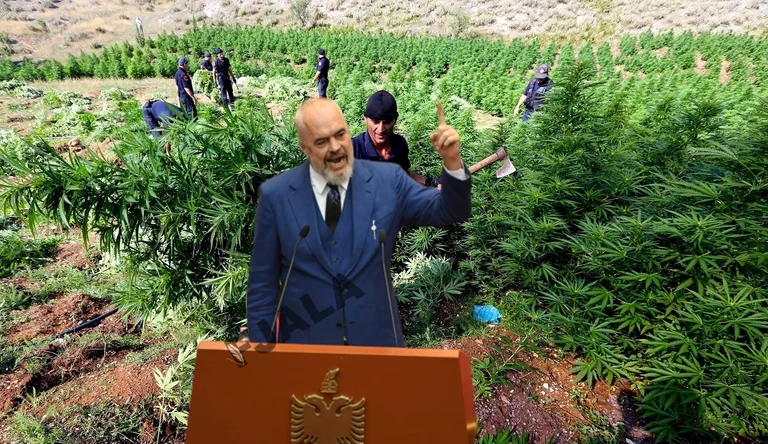
(4 years ago)Albania could join the list of European countries that legalised the cultivation of cannabis for medical and industrial purposes. However, cultivation, production and trade will only be destined for export.” The renowned American magazine “Forbes” has dedicated an article to the bill initiated by the Rama government for legalising the medical cannabis. The government announced me [...]
Known American magazine “Forbes” has dedicated an article to the bill initiated by the Rama government for legalisation of the medical cannabis.
The government announced on June 30th the plan for legalising the cultivation of medical cannabis after the results of “National Consultation”, where 61% of the approximately 536 respondents were pro.
Forbes writes that “The bill creates a national agency for monitoring and cultivating cannabis plants for medical and industrial purposes and producing its byproducts. ”
The bill will allow the production of medical cannabis and industrial fungi for up to 150 hectares of land starting in 2023.
The Council of Ministers would grant license for cannabis production for 15 years with the right to renovation”, the following Forbes article.
The “Businesses that want to operate in Albania's medical and industrial cannabis sectors must show they have capital of over $86,000, employ at least 15 people and pay a fee of 1.5% of the company's annual lap. ”
But what's most important to the bill is that the cultivation, production and marketing of the medical cannabis and industrial mushroom will only be for export”, Forbes writes.
“This means that patients will not have access to cannabis medical treatment, and local companies would not benefit from the many uses of industrial mushroom. ”
Opposition Rejects
The opposition has criticised the bill proposed by Prime Minister Edi Rama.
The opposition's “Deputet Enkeleed Alibeaj called this action “crazed” in a Facebook post, as legalisation would facilitate the cannabis's further production for trafficking purposes under the mask of medical use”, the article says.
Alibeaj alleged that the bill would benefit only Rama's friends and allies.
The “Criteries and procedures outlined in the bill explain that licenses for this activity will benefit only Rama's friends and allies. Everyone knows that in a country where crime and corruption are at the highest levels, controlling this activity is impossible”, he wrote.
“in particular, Alibeaj referred to the case of Saimir Tahiri, former interior minister in Rama cabinet. Tahiri was sentenced in 2022 to three years and four months in prison because through inaction he facilitated drug trafficking for a criminal group and received gifts from its members during his term.
The bill's announcement came days after the United Nations Office on Drugs and Crime (UNODC) ranked Albania 7th out of 154 countries for the cultivation and distribution of cannabis in its World Drug Report 2022.
The Balkan country has been renovated as the centre of drug trafficking. In particular, the country serves as a classification centre for heroin coming from the East to be trafficked across Europe.
Furthermore, Albania is considered one of the largest producers of illegal cannabis in Europe, despite the government's devastating efforts to reduce its own cultivation”, Forbes writes.
The Italian Institute for International Political Studies (ISPI) reported that Albanian organised crime built one of Europe's largest cannabis crops for more than two decades.
For example, the village of Lazarus and the mountainous region of Dukagjin became the symbols of the land of cannabis cultivation.
Although police seized tons of cannabis and thousands of plants in both countries in 2014, illegal trade continues to grow as much as in 2016, Albania witnessed an unprecedented expansion of cannabis cultivation throughout the country.
Law enforcement authorities intensified their efforts against the phenomenon, bringing cultivation rates to lower historical levels over the past five years, but organised crime gangs disqualified cocaine-focused drug trafficking.
Recreative cannabis is illegal in Albania and is included in the list of substances controlled by the Narcotic and Psychopic Substatic Substance Law, established in 1994. Hence, cultivation, production, trading, ownership, and donation are strictly forbidden.
Medical cannabis is also banned in the country. According to a recent poll, 38,000 Albanian citizens voted for legalisation of the medical cannabis, while 88,000 voted against and 51,000 had no opinion on the issue.
However, the decision to legalise the medical cannabis and industrial slaughter seems more to be a purely economic act than a further effort to combat or curb organised crime.
By licensed companies with capital, the bill is unlikely to destroy illegal businesses.
Moreover, such legislation focused solely on companies destined to export would deprive Albanians of cannabis's medical benefit. / ABC.al