20 minutes ago
HIMARS: American rockets changing the fate of war in Ukraine
Periskopi(4 years ago)
(4 years ago)“Russian ammunition files are probably the most uncertain places in any war zone”, according to an American Army manual published in 2016. “Munnicions were not safely preserved, and many of them were dated from the Soviet era, near the expiration date. Such a thing will cause a serious strain of [...]
Ukrainian generals are now testing this theory.
On 11 July, a Russian ammunition depot in Nova Kakhovka in southern Ukraine exploded spectacularly. Satellite images showed that the entire object disappeared overnight. It is thought to be the “vikmation” of the U.S. High-Servation Artifact Artificial System (himars), weapons America began sending to Ukraine in late June.
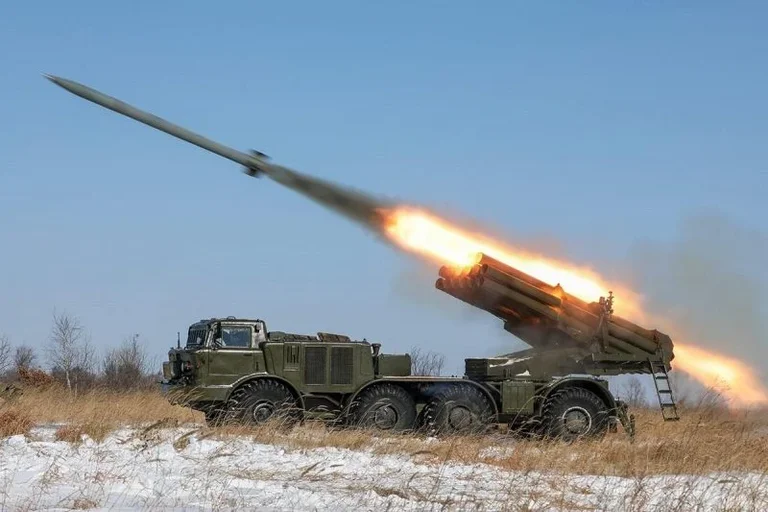
America has sent eight missile systems HIMARS and July 8th said it would send four more. Each carries a group of six rockets led by “gps” and a long range of up to 84 km or more than three times the missile rays the country has previously sent.
American officials have been careful about sending such weapons until it became clear that Ukraine would use them effectively. Although they appear to be similar to Soviet - age missiles, they are far more accurate and should be used to preserve ammunition.
So far, Ukraine seems to be passing that test. Nova Kakhovka's target was probably the 19th warehouse, which has been involved in flames since 27 June, according to a report by Kyle Glen, an analyst. An attack on the Kherson province on July 10th has reportedly killed the commander of Russia's 20th Division and some of its senior officers, along with the chief of staff of the 22nd Army Corps.
The attacks seem to have taken place along the front line, from Luhansk to east to Kherson in the south. Kiril Mikheilov of the Conflict Intelligence Team, a research group, said that four missile systems are located on the left bank of the Dnipro River and are used against targets in Kharkiv, Zaporizija and Donbas. Recently, another one has moved to the right bank and seems to be preparing the grounds for a counteroffensive around the Kherson province.
Ukrainian commanders have indicated that HIMARS are turning the war in their favour after the recent loss of Severodonnetsk and Lysychansk, cities in Luhansk. One colonel said the weapon is effectively resulting against a series of targets, from command posts to barracks.
Ukraine appears to be using Soviet-era missiles to destroy Russian air defence systems before launching other offensives. The Colonel says dozens more missiles would be needed to launch an effective counterattack.
He also said the HIMARS missile systems could become less effective as Russia regroups troops by “hright” main targets. But the fact that the Russian Army did not take such precautions despite weeks of announcement that Ukraine would soon be supplied with such missiles highlights a structural problem.
America's army is trying to move and hide its ammunition depots in a number of smaller locations. The Russian army, which relies on trains to move ammunition and human muscles to load them into trucks, has instead created large warehouses near railways.
That was a positive thing until HIMARS appeared. Displacement of these warehouses would require a large quantity of new equipment, or labor force. Even if Russia were to shift its supply chain precisely outside the range of HIMARS missile systems, the deadline could only be temporary.
America, cautious about escalation, sent missile systems on condition Ukraine did not use them against targets on Russian soil. As a further precaution, the US did not send the longest-range missiles: The 300km action radius of the Army's Tactical Ractor System (aacms).
If he did so, every square inch of Russia's territory would be within Ukraine's range. This includes the Crime, which Russia annexed in 2014, as well as the Kerci Bridge that links it to Russia, ships at the Crimean ports, and many other objectives. The Economist / ABCNews