8 minutes ago
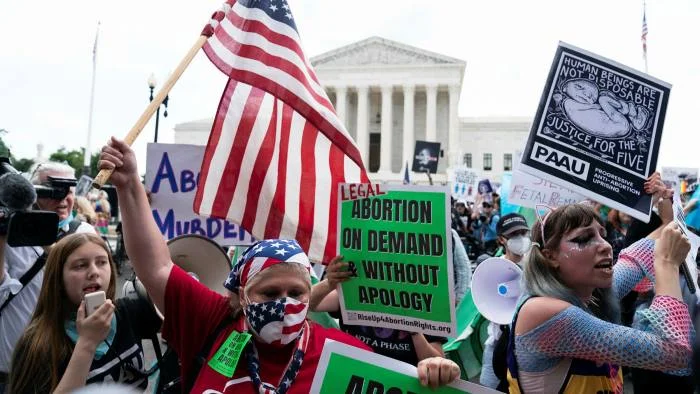
What will happen after the U.S. Supreme Court's ruling on abortion?
Periskopi(4 years ago)
(4 years ago)What is expected to happen now that the Supreme Court rejected the constitutional right to abortion? The verdict brought down “Role against Wade”, or the 1973 Supreme Court ruling, which had given women the right to abortion throughout the United States. Now, individual states have the right [...]
The verdict brought down “Role against Wade”, or the 1973 Supreme Court ruling, which had given women the right to abortion throughout the United States. Now, it's individual states that have the right to decide.
What does the decision mean for individual states?
Even before the Supreme Court's final decision, the laws of American State on abortion changed greatly. The republican-controlled states had more restrictive laws than those controlled by Democrats. After the Supreme Court ruling, the states will be able to decide whether abortion is legitimate.
In what countries is abortion expected?
Thirteen countries had previously passed abortion - restricting laws that would come into force if the Supreme Court overturned the right to abortion as a constitutional right. Some of these laws have already entered into force, while others will begin implementing 30 days after the Supreme Court's ruling.
Where else will abortion be restricted?
Some U.S. countries have had restrictive laws that were never abolished before the 1973 decision, although abortion was known for nearly 50 years as constitutional right. Other countries, however, do not secure or defend the right to abortion in a clear way. Twenty - six states are likely to ban, or enforce severe abortion restrictions, according to the Gutmacher Institute, a group working in support of the right to abortion.
Where is abortion protected?
Sixteen American states and capital, Washington, defend the right to abortion, according to the Gutmacher Institute. Protection is based on state laws, constitutional changes of state, or the decisions of the Supreme Court of State.
Can women travel to other countries to have an abortion?
There are no restrictions on women who travel from one country to another to have an abortion. U.S. Attorney General Merrick Garland said the Department of Justice would protect women seeking abortions in countries where it is legal. Abort rights activists say the possibility of abortion will be more difficult for poorer women who have no means to travel, or are on such contracts that would make travel abroad difficult.
Will abortion be treated as a crime in some countries?
None of the states that have restricted the possibility of abortion have committed a crime for a woman to seek abortion. Instead, they have threatened criminal acts against health care clinics and the removal of licenses for doctors.
Will Congress Be Involved?
Congress, theoretically, can pass a law that made abortion legitimate in all 50 countries. However, under current rules of operation, 60 votes would be needed in the Senate to adopt such a law. The Senate, in the current mandate, is divided into 50 republican and 50 democrat votes, making such a law impossible to adopt. Even if Congress approved such a move, there is no guarantee that it would not be brought down by the Supreme Court.
How has the administration of President Beden reacted?
President Biden has condemned the Supreme Court's decision, and has acknowledged that it has no executive power to allow the right of abortion to continue. Senior democratic officials have called on the president to take certain actions at the federal level. They have sought, among other things, to allow abortion procedures on federal government territory in countries that limit abortion rights, facilitate access to abortion drugs, and federal assistance to women seeking abortion in other countries.
How will the decision affect other legal precedents?
It is not clear what effect the Supreme Court's decision will have on other judicial precedents. Supreme Court member Christine Thomas said the court should examine “decisions on other cases of the past, including those affecting the marriage of same-gender persons and the breach in contraception. It is unclear whether other judges agree to review such cases. / VOA