11 minutes ago
Germany does not change stance on Kosovo-Serbia dialogue, expects mutual recognition
Periskopi(4 years ago)
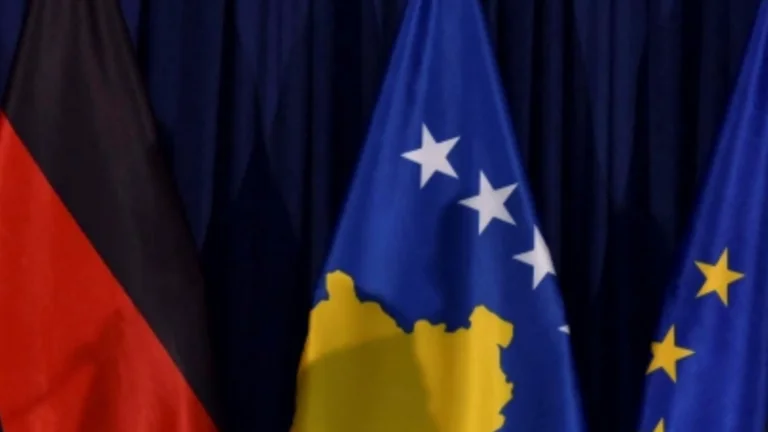
(4 years ago)German Ambassador to Belgrade Thomas Schieb has said Berlin's stance on dialogue between Pristina and Belgrade has not changed, and that at the end of the normalisation process mutual recognition of both sides is necessary. At the end of his four-year mandate in Serbia, he says the framework for negotiations [...] is clearly set.
At the end of his four-year mandate in Serbia, he says the framework for negotiations between Kosovo and Serbia, which is under way with the support of the EU and envoy Miroslav Lajcak.
The German diplomat stated, among other things, in an interview for FoNet that his country, Germany, offers unlimited support for the process.
“At the moment, dialogue between Serbia and Kosovo is slow, but it is important for us to reach a legally binding agreement on normalising relations, as this will speed up the membership process of both countries in Block”, he said.
Schieb estimates there is no political will to make faster progress and achieve some results, but stresses that progress has recently been made in energy co-operation, even though according to him it remains to be seen how this agreement will be realised.
We expect dialogue to continue and work constructively for resolving the problem, Schieb stressed and reminded that German Chancellor Olaf Scholz was involved in meetings with Kosovo Prime Minister Albin Kurti and Serbia's president, Aleksandar Vuciq, in that process.
The German diplomat denied that his country's stance had changed over the outcome of Brussels' dialogue.
The “needs to normalise relations between the two countries and ultimately is mutual recognition, which Chancellor Scholz clearly declared. Until then, there will still be much work to do”, Schieb explained.
Asked Serbia's stance on Russian aggression against Ukraine, Schieb initially responded that the desire of all is to end the war as soon as possible, and that according to him the EU, as a community of values, imposed sanctions against Moscow for that purpose.
Serbia, as a candidate for EU membership, must join all sanctions and measures taken by the Union. After all, it is Serbia's decision whether and when it will do so. We have clearly said that we expect this from her”, the Berlin envoy declared in Belgrade.
Speaking of the EU integration process, he stressed that at the moment Serbia meets all the established conditions, it sees nothing that would prevent its membership.