6 minutes ago
Confirm Vuchiqi: Zagreb twice rejected his visiting request there
Periskopi(4 years ago)
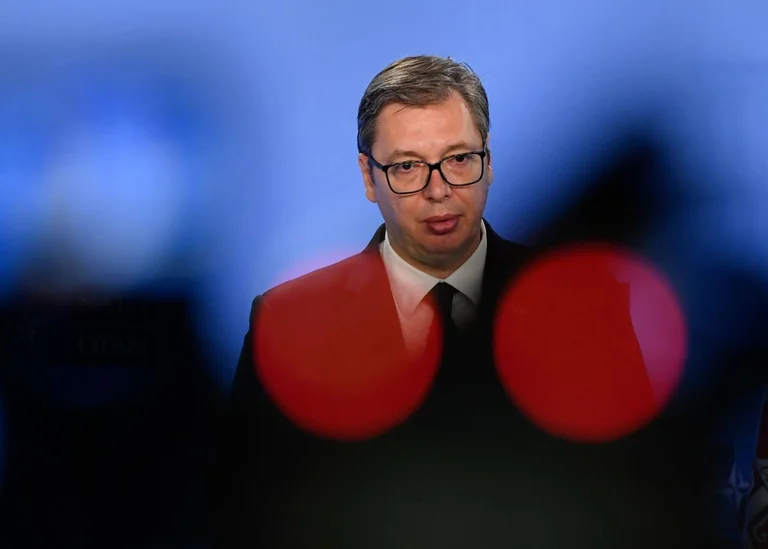
(4 years ago)Serbian President Aleksandar Vuciq declared during a public appearance Monday, 18 July that Croatian authorities had twice rejected his request to visit Jasenovac, while accusing Zagreb of claims on meaningless “ ”. Commenting on the case of rejection by Croatian authorities to allow him a visit to <x2-private” at the complex [...]
Commenting on the case of his refusal by Croatian authorities to allow him a <x0private” visit to the memorial complex dedicated to the victims of World War II crimes, because it had not been officially announced, Vuciq said he had submitted requests for visits in September 2021 and in March of this year.
“We have received answers that the visit was not welcome at the moment. I said I don't care to hear that shit anymore, that it's not the right time, and that I just want to put in one flower and nothing more. And then they created this circus”, Vuciq said.
Serbia's president said he intended to go on a private visit, “without particular media coverage” and that he would not issue statements that would imply provocation.
The “is unfortunate since 81 years since the founding of one of the most terrible Nazi death camps in Europe, no Serbian president has been in Jasenovac. I was there on two occasions, but not as president. The goal is to show respect for the victims and nothing more than that”, Vuciq said, the REL reports.
Croatian authorities announced that the visit had not been warned and that the mandatory procedure for visits by senior officials was lacking.
Belgrade responded by condemning the decision and announcing it would implement a special control regime for all Croatian officials who want to visit Serbia.
I'm not going to sea, I wanna go to Jasenovac.
Vuciq criticised the media in Croatia and repeatedly returned to Croatian Foreign Minister Goran Grliq Radman's statement, which said the visit to Jasenovac was not a trip to sea and that it was a visit by a country president, where procedures need to be respected.
“I am not going to sea, I want to go to Jasenovac”, repeated several times Vuciq, adding that many citizens go to sea in Croatia and boast of that fact, but that “this wasn't his case”, and that especially he wouldn't go to Dubrovnik or Rovinj.
He added that Serbia always wants to have “civilized communication” with Croatia, but that after this event “we realised that Jasenovac is a banned country”.
“We will work not to be a banned place in the minds of Serbian children”, Vuciq said, and warned “major changes, systematic in the Serbian educational system” and that more and more will be invested in performances, new films, serials and books on Jasenovac.
Diplomatic Notes Exchange
Croatia's Foreign Minister, Gordan Grolic Radman, through a media conference, clarified on July 17th that Croatian authorities were informed through informal channels Vuciq was planning to visit Jasenovac and Pakrac and claimed he had delivered a protest note to Serbia. “Ua recalled that in the case of any visit by foreign officials, time, location and the visit plan must be reconciled between the two sides. Croatia has not been informed, this is unacceptable for Croatia”, he said.
After the dispute, Serbian Foreign Minister Nikola Sekalovic said Belgrade sent a request to Zagreb expressing Vuciqi's readiness to officially visit Jasenovac.
Because they rejected our procedure and are trying to counter our honesty, we are announcing that the president wants to come and that the visit will be accompanied by all that is needed on an official visit by a president of state”, Sakkovovic said at “Pink TV” on July 18th.
According to him, Serbia is submitting an official request for Vuciqi to visit Jasenovac on September 17th.
Zagreb still lacks official confirmation if request for Serbian president's visit has arrived
Jasenovac, a crash point between Croatia, Serbia
At the Jasenovac camp on the territory of then Independent State of Croatia (NDH), during World War II, widespread crimes have been committed against Serbs, Jews and Roma.
The number of victims at Jasenovac is the subject of disagreement between the official history of Serbia and Croatia, as well as charges on one side and the other for overexploitation or minimizing the number of people killed.
Belgrade and Zagreb also have unresolved issues -- thirty years after the war in the former Yugoslavia -- as finding the remains of missing people and prosecuting war crimes, while the two countries also clash over the border assignment on the Danube River.