12 minutes ago
“Vallac is our” Kosovo, Serbia after Energy Agreement
Periskopi(4 years ago)
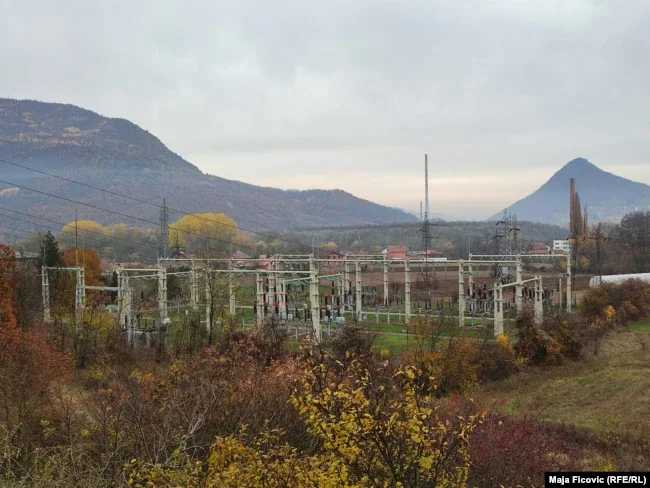
(4 years ago)Kosovo or Serbia? Who exactly will manage Vallach's electrical substation is unclear. The two countries, on 21 June, have adopted a guide for implementation of the Energy Agreement, which was reached in 2013 under dialogue for normalisation of relations, but has never been implemented. The guide also mentions trafo-station [...]
The two countries, on 21 June, have adopted a guide for implementation of the Energy Agreement, which was reached in 2013 under dialogue for normalisation of relations, but has never been implemented.
The guide also mentions Vallaci's trauma, which is located about eight kilometers from northern Mitrovica, inhabited by Serb majority.
Both Kosovo and Serbia claim to be owner of Vallaci, through whom they will distribute electricity to municipalities in northern Kosovo.
Currently, the Vallach substation workers are paid by Serbia's Electrical Network (Electrezha Srbije EMS), but receive instructions from System, Transmission and Electricity Market in Kosovo (KOSTT).
COMM STT: Vallachi is under Kosovo administration
From COSTT they say electricity is transmitted and distributed via the Republic of Kosovo's Republic of Kosovo's 400/220/110 kV and the 35/xx kV network (KEDS).
KED is Kosovo's power distribution company. By 2013, it is managed by a Turkish consortium and has exclusive authority to distribute electricity throughout Kosovo, as well as to manage and maintain assets on the ground.
The Energy Regulatory Office in Kosovo (ZRRE) gives license to the Serbian company “Drustvo Elektrosever D.O.” and ensures that the company's work is conducted in line with Kosovo laws.
The Kosovo Energy Regulatory Office (ZRRE) approved the license for the Elektrosever company on Friday for the supply of Kosovo's northern electricity.
The ZERE board voted by five votes for and none against.
Elektrosever is owned by Serbia's energy company, EPS (Electroprivreda Srbije), but in Kosovo it is founded with Kosovo laws.
This company will make both the supply and the billing of the electricity spent in the north.
From COSTT they say that after the ZRRE license, which was made Friday, Elektrosever will sign agreement to access market regulations and balance responsibility with COSTT.
So, according to legislation in effect, electricity across Kosovo's entire territory transmits and distributes licensed companies for these activities, COSTT and KEDS”, it says in a COSTT statement on Radio Free Europe.
It also stresses that Vallach is owned by COST. So COSTT has all the competencies of operation, maintenance and development of substation”, the statement said.
It is added that COSTT has planned “to revise substation and convert 110 kV high-tensive equipment to the Vallach “, so that “increases the security and credibility of the substation operation, as well as the security of electricity supply of the parties locked”.
“Vallac is of Serbia”
Serbia's Electric Network (EMS), on the other hand, says that “at Vallach's substation are six permanent employees. Everyone has work contracts indefinitely, which means they get their income at EMS”.
In Radio Free Europe's question on the further functioning of substation Vallach, EMS says this issue is the competence of the Office for Kosovo in Serbia's Government.
THE REL has addressed this office with the same question, but it has not received an answer.
The director of the Office for Kosovo in Serbia's Government, Petar Petkovovic, has told Serbian media 22 June that the Vallach substation will be owned by Serbia and that something like that “has never been questioned”.
“Just as it is our Elektrosever... is the Serbian company”, Petkovic said of Serbia's Radio-Television, adding that this “Serbian company will be present forever in Vallac”.
He has claimed that there are guarantees for this also from the European Union's special envoy for Kosovo-Serbia dialogue, Miroslav Lajcak.
<x0rahas>Crahas guides, we have two very important documents, here I have now exclusively brought the originals, the letter of the special representative for dialogue, Miroslav Lajcak, in which it says that Elektrosever will always be present at Vallach”, Petkovic said.
According to him, this means that no one can interfere in Vallach and no one can get the Vallacin”.
“Whoever understands the situation in Kosovo, knows that any intervention in Vallach, which presents the heart of the electro-energenetic system in the north... or if Pristina manages to get Vallaci, the north will remain without electricity”, Petkov has said.
He has added that Serbia has received assurances that COSTT and KEDS, “with the permission of the Serbian company Elektrosever, will be able to access Vallach”, which is not written anywhere on the guide published for implementation of the Energy Agreement.
Free Europe Radio has been addressed to the European Union, but also to the Government of Kosovo to confirm or reject Petkov's statements, that there are guarantees that COST and KDS cannot have access to Vallach without Elektrosever's approval, but that no institution has received answers.
With the 2013 Energy Agreement (for implementation of Kosovo and Serbia agreed on 21 June), consumers in the north will pay the current themselves, after 23 years. Elektrossever will make both the supply and the luck of the current there.
C ekueku: Kosovo property on Valacin cannot be disputed
Energy expert in Kosovo Ethem Ceku, at the same time the former minister of this sector, says Vallaci's substation is the asset of Kosovo and that its ownership cannot be disputed. Statements by the head of the Office for Kosovo in Serbia's Government, Petar Petkov, Ceku deems them unstable.
“Vallac is an integral part of the energy system in Kosovo, part of the assets of the Republic of Kosovo. The management issue remains a very difficult issue, which the Government of Kosovo must resolve. We are hoping that, at last, Serbia understands that energy problems are not local problems, so they are not the problem of reports only Kosovo-Serbia, but they are global problems”, Ceku tells Radio Free Europe.
He adds that if Serbia manages to extract the Vallach substation from Kosovo's energy system, then the door opens for many impact elements in the field of energy”.
“Politizing electrical power supply”
Vallaci's substation in northern Kosovo provides much of the electricity for northern Kosovo, where Serb majority population lives.
The hydropower plant at Lake Weyman is also supplied with electricity from the Vallach substation.
Ceku says Vallaci's importance has led Serbia to target ownership rights over this substation, while Kosovo insists on preserving property rights over it.
As he says, Vallach is the “power grid that connects through Ujaman and, through it, controls the entire entry of energy into the northern part of Kosovo”.
In this context, according to him, the case of the Vallach substation has also taken on political meaning.
This is the fundamental problem, because that part [the Kosovo version, inhabited by Serb majority] is radically politicising the energy issue, which is fundamental and fair civic issues. The very request to create an international company [Electernian] and by refusing to accept Kosovo's energy system, indicates that the Serbian side, unfortunately, is placing [the power supply] in political context”, Ceku says.
Vallach's substation is one of the first substations built in Kosovo in the transmission system. It is linked to several high-voltage 110 kV (kilovolt) lines: the Trepca substation, the Skenderaj substation, the Usman substation, the Ilirida (Mitrovica) substation, and the Palaj substation (close to Pristina), as well as the Novi Pazar 2 interconective Kosovo-Serbia substation.
Vallachi's role is reportedly to provide reliable electricity supplies to the parties locked in this substation, within the Kosovo Broadcasting System.
Also, this substation is important for the physical exchange of electricity between Kosovo and Serbia through interconcretional 110 kV Vallach-Novi Pazar line.