a few seconds ago
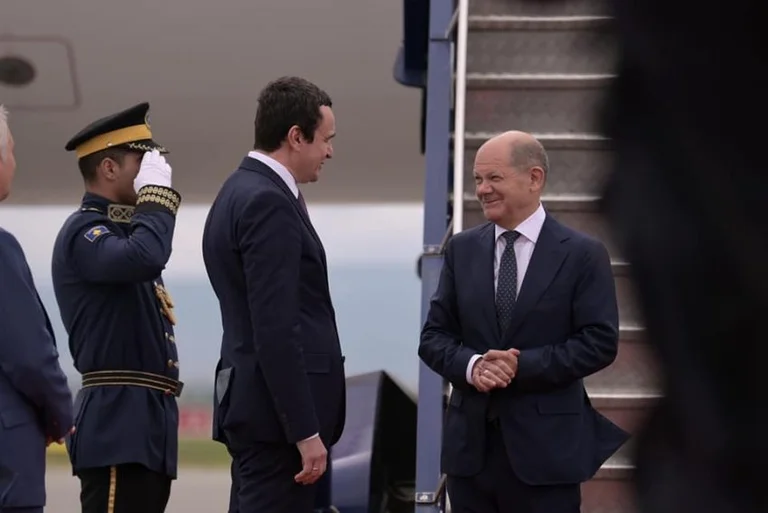
Scholz in Pristina: Why this visit is very important, reports the German newspaper
Periskopi(4 years ago)
(4 years ago)Olaf Scholz has travelled to Kosovo and Serbia, where he will then visit Greece, Northern Macedonia and Bulgaria. Conflicts are multiple, the expectations of the German federal Chancellor are high, perhaps too big. The expectations of the first German government are great, however, may be slim. But for [...]
Olaf Scholz has travelled to Kosovo and Serbia, where he will then visit Greece, Northern Macedonia and Bulgaria. Conflicts are multiple, the expectations of the German federal Chancellor are high, perhaps too big. The expectations of the first German government are great, however, may be slim.
But for that, it is not the Chancellor's fault -- as far as Europe's stalled Balkan policy -- writes Francofurter Congress. The fact that Scholz starts his trip to Pristina and only later travels to Belgrade is very important for Kosovo.
Foreign Minister Annalena Baerbox did the same: Pristina first, then Belgrade. But Kosovo expectations by the German Chancellor are otherwise high -- perhaps too high. Kosovars hope on two things in particular from Berlin: support for visa liberalisation that has been required for years and for membership application to the Council of Europe. As for visa liberalisation, there is hope in Kosovo that after parliamentary elections in France there will finally be some progress, and Kosovars will be allowed to travel freely to European Union countries by 2023. The country has been meeting technical requirements for years, but has been blocked for political reasons. For Kosovo and the government of the prime minister, Albin Kurti, lifting visas would be a major success.
However, not only in France do many Kosovo Albanians fear that they may abuse the removal of visas, applying for asylum. But in Pristina they have made sure this danger is not real. In any case, residents of Pristina want the Chancellor to be clearly engaged in visa-free travel. On the other issue is German support for Kosovo's application to the Council of Europe, while in the background there were some disagreements between Berlin and Pristina.
Pristina is taught that concerns have been raised in the foreign ministry that now “is not the right time” to apply for membership. Even after the Russian prosecution of Crime, we were told that now was not the right time to apply. If we act according to such advice, then time is never right”, a Kosovo diplomat says. Mathematically, there is a majority in the Council of Europe for Kosovo's application at least if all states that have recognised Kosovo's independence also vote for the admission of the newest European state to the Council of Europe. After Russia's expulsion, the time of Kosovo membership has finally come, they say in Pristina.