18 minutes ago
First Monkey Li case confirmed in Greece
Periskopi(4 years ago)
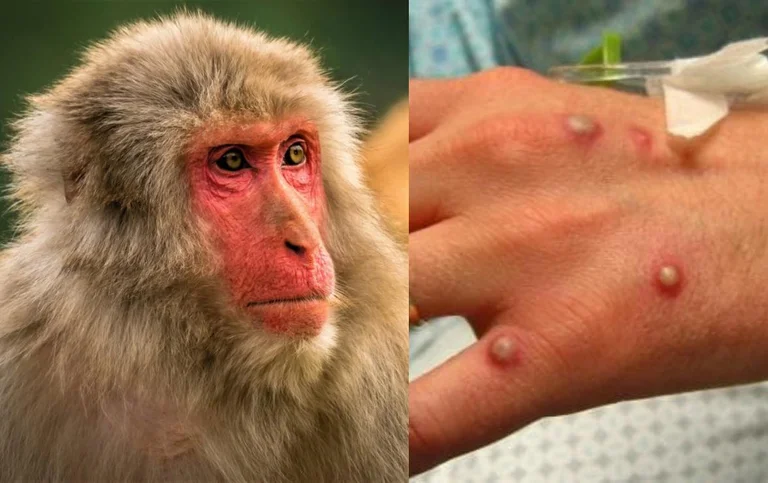
(4 years ago)Greek media have indicated that the first case of monkey smallpox in the neighbouring state has been confirmed. Greek health authorities announce Wednesday evening that one person, who had recently returned from Portugal, has shown all the symptoms of monkey oak. Actually, he's hospitalised [...]
Greek health authorities announce Wednesday evening that one person, who had recently returned from Portugal, has shown all the symptoms of monkey oak. Actually, he is hospitalised where he is in stable condition.
According to Greek media, this person has been given an initial test at the Public Health Laboratory from which he has proved positive with this virus.
What's a monkey's drop, the new virus that's bothering the world?
An extremely rare disease called ape's permit, close to sheeppox, appears mainly in West and Central Africa. But recently, numerous cases have been detected in several countries of the world, such as the US, Canada, Europe and other countries.
According to the U.S. Center for Disease Control and Prevention (CDC), these cases are related to trips from one country to another, as well as the importation of animals infected with the virus.
The situation is not presented as alarming by health experts, but they nevertheless call for caution.
What are the symptoms of monkey oak?
The virus has a 14-day incubation period, according to the CDC. The first symptoms are that of common flu, such as temperature, trembling, fatigue, headaches and muscles, and the breath of lymph nodes, which help the body fight the virus and the disease.
Then, the infected person experiences the appearance of rough spots on his face, body, and mouth. Pusses are filled with juice and often red. They disappear after a period of two or three weeks.
There is no specific medicine for this disease, the cure contains only helpful treatments. However, for this infection there is a” vaccine, Jimmy Whiteth, professor of international public health, said through a statement to the media in “London School of Hygiene & Tropical Medicine”
How the Monkey Leaven Spreads
Experts say that the spread of this virus serves close contact with an infected person. Neil Mabbott, chief of the immunopathology casteon at the University of Edinburgh, said through a statement that the virus is transmitted through the touch of infected skin, mucous membranes, respiratory sprays and body fluids.
After the wounds have been healed, the crust falls into dust, but it can be blown through the air by other people”, says Dr. Michael Skinner, professor at the medical department at “Colge London”, specializing for infectious diseases.
Human transmission occurs mainly through respiratory sprays, but since they remain in the air for only a few inches, close contact has to last a few minutes.
Death
According to Michael Head, a researcher at Southampton University in the United Kingdom, a monkey's leave can be translated into a serious infection. The mortality for this type of virus has always been around 1%”, he says. “Varates are created often in areas where population income is low and access to health services is limited”. However, he felt that it would be very unusual to see an explosion of cases in developed countries. “We won't be able to broadcast at the level of Ovid”, he said.
According to the CDC, the common disinfectants we keep around the house can eliminate the monkey oak virus.
The Origin of the Virus
According to the CDC, the monkey's permit was named in 1958, when a disease similar to sheeppox spread into two groups of monkeys, held for scientific studies. However, the main host of this virus is still unknown. According to the CDC, African rodents allegedly broadcast it. The first case of monkey oak in humans was recorded in 1970 in the Democratic Republic of Congo at a time when the whole world was making great efforts to eliminate sheeppoon. After almost 40 years without reported record, the monkey's permit resurfaced in Nigeria in 2017. Since then, over 450 cases have been reported in Nigeria, and at least 8 of them have served as exporters of the virus in other countries. /a2cn