2 minutes ago
Five major NATO challenges at Madrid Summit
Periskopi(4 years ago)
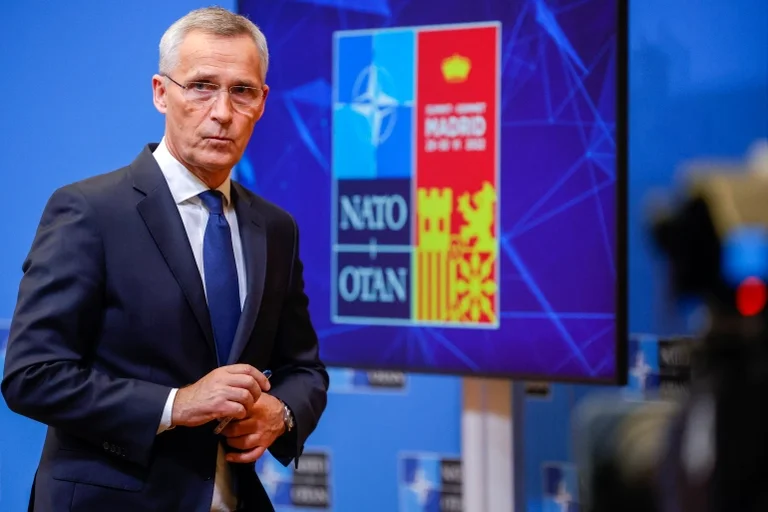
(4 years ago)Summit NATO this week comes at a critical time in the alliance's 73-year history. The Russian invasion of Ukraine has been named the West's biggest strategic companion since the September 11th 2001 attacks. NATO is the only alliance capable of protecting Europe from further Russian aggression, but [...]
The alliance faces a number of challenges, starting with hybrid attacks for destabilizing the Balkans, militarizing space and what to do about increasing China's military power. For the first time, this Sam of NATO will address what it calls a “challenges that Beijing distributed for our safety, interests and values”, Stoltenberg said. Below are the most sensitive issues expected to be on the table this week.
Avoiding War Cross in Ukraine
NATO faces a balanced act. The world's most powerful military alliance, consisting of 30 states, three with nuclear weapons ( The US, United Kingdom and France do not want to go to war with Russia. President Putin has reiterated the position that the West has a powerful nuclear arsenal, and even a small-level confrontation at the border level could soon slip out of control.
So the biggest challenge in the past four months has been and continues to remain like helping Ukraine defend itself against this unprotested invasion without becoming part of the war itself.
Maintaining Unity Over Ukraine
If Russia were only to attack Donbas and not all Ukraine on all three sides, then there would be a possibility that we would not see this extraordinary unity of the West. The six packages of EU sanctions are seriously damaging Russia's economy, and now Germany has cancelled the billions of Nord Stream 2 gas pipeline project that would bring Russian gas to northern Germany.
Baltic Security
This region has the potential to become a lighting point between NATO and Russia. This month Russia threatens “against practical response” as Lithuania blocked transportation from its territory towards Russia of some EU-sponsored goods. Estonia, Latvia, and Lithuania have once been part of the Soviet Union. Today, they are independent states and all NATO members. They are too small to record an incubation concentrated by a reconsolidated Russian army. Baltic leaders now want at least a division of NATO forces to be deployed in each country as a serious prevention. This seems to be a hot topic in Madrid.
Permission of Finland and Sweden to Membership
Finland and Sweden, both endangered by the full Russian invasion of a sovereign country, have decided to leave neutrality and join NATO. The alliance is expecting them with open arms, but this is not that simple. Turkey, a member country since 1952, has been blocking their membership due to the cultivating of Kurdish separatists Turkey calls terrorists.
Urgent Growth in Protection Expenses
For now, NATO members are obliged to spend 2% of their GDP on defence, but not all do so. Recent measures by SIPRI show that the United States spends 3.5% in defence and Great Britain spends 2.2%, while Germany spends only 1.3%. On the other hand, Russia spent 4.1% of its GDP on defence.
Countries must increase defence spending if they want Russia to be prevented from further aggression. But continuing reductions over the past decades have raised concerns if NATO still has enough measures to prevent a future Russian invasion. /Periscopi/