30 minutes ago
EU summit may disappoint Kosovo, Free Europe cites new visa deadline
Periskopi(4 years ago)
(4 years ago)A summit between EU leaders and Western Balkan leaders will be held today and tomorrow in Brussels. Free Europe Radio warns of all hopes for Kosovo to get visa liberalisation and provides a new deadline for the issue. Last week, the European Commission recommended that Ukraine and Moldova be [...]
Last week, the European Commission recommended that Ukraine and Moldova be granted candidate status for the European Union, while Georgia must meet a series of conditions before considering candidate status.
At a summit in Brussels on 23-24 June, leaders of the 27 EU states will consider all three requirements for candidate status.
In addition to those possible developments, however, there are other major developments worth looking at.
Adopted candidate status for Ukraine, Moldova... but not for Georgia
All indicators suggest EU leaders will approve recommendations set by the European Commission last week.
That means Ukraine and Moldova will receive candidate status on the evening of June 23rd, but must meet a series of conditions to further advance their respective accession routes.
Georgia, on the other hand, will first face a series of conditions before the country achieves candidate status.
Perhaps, however, the most interesting part in the latest draft of the EU summit seen by Radio Free Europe is a sentence regarding Ukraine and Moldova, which says: “The Council [European] will decide on further steps after all these conditions are fully met. ”
Does this mean that Ukraine and Moldova will be ready to open accession talks after these conditions are met? Or does it mean that more conditions will be set before each step to follow?
This would be the first time the EU would grant candidate status, but it would also join conditions, so Ukraine and Moldova would be in very unexplored territory.
Possible disappointment for the Western Balkans again
While EU leaders are likely to take the historic step to show that Ukraine, Moldova and Georgia will one day be part of the bloc, those hoping in the Western Balkans' future in the EU can face another disappointing summit.
Leaders from Albania, Bosnia and Herzegovina, Kosovo, Montenegro, Northern Macedonia and Serbia are all expected to be in Brussels to meet their EU counterparts on 23 June for a meeting of the Western Balkans before the largest summit.
Northern Macedonia, Montenegro, Albania, Serbia and Turkey are all official candidate countries to join the EU, yet Bosnia and Kosovo are only potential candidate countries.
On June 21st, Albanian Prime Minister Edi Rama asked if it would make sense for them to appear, if the meeting results in another “jo”, following similar gatherings where Brussels did not share any good news.
He has confirmed his presence, even though the atmosphere among the aspiring Balkan countries is more than slightly weak.
There is still a chance that northern Macedonia and Bulgaria can fix their differences before or during the summit, so that Skopje, together with Albania, will get a green light for starting EU accession negotiations.
But Bosnia and Herzegovina will not receive candidate status, as the overwhelming majority of EU member states believe it has not carried out sufficient reforms in recent years.
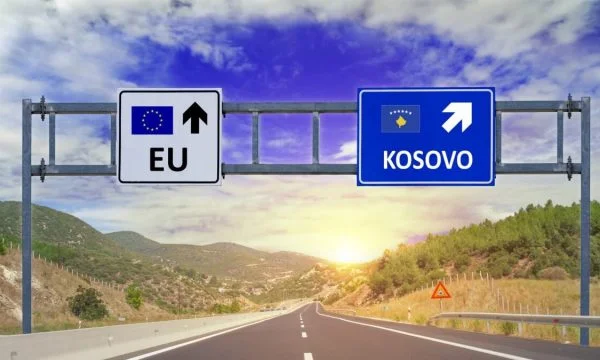
Meanwhile, Kosovo's hopes of eventually obtaining visa liberalisation appear to be dim, even though there may be a commitment to launch the political process on that front later in autumn.
New European Political Community of Macron
This summit will be focused on EU enlargement, but the idea of boosting club membership still makes some countries, especially in the western part of the EU, a bit troubled.
That is why EU leaders will also discuss the recent idea of French President Emmanuel Macron for a new European Political Community during dinner on June 23rd.
The French document, distributed in Brussels last week, calls for the creation of a new political body with decision-making competencies, which will be collected several times a year at different political levels and will be open to all European states “that share a joint group of democratic values”.
While Paris has tried hard to explain that this new creation would not be a substitute for EU enlargement, some countries are very careful, for fear that Ukraine and Western Balkan countries would remain in a sort of “halves of the EU” road.
Wait for some heated exchanges for this, especially with a French president coming from a real noise in parliamentary elections over the weekend and may not be too keen on compromise.
Russian Ideas Running Out
A large part of the summit, obviously, will be dedicated to Russia's war against Ukraine, but there is a special feeling, both inside and outside Brussels, that the bloc is running out of new ideas.
There will be a call to further boost military support for Kiev and give Ukraine another financial assistance package worth up to 9 billion euros.
When it comes to wheat stuck in the port of Odessa, because of a Russian naval blockade, many in Brussels still hope that the UN secretary general may be able to resolve the issue.
And, in terms of Moscow's vocal threats against Lithuania for blocking Russian goods sanctioned by the EU to enter the Russian enclave of Kaliningrad, there are still discussions whether any written support for Vilnius will enter the final declaration.
Even in terms of sanctions, fatigue is evident in Brussels' power corridors.
After having had trouble adopting the last round of restrictive measures, especially a Russian oil embargo with multiple gaps, the draft is rather unclear: “Puna will continue for sanctions, including strengthening implementation and preventing bypass”. / REL