9 minutes ago
Alt: Schelz toʹe put pressure on Serbia for recognition of Kosovo
Periskopi(4 years ago)
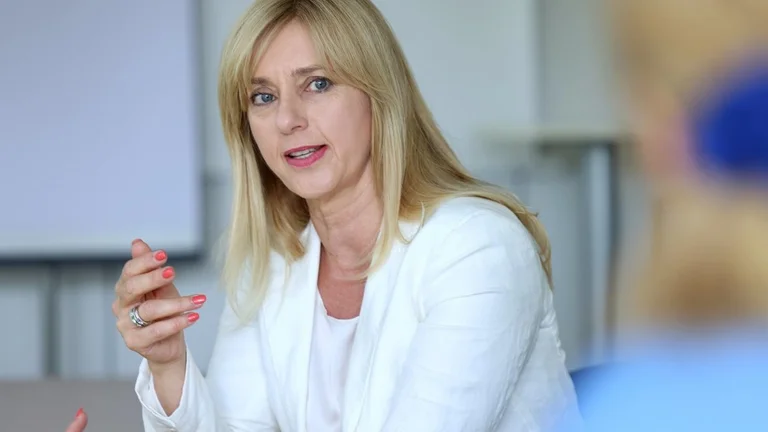
(4 years ago)German Chancellor Olaf Scholz kicks off a two-day visit to the Western Balkans on Friday. The chairman of the German Bundestag Human Rights Commission in an interview with DW hosts clear messages to Serbia. Deutsche Welle: Mrs. Alt You headed the Commission for Human Rights in the German Bundestag and you've been reporting for many years for [...]
Deutsche Welle: Mrs. Alt You headed the Commission for Human Rights in the German Bundestag and have been reporting for many years for the Western Balkans in the FDP parliamentary group. German Chancellor Olaf Scholz will soon visit several countries in the region. How do you assess the human rights situation there?
Renata Alt: Of course, the human rights situation in the Western Balkans should always be kept in observation. There is not yet enough progress, there are not sufficient reforms, even human rights coming to Serbia by reducing. Especially in the area of media freedom, the control over which it is massively increased.
Would you call Serbia an authoritarian regime?
In fact, there are nongovernmental organisations that say on the basis of long-term surveys that Serbia has become a hybrid state or autocracy. And this is disturbing, especially when it comes to an EU candidate country.
What are your expectations from the German Chancellor's visit to the region?
It would be important for Chancellor Scholz, during his visit to Serbia, to exert pressure on Aleksandar Vuciqi and the future government in Serbia, and to make it clear that Serbia must support European Union sanctions against Russia and clearly condemn war crimes committed by Russia in Ukraine. Serbia must end the swing policy and decide: does it want to go to Russia or is it really interested in EU membership?
Such appeals are often made to Mr. Vuciq, but so far he has not changed the course. On the contrary, Serbia just concluded a new deal with Russia on gas supply. Why did Germany not react to this agreement at all?
Unfortunately, Germany has made itself very dependent on Russian gas, thanks to even a failed policy by Chancellor Merkel. That is true in Serbia. The Serbian government should guarantee citizens apartments and warm homes in winter. But in the long term, there is no point in connecting with Russia and buying weapons from Russia and China. There are also many companies in Serbia that belong to Russia. It would be important that these companies or these individuals be included in the list of sanctions, as happens in all other EU countries.
What does Germany have in its power to turn Serbia in the right direction?
It's important to intensify dialogue. So I welcome the Chancellor's visit to the region. Although the moment seems strange to me, right after signing the deal with Russia. I'm afraid Serbia will use Chancellor Scholz's visit to some kind of propaganda different from what we would like in Germany. Chancellor Scholz's visit will be interpreted by Serbian media as backing for Aleksandar Vuciqi's policy.
Also disturbing were President Vuciq's words, when he swore after the elections, that he would never recognise Kosovo's independence. It is therefore important for Chancellor Scholz to make it clear that Serbia must recognise Kosovo's independence so that it will continue to be considered a serious and reliable candidate for EU membership.
I think that as a means of pressure, financial resources can be used. If Serbia continues its fluctuating policy and increasingly leaves democracy, I suggest freezing funds and considering suspending EU accession negotiations. Of course, Kosovo should also draw close to Serbia, for example, is not too wise to prevent holding Serbian elections in Kosovo. So both sides must move towards each other. However, it is important that all Western Balkan countries be given a clear European perspective. It is incomprehensible why northern Macedonia does not start membership negotiations with the EU, especially after changing the name.
The European perspective has been constantly highlighted by former Merkel, when she traveled to the region. However, there was no movement. What was the reason?
We as the FDP have criticised the previous government's foreign policy as naive. We demand that clear terms be communicated. It should be in our interest to have peace in the Western Balkans. Serbia is not only involved in the Kosovo conflict, but also in separatist tendencies in Republika Srpska. Therefore, we must make it clear that if we want to remain united and have peace and security and respect human rights on the European continent, candidate countries should also represent our values.
Northern Macedonia is blocked by Bulgaria's veto. How realistic is it, for the opening of negotiations to be done by removing the principle of unanimous decision-making in the EU?
Russia's fight against Ukraine changed many things in Europe. Ukraine has also applied for EU membership. Of course, it must be acknowledged that reforms in Western Balkan candidate countries are much more advanced than in Ukraine. And so that the EU can make decisions on enlargement, it must also take into account which reforms would be necessary and perhaps give up the principle of unanimity.