2 minutes ago
University Studies Programs Displaced With Work Market Needs
Periskopi(4 years ago)
(4 years ago)Many graduates and few professionals who meet the needs of the labour market, the problem is presenting Kosovo, education experts are assessing, reports Online Economy. Based on a report that was released days ago, there is a discussion of the incompatible of higher education activities with the needs of the labour market. So [...]
Based on a report that was released days ago, there is a discussion of the incompatible of higher education activities with the needs of the labour market.
Therefore, experts say the Government should have political and educational strategies as well as not be allowed to accredit programmes for academic advancements only.
Dibran Hoxha from the Organisation for Quality Growth (ORCA) for Online Economics said there is great displacement between the skills of students who win at university with labour market needs.
The “is in some form a big confusion that no one knows what the labor market needs and what the students should acquire during studies”.
According to Hoxha, most UP guidelines are “cark” of professors to set hours and rates to discredit programmes, adding that more graduates are in the Jury and Economics Faculty.
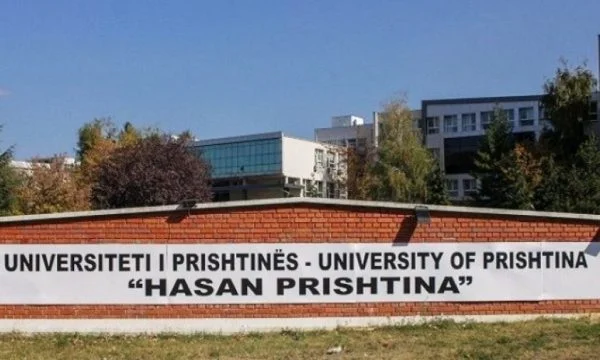
The majority of programmes at the University of Pristina, since they are paid on our taxes, are a kind of tight slate of professors to set hours, rates and standards among them in this way to reason in a shape, with accredited programmes even when there is no need for the labour market. More graduates we have not released this statistics, but in all likelihood it should be the Jurdic Faculty, Economics because they have many students who accept”, Hoxha said.
Hoxha says institutions have no communication among themselves, so according to him, the Ministry of Education would have to draft education policies in order to connect the labour market with the fields of study.
There is no communication between institutions. We're assuming that the Ministry of Education drafts policies and tells us that in the coming years we need so many students in these areas and we give priority in these areas, then it would be a state orientation of education policies and inter-market interconnection, which we've heard from many governments even from this Government. But the Ministry of Education does not have policies, therefore the Accreditation Agency that makes software accreditation, does not have the direction to discredit these programmes, does not have statistics, does not measure”.
Even Youth Qehaja, director of the Ed-Good Institute in an interview for Online Economy, said university programmes are not accredited in response to market demands, but in response to the number of carriers for the programme.
It's very obvious and this is evidenced by everyone, and that point in the first place by the students who are offered from university studies is incompatible with the real needs of the labour market, so in our country public university launchs programs not in the service of students, but for the respect of academy staff”.
Qehaja for EO says that in this way only benefits the professor for academic advancement, so according to him, the Government of Kosovo should support market demands.
It's important that public universes return to entrepreneurial universities, thus overcome, restrictions in mind, administrative bureaucracy and the illusion of making science and publication. Of these, not the student benefits, but only the professor for individual academic advancement. When that changes, and we have a strategic entrepreneurship, promoted by the Government, then market demands will be met more quickly and in the interest of students”.
Medhain Hashani university economics professor says the state should have strategies in all aspects that should be consistent with the labour market.
Each state should have its own strategies and state priorities. So even our Kosovo state should define priorities as in terms of economy, education, health and all these priorities that are made must be a working market reform because the main orientation of all graduates in the future should have a secure place of work”.
Hashani further said the Ministry of Finance and Education should determine priorities based on labour market requirements. / EO