8 minutes ago
Reporters Without Borders: Kosovo media freedom problem
Periskopi(4 years ago)
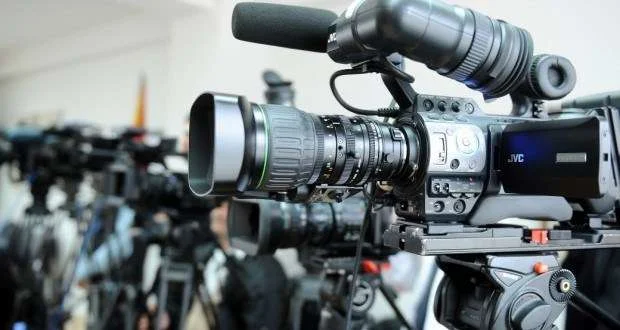
(4 years ago)Kosovo has noted progress in media freedom, the World Press Freedom Index published by Reporters Without Borders shows. In this index, Kosovo this year ranks 61st, compared to its 78th position, which it held in 2021. The growth trend comes after the fall has marked [...]
In this index, Kosovo this year ranks 61st, compared to its 78th position, which it held in 2021.
The growth trend comes after last year's decline in eight positions compared to the 2020 ranking.
But, even in spite of progress, Kosovo continues to remain in the middle of countries with the problematic “ ”, as Reporters Without Borders estimate.
Other Western Balkan countries, such as the following: Albania, Northern Macedonia, Serbia, Montenegro and Bosnia and Herzegovina.
Of them, like Kosovo, progress has marked: Northern Macedonia in 57th position from 90; Serbia is ranked 79 out of 93 and Montenegro in the position of 63 out of 104.
Albania has undergone deterioration from its 83th position last year to 103rd position.
Similarly, Bosnia and Herzegovina: Last year it was 58, this year at 67.
Situation in Europe
Reporters Without Borders' report comes on World Press Freedom Day, marked every May 3rd.
The report praises the status of journalism in 180 countries and territories of the world.
In Europe, according to the report, Norway remains at the helm of the World Press Freedom Index, but, however, there are considerable inequality.
Estonia and Lithuania two former communist states are now in the first ten, while the Netherlands is gone.
Greece, meanwhile, has replaced Bulgaria as last in Europe.
These developments and inequality reflect three main trends, the report says.
First: killing journalists. The report specifically cites the murder of journalists: Giorgios Karaivaz in Greece and Peter R. De Vries in Holland in 2021.
“responsible for the murder of Daphne Carwana Gallizia in Malta and Jan Kuciac in Slovakia, before 2020, has not yet been sentenced to”, the report also reported.
Citing the second reason for the situation on the continent, the report says journalists wrongly equated with governments have faced hostility from protesters, who have rejected anti-commerce measures.
“In Germany, France, Italy and the Netherlands, journalists have been physically attacked, while facing insults and threats of all kinds across the continent”, the report says.
The third reason, according to the report, is that some European Union and neighbouring governments have hardened the laws against journalists, especially in Slovenia, Poland, Hungary, Albania and Greece, but there are no details about what laws to be discussed.
The last five countries on Reporters Without Borders' list, where the situation with making journalism is considered to be a very serious “”, are: North Korea, Eritrea, Iran, Turkmenistan, and Myanmar. / REL