3 minutes ago
Kosovo dependent on remittances sending exiles, but on what money is spent
Periskopi(4 years ago)
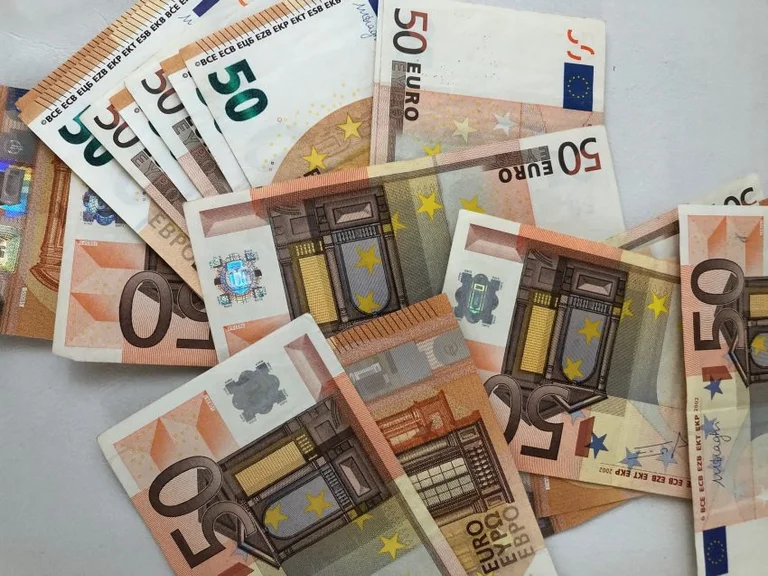
(4 years ago)Last year alone, according to Kosovo Central Bank data, remittances have seized the value of around 1.2 billion euros. The amount has been a record for Kosovo. According to international financial mechanisms, these remittances have also affected economic growth in Kosovo, which, last year, has been over 10 percent. In 2013, [...]
According to international financial mechanisms, these remittances have also affected economic growth in Kosovo, which, last year, has been over 10 percent.
In 2013, The CEC has seen a decline in remittances in the next five years because, as it was said at the time, “creating new generations in diaspora and weakening ties between diaspora and Kosovo”.
However, that did not happen. According to Lirim Krasniqi, from the Germin organisation, which deals with diaspora issues, remittances have continued to flow to high levels due to continued migration of citizens from Kosovo.
“The slight migration procedure”, which is a document of the Kosovo Ministry of Internal Affairs and covers the period 2018-2020, estimates that 71,799 people have emigrated from Kosovo.
According to this minister, Kosovo faces an average migration of 23,933 people per year, dropping 1.3 percent of the general population.
According to Kosovo Statistics Agency data, the number of Kosovo citizens living abroad by the end of 2018 has been over 850,000.
The largest number of them live in Germany and Switzerland, and the largest amount of remittances in Kosovo, according to the CEC, are sent exactly from these two countries.
Krasniqi, from the Germin organisation, says that in the short term, there is no expected to be a decline in remittances, they may begin to fall gradually, over the years.
Where are the remittances spent?
Economics Professor at the University of Pristina, Berim Ramosaj, predicts that the level of remittances will not decline until the next ten years, due to migration waves.
Speaking to Radio Free Europe, he says 70 percent of remittances reaching Kosovo are spent on family budgets.
According to him, it would be good for diaspora vehicles to be guided into investment projects.
“Remits are a loud voice in the income sense and must be respected... But government interest should be guided, not in the arbitrary sense of funding, but in encouraging people to invest in Kosovo”, Ramosaj says.
The current Kosovo government, which took office in March last year, has envisioned in its plan the creation of several instruments, through which diaspora capital could be channeled into investments, generating jobs. The Government's plan has been envisioned since the first year of governance, to issue treasury bonds dedicated to the diaspora. It is not clear, however, whether or not this plan has been implemented.
In late March, the Government of Kosovo has said that foreign direct investments in Kosovo over the past year have increased by more than 21 per cent compared to 2020.
In response, the chairman of the Kosovo Afarism Oda, Skender Krasniqi, had said the world that foreign investments mainly in the real estate sector are largely attributed to the Kosovo diaspora, which, according to him, invests considerable amounts of money in building houses and buying apartments.
Kosovo with greater dependence on region
According to the European Statistics Agency, Eurostat, Kosovo has the largest dependence on remittances, compared to other Western Balkan countries.
Eurostat data shows that, in 2020, Kosovo has accepted 1.2 billion euros in remittances or 18.5 percent of Bruto Product; Albania has accepted 1.27 billion euros in remittances or 9.8 per cent of Bruto Local Product; Bosnia and Herzegovina 1.63 billion euros, or 9.3 percent of the local Bruto Product; Montenegro 524m euros, or 9.3 per cent of the local Bruto Product and Serbia 3.37 billion euros, or 7.2 per cent of Bruto Product.
The United Nations General Assembly has approved the International Family Remitency Day, which is marked every June 16th. This day honors more than 200 million world immigrants, women and men who send money home for over 800 million family members.