18 minutes ago
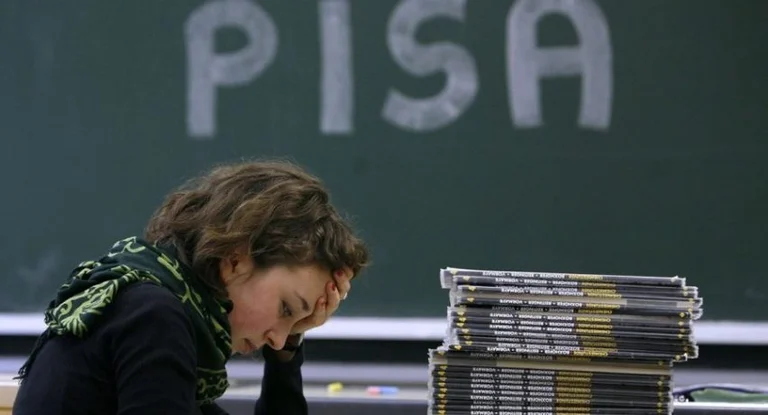
Students attendee on test P ISA preparing for additional lessons
Periskopi(4 years ago)
(4 years ago)Kosovo students' knowledge will once again be subjected to international test PISA. Seven thousand students, from 15 years old, selected from 237 Kosovo schools, will be tested on days scheduled from 25 April to 20 May. P ISA, or the Student International Rating Programme, is a worldwide study of the Organization for Co-operation [...]
Seven thousand students, from 15 years old, selected from 237 Kosovo schools, will be tested on days scheduled from 25 April to 20 May.
P I SA, or the Student International Rating Programme, is a worldwide study of the Organisation for Economic Co-operation and Development in Member and Non-EU countries, which aims to assess educational systems.
In 2015 and 2018, this reading, mathematics, and science test has released Kosovo almost at the end of the world list.
More intensive preparations are being made this time, with students holding extra hours after the end of regular classes.
The REL has visited the Initiated School “dania” in Pristina this week, where it met Melik Fetah and Medina Shala both students selected for the PISA test.
The two said that they expect to pass the test successfully after they kept extra hours in mathematics.
We're trying and engaging with educators to get good results. I hope we get along well”, Medina said.
From School “ , PISA will submit 19 students. The co-ordinator of the group of student participants, Arlinda Idrizaj-Zariri, tells Radio Free Europe that teachers are committed to better preparation.
We have received material from the Municipal Education Directorate in Pristina, examples of questions and the way students should be prepared technically. I have prepared them technically, while math and language teachers are constantly preparing them, as much as they have access and time”, says Idrizaj-Zeqiri.
From the Kosovo Ministry of Education, Science, Technology and Innovation confirm that <x0 users have been notified by the nature of the test's questions and by the way of meeting the test on the computer”.
“are selected 7,000 students from 237 schools and computer spaces are provided, where the test” will be held, says a AugustI statement on REL.
Education field experts, however, are not optimistic about good results in PISA.
“The results will be thrilling”, Free Europe Halim Hyseni, from the Center for Education System Progress, tells Radio.
According to him, the quality of education has not been satisfying before, but in the past two years, it has deteriorated because of the long - term learning that has long imposed the pandemic of coronary.
“We, when we were even in better conditions, the results have been disturbing”, Halimi says.
Youth Qehaja, education field expert in the organisation “, likewise expresses it. Ed-Guard”, headquartered in Pristina.
“P ISA should not be a sole goal. The aim should be to improve the quality of education, as a state interest in socioeconomic development, not just for results of the 48x1> test, says Qehaja for the REL.
First test scores P The ISA, which was held in Kosovo in 2015, was published in 2016. Kosovo, at the time, is ranked 68th, among the 72 countries that have participated in the test.
P The second ISA in Kosovo was held in 2018, and by the results released in 2019, Kosovo has been 77th in the midst of 79 countries that have been subjected to testing.
This year's test was first held in 2021, but it was postponed because of the coronary pandemic.
The quality of education in Kosovo has also been criticised in a report published by the World Bank in 2020, in which students in Kosovo “are said to have a major impasse in learning”.
By United Education Union in Kosovo have said earlier REL that the state should invest in digitizing learning.
In our schools it's still used to foam and board, and even textbooks don't correspond to the curriculum and teachers are always challenged and in trouble to keep teaching” well, said union president Nundman Jashari.
Kosovo seems to have weaker educational qualities even compared to neighbouring countries.
On test P The ISA in 2018, the first of the Western Balkan states, has been Serbia, followed by Montenegro, Albania and Northern Macedonia.