7 minutes ago
EP reiterates call for visa liberalisation for Kosovo
Periskopi(4 years ago)
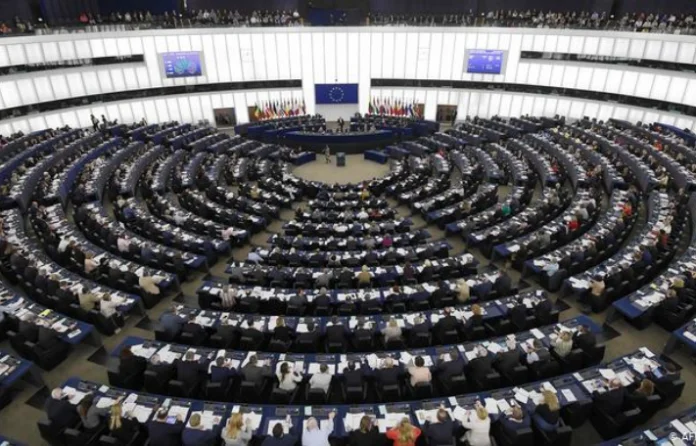
(4 years ago)The European Parliament has reiterated the call for visa liberalisation for Kosovo and, on the other hand, for normalising reports between Kosovo and Serbia, so that both countries can advance towards the European Union. These calls are included in Kosovo's draft reports and for Serbia, which it has [...]
These calls are included in the draft texts of reports on Kosovo and Serbia, which has provided Radio Free Europe.
The report reiterates that Kosovo has fulfilled all criteria for visa liberalisation since 2018, but the decision on visa liberalisation has not yet been adopted.
Meanwhile, the EU Council is called on urgently to make the visa liberalisation decision for Kosovo citizens.
This report reportedly is aware of Kosovo's goal to apply for EU membership.
Kosovo has noted progress in the fight against organised crime and corruption, and commitment to advancing reforms within the European reform agenda is also welcomed, said the report. The fact that Kosovo has advanced for 17 positions in the organisation Transparency International's corruption perception index is also cited as evidence.
Also cited is the fact that there is great support for EU integration in Kosovo during 2022.
However, we underline the fact that there is no quick procedure and that normalisation of reports with Serbia is necessary for Kosovo's advancement on its European path”, the text of the draft report, which the European Parliament's Foreign Policy Commission session will discuss Thursday.
This time again, the call for the 5 EU nations to recognise Kosovo is repeated.
“We regret the fact that 5 EU member states have not yet recognised Kosovo and reiterated the call to do so”, it says in this text.
Through this report, the European Parliament expresses full support for Kosovo's warning to apply for membership in the Council of Europe.
At the same time, it has joined all EU positions in connection with Russia's aggression against Ukraine, announced sanctions, and a special resolution in the Assembly has condemned this aggression.
In text, Kosovo has turned to the situation in the Judiciary. Concern has been voiced because the Judiciary continues to be inefficient and sensitive to political interference. In this direction, the proposal for prosecutorial reform has been welcomed, and is required to consider the Venice Commission's opinion.
Parliament is aware and of the Government's plan for vetoing judges and prosecutors, and underscores that this should remain only as the last possibility and not ignore the positions of the EU and the United States of America.
The effort to depoliticise and professionalise civil servants has also been welcomed.
The Kosovo government has demanded that the Constitutional Court's decision for the Decani Monastery be implemented. “We are concerned that authorities have not yet implemented this decision and thus undermines the Government's commitment to strengthen rule of law and respect for the independence of the judiciary”, the text says.
Parliament, according to the draft of this report, laments the limited success of initiatives to include the Kosovo Serb community in political, social and economic structures. Meanwhile, it recalls that institutionalisation and teaching official languages in Kosovo and equal access to services and information in official languages is essential.
Recalling the role of the media as a pillar of democracy makes it an invitation to protect journalists from political pressures and is said to be an offensive language to journalists.
Also, greater media transparency, including their ownership, is required.
It has also expressed regret over the Kosovo government's decision not to allow Kosovo Serbs' vote in Serbia's elections.
Meanwhile, in the text of the draft report for Serbia, it expresses regret that this state has not supported EU sanctions against Russia. The same text calls on authorities in Serbia to prove true devotion to EU values and to adapt to EU decisions and attitudes in foreign and security policy”.
In this text, MPs are said to be “equally concerned about spreading dezinforms for Russia's aggression against Ukraine and have called on authorities in Serbia and the European Commission to support the anti-dezinform infrastructure and other hybrid threats.
The European Parliamentary will also extend an invitation to Serbia to act against deregulating war criminals and disrupt promotional rhetoric, which exacerbates reports with neighbours and jeopardises regional stability and reconciliation.
As in the text of the draft of the report on Kosovo and this for Serbia, it is recalled that progress in travelling towards the EU is linked to progress in the process of normalising reports with Kosovo.
Both sides require commitment towards reaching a comprehensive agreement on normalising reports that would be key to the progress of both sides on their European journey.
The texts of these two drafts will be discussed Thursday, while then MPs will be able to propose amendments. Later in the form of the European Parliament Resolution will have to be adopted at a plenary session. Such resolutions have a political significance, because they present the positions of this important institution in the EU, but they do not have authority over member states.