10 minutes ago
All necessary components first discovered for DNA in the meteor
Periskopi(4 years ago)
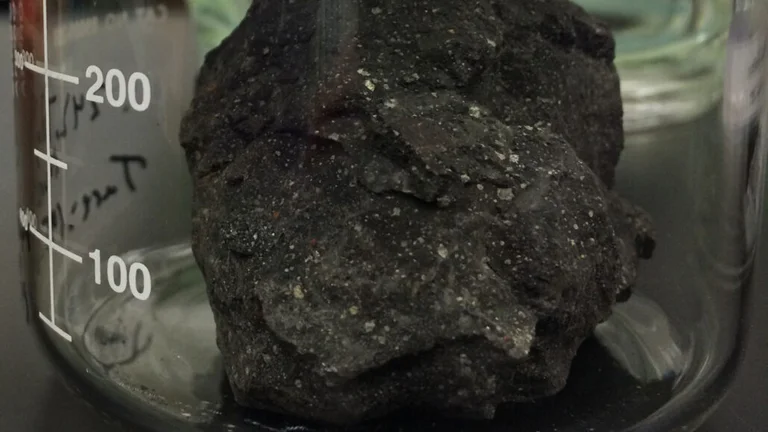
(4 years ago)Space reefs that fell on Earth during the past century contain five bases that store information on DNA and ARN, scientists in Nature Communications report. These “do not letobase” adenine, guana, cytoline, mine and urbal, combine with sugars and phosphates to create the genetic code of all life on Earth. It is not known yet if these components [...]
These “do not letobase” adenine, guana, cytoline, mine and urbal, combine with sugars and phosphates to create the genetic code of all life on Earth. Whether these basic components for life came first from space or were formed is not yet known. But the discovery adds evidence suggesting that the forerunners of life first came from space, researchers say.
Scientists have discovered pieces of adenine, guanine, and other organic compounds in meteors since the 1960 ' s. Researchers have also seen signs of uranium, but the quote and mine remained elusive so far.
“We have completed the group of all bases found in DNA and ARN and life on Earth, and they are present at the meteorate”, says Astrochemicalist Daniel Glavin of NASA Goddard Space Flight Centre in Greenbelt, Md.
A few years ago, geochemicalist Yasuhiro Oba of Hokkaido University in Sapporo, Japan, and colleagues went out with a technique to extract and gently share different chemical components in the dust of the liquid meteor and then analyze them.
Our intelligence method has greater sensitivity than that applied in previous studies”, Obama says. Three years ago, researchers used the same technique to detect the ribosis, a life - needed sugar in three meteors.
In the new study, Obama and his colleagues combined forces with NASA astrochemists to analyze one of those three meteor samples and three extra ones, looking for another kind of essential ingredient for life, non-leobatics.
Researchers believe that their softest extraction technique, which uses cold water instead of common acid, keeps its ingredients intact. We are finding that this extraction approach is very appropriate for these fragile nuleobases”, Glavin says. It's more like a cold drink, instead of making hot tea”.
With this technique, Glavin, Obama, and their colleagues measured the abundance of bases and other life - related compounds in four samples from meteors that fell decades ago in Australia, Kentucky, and British Columbia. In all four, the team discovered and measured the adenine, guanine, cytosine, uracil, mine, some compounds related to the bases, and several amino acids.
Using the same technique, the team also measured the chemical abundance within the soil gathered from Australia's country and then compared the meteor's prudent values to that of the earth. For some discovered components, the meteor's value was larger than the surrounding earth, suggesting that the compounds came to Earth on these rocks.
But for other discovered compounds, including cytosine and uranium, the earth's abundance is 20 times higher than in meteors. This may point to land pollution, says cosmixist Michael Callahan from Boyse State University in Idaho.
I think the researchers positively identified these” compounds, Callahan says. But “ata did not present enough convincing data to convince me that they are really extraterrestrial”. Callahan used to work in NASA and co-operated with Glavin and others to measure organic materials in meteors, broadcast Klankosova.tv.