9 minutes ago
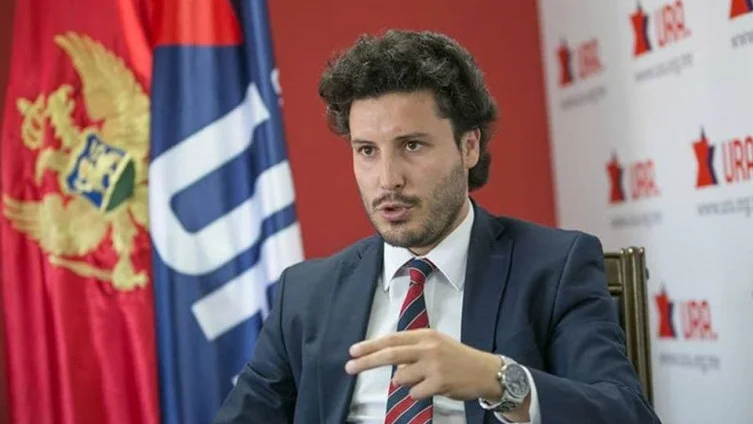
Abazovic presents new government work program
Periskopi(4 years ago)
(4 years ago)The key pillar of Montenegro's new government will be rule of law and economic development, Prime Minister Dritan Abazovic said in the exhibition handed over to the Montenegro Assembly. The new government of this country is expected to be elected at a parliamentary session, to be held on April 28th in [...]
The new government of this country is expected to be elected at a parliamentary session, to be held 28 April in Cetina.
It is expected to make up Abazovic's Civic Movement, the pro-Serbian Socialist People's Party, the Social Democrats and the national parties of Albanians and Bosniaks.
The new government is expected to have 46 deputies, up from 81, as much as Montenegro's Parliament totals.
The government is also expected to have parliamentary support from Montenegrin President Milo Djukanovic's Democratic Party of Socialists (DPS).
But it is strongly opposed by the pro-Serbian and pro-rus Democratic Front, as well as the Democrats ʹ two subjects that have made up the ruling coalition.
Abazovic's exhibition says that in the first quarter of the new government's work, a bill for population registration is planned, in line with European standards.
Population registration causes tensions in Montenegro because for some part of the political opinion, it is not a statistical issue, but a matter of national and religious census.
In the field of foreign policy priorities, Abazovic cites the formation of the European Affairs Ministry, with the aim of, reportedly better co-ordination and communication with the EU's negotiating structure.
“I believe Montenegro can seek an accelerated [EU] accession and that with urgent but wise decisions, it can soon become a full member of”, Abazovic said.
Among the priorities of his government is also cited as the agreement on keepers of judicial functions, then the Law on Property Origin, Election Reform, the revision of the current situation in education and culture, etc.
Abazovic has been nominated for prime minister of Montenegro's new government on March 3rd by the country's president, Milo Djukanovic.
Parasely, the no-confidence motion against the government so far has passed to the Parliament with the votes of Abazovic's URA and Djukanovic-led opposition.
The ousted government, led by Prime Minister Zdravko Krivokkapiq, was formed in December 2020 by a coalition between the Democratic Front, Democrats and the URA Civic Movement.
This Government has had a narrow majority in the Assembly of 41 deputies but has returned The opposition DPS after three decades.
Differences in attitudes between coalition partners have started to spread very soon after its formation, and parties have often not been unanimous in decisions.