4 minutes ago
The ten things we did most wrong about Russia, and its invasion in Ukraine
Periskopi(4 years ago)
(4 years ago)By Vince Cable after the terrible Russian invasion of Ukraine, there are many regrets in the West and feelings mainly in private circles. In fact, almost all of us were wrong about Russia and its evil plan. And in some cases catastrophicly. 1. Those of us who thought Putin could [...]
After Ukraine's terrible Russian occupation, there are many regrets in the West and feelings mainly in private circles. In fact, almost all of us were wrong about Russia and its evil plan. And in some cases catastrophicly.
1. Those of us who thought Putin might be bluffing were wrong. The CIA and other intelligence agencies, and governments that agreed with its judgment, were right.
2. The belief that Putin could be hampered by the threat of economic sanctions was also wrong. However, after military involvement was expelled, there was no alternative. If economic sanctions are not really comprehensive and effective in curbing Putin's collapse and ousting, the West will be seen as a “tric player of paper”.
3. Hope that diplomacy and negotiations could force Putin to give up the attack on Ukraine was too optimistic. But Makron, in particular, should have tried harder on this front, even to show that everything was done to avoid war.
4. The most catastrophic miscalculation (initially by George Bush in 2008) was the denial of Ukraine's NATO membership perspective, and then the reopening of this opportunity, but that's all. The result was the worst possible: Russia was provoked and Ukraine remained vulnerable.
5. The focus on Asia” resulted in another miscalculation, as it distracted attention from Russia's immediate military threat to focus on economic, technological and military challenges on China's long-term plan. It was funny that Britain sent its small navy to the South China Sea and the Persian Gulf, not the Black Sea or the Baltic.
6. Idealologists who thought the collapse of communism would stabilize the world were lying to themselves. Putin and his friends have completely deãod Russia, stealing public assets, and embracing Christianity. But a privatised state and a doctrine of extreme nationalism is resulting in more danger than Soviet communism.
7. The Russian elite and the educated middle class erred when they believed in the inevitability of political liberalisation when Russia became a more modern economy. A corrupt state, the Mafia has become stronger, and its overthrow will probably be violent and undemocratic.
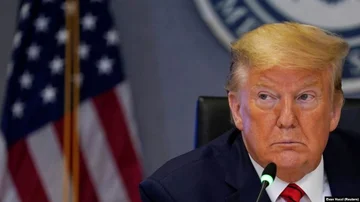
8. Donald Trump, an instigator of Putin's American fans, was even greater than we thought. Putin feels comfortable in thinking that his friend could return to the White House in 2024.
9. Germans realize they paid insufficient attention to energy safety. They will now invest more in importable natural gas plants, renewable resources, and will probably be back in nuclear power plants.
10. For now, the Western world is united over sanctions. But the ongoing British refrain for “leadership”, and the attack on Germans and French as weak “” sent a powerful message to Moscow, that Europe is very divided. Brex, like Trump, was a success of Putin.
This is already in the past. We hope that past mistakes will bring better decisions in the future. There are some big jobs ahead. First, in terms of sanctions, the energy sector cannot be ruled out. This means higher fuel prices for American drivers and gas shortages in Europe.
If our voters cannot be persuaded to live with the consequences of sanctions, then the game is over. The needed and delayed printing of Russian financial and property interests in Britain should deepen and expand to territories and places like Switzerland, where much money is cleaned and hidden.
A second decision is how we should deal with countries like the United Arab Emirates, India and Israel, which have good business relations with Russia. The biggest problem will be China. Beijing has backed Moscow's strategy for NATO aggression, but it has been careful not to openly support the invasion.
A tight and protracted alliance with an untrustworthy and needy Putin is absolutely a position China does not want to be located. Western governments, they have to find ways to weaken Russia-China by restoring a relationship that has more important business with Beijing.
Third, there is also the problem of responding to Ukraine's demands for military supplies to strengthen its resistance. It may be too late to help the Ukrainian Armed Forces, but we must try. A more difficult issue is that if an armed guerrilla resistance should be backed up.
In an emotional way, this would be difficult to refuse, but it could deepen and expand conflict: we would have another Syria in Europe. Russia can retaliate by bringing conflict on NATO territory, or escalate its nuclear threat. The horrors we are seeing today can only be the beginning.
Note: Sir Vince Cable, is former leader of the Liberal Democrats in Great Britain. During 2010-2015, he was Secretary of State for Business, Innovation and Skills. /“World.al