16 minutes ago
Kurti: Today 23 years has won our justice and NATO
Periskopi(4 years ago)
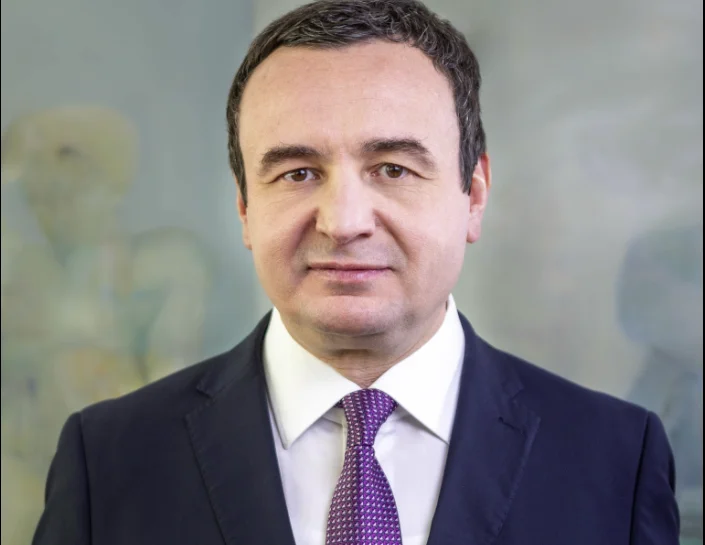
(4 years ago)Prime Minister Albin Kurti recalls the 23rd anniversary of NATO bombings on Serbian targets. In a long Facebook text, Kurt links the circumstances of the day with present - day circumstances in Ukraine. Our victory was twofold: our sense of justice won, and that justice was not only ours but also that of [...]
Prime Minister Albin Kurti recalls the 23rd anniversary of NATO bombings on Serbian targets.
In a long Facebook text, Kurt links the circumstances of the day with present - day circumstances in Ukraine.
Our “Fitto was twofold: our sense of justice won, and that justice was not only ours, but also that of the most powerful and democratic states, of NATO. Our meeting was a fine example of the Western internal investigation into the truthfulness of the problems and freedom of the peoples, whether large or small, of being these peoples and those societies. The sense of freedom and justice depends on the soul, not on the body”, writes Kurti.
Full text:
23 years after March 24
We are in the time of the clash of democracy with the drama of delay and its absence, with the drama of concessions and misunderstandings. It seems that what we have learned so far must be repeated at any time of the generation. A place like ours and a society like ours understand this drama better and closer. We still have it in our skin and try not to forget it. The victim is quickly forgotten, crime fades quickly. Neither knowing the victim nor recalling the crime should have the age of the human individual, but the age of public knowledge.
Today, when it has been almost a time of generation, we are called to remember as heavy as glorious. The people, our society, demanded in the new world configuration a new justice, a more just justice: the dignity given to the soul and morals, the democratic and sovereign size of development. Not even a decade had passed since the fall of the Berlin Wall. Human society accompanied not with the same clarity the great collapse of ideology and the rehabilitation of peoples. We had to carry this burden on our shoulders. In a short time, we had to build confidence in freedom until collective resistance, collective resistance to university resistance, university resistance to military resistance.
Coming from a no-great people, this trajectory shaped, after the collapse of the former Yugoslavia and after the monstrous crimes in Bosnia, a new complication and a major trouble for institutions that mostly had the knowledge of Western democracies. This problem required a new estimate. Our journey had been from peace to war, and the west demanded that it start out of dialogue to avoid war. Democracy has polluted war because it openly exposes the defects of meaning and language, conscience over the past, and future design. We have to say that democratic societies have mostly promoted the nature of crime devices and kept their public discussion alive.
But in the unprecedented intensity of civil events and victims, dialogue showed its inability. Imagines did not speak the same language. On the other hand, the future was put into the use of a extinguish past.
Today, in this serious current, when civil casualties are being produced in a European state by a state military device, we can say with certainty the maximum renewed date 24 March 1999 has been reconfirmed in truth.
What is this dialectic that defined the authenticity of the military's greatest history alliance in the Balkan region? The liberation route coincides with the expectations of democratic states, but democratic states function in hopes of simultaneous design of tastes and knowledge. With the natural pro-European and pro-Western trend, even under apartheid, we had the intimate knowledge of all phases. In a short time, the democratic and liberal West also went through all the necessary stages of political, sociologist, historical reflection.
Our two trajectorys coincided with the conclusion of this process in co-ordinating our military with the NATO military Alliance. We met at the point where the trajectory of our obedience and resistance was affected with the reflection trajectory and internal dialogue of democracies involved in NATO. For this we have every reason to be proud. Our justice, on that March 24th date 23 years ago, confirmed that our independent journey was the same as reflecting countries with the most developed democracy on this globe. Our victory was twofold: our sense of justice won, and that justice was not only ours, but also that of NATO's most powerful and democratic states. Our meeting was a fine example of the Western internal investigation into the truthfulness of the problems and freedom of the peoples, whether large or small, of being these peoples and those societies. The sense of freedom and justice depends on the soul, not the body.