19 minutes ago
Serbia seeks its elections held in Kosovo
Periskopi(4 years ago)
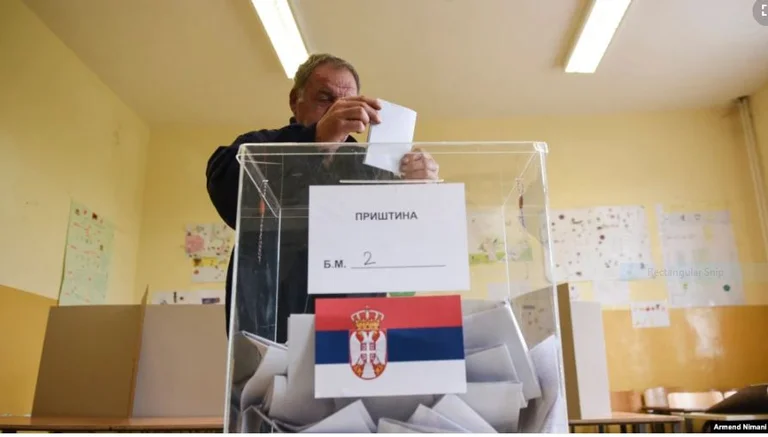
(4 years ago)The director of the Office for Kosovo in Serbia's Government, Petar Petkovovic, said he expects representatives of the international community, with the authority they have, to enable the Serb people in Kosovo to vote in Serbia's elections, which will be held in April. In a conversation with the Russian ambassador to Belgrade, Aleksandr Bocan Harchenko, Petkov [...]
In a conversation with the Russian ambassador to Belgrade, Aleksandr Bocan Harchenko, Petkov said that the pressure campaign and the pressure response against the Serbian people --” continues in Kosovo.
According to him, authorities in Kosovo openly try <x0).
Petkovic said Russia's support and assistance for the Kosovo issue are of great importance, reports the Balkan Free Europe Radio Service, calling at a report by the Office for Kosovo in Serbia's Government.
Belgrade, Petkovic said, is determined that in the dialogue on normalising relations with Kosovo, it will try to find compromise solutions, but also protect the interests of Serbs.
On January 16th, Serbia has organised a referendum on changing the Constitution to justice, and this has been the first time that no decision has been opened in the majority Serb environments in Kosovo.
It has been the Government of Kosovo's decision, arguing that opening seats in Kosovo for Serbia's elections is contrary to the Constitution and Kosovo laws.
Serbian citizens have been able to exercise the right to vote by mail or through the Liaison Office with Serbia.
The Government's decision is supported by the Kosovo Assembly on January 15th, despite the international community's calls for Serbs in Kosovo to be allowed to vote in Serbia-organised referendum.
On April 3rd, Serbia holds presidential elections and extraordinary parliamentary elections.
Vetevendosje Movement officials in Kosovo have said earlier that Kosovo Serbs' vote in the 3 April Serbian elections, “would have to be done the same way in the case of Serbia's referendum on constitutional changes”.
What has been the practice before?
Just a few months after Kosovo has declared independence on February 17th 2008, Serbia has organised parliamentary elections in majority Serb areas in Kosovo.
In these elections, which have been held on May 11th, 2008, the right to vote in the polls in Kosovo has exploited about 900,000 citizens of Serbia, the Republika Election Commission data in Serbia has shown.
Serbia's parliamentary elections on Kosovo territory have also been held in 2012, 2014, 2016.
The last Serbian parliamentary elections in Kosovo are held on 21 June 2020.
In the latter, the ballot has gathered the Kosovo mission of the Organisation for Security and Co-operation in Europe (OSBE).
This voting collection practice was established in 2017 and has so far had the permission of Kosovo authorities.
After the closure of polling stations, votes from Kosovo have been counted in the District and Vranje two Serbian border towns.
The “vote-gathering method” in Kosovo has also held Serbia's presidential election in 2017.
Serbia has organised its presidential elections in Kosovo even in 2012.
The local Serbian elections in Kosovo are not organised after Kosovo's 2008 declaration of independence, as the decentralisation process has begun in the same year, based on Martti Ahtisaari's plan.
This plan is the document on which Kosovo has declared independence.
International Community Calls
Last week, US envoy for the Western Balkans Gabriel Escobar and the European Union's envoy for Kosovo-Serbia dialogue, Miroslav Lajcak, have called for the exercise of voting rights in Kosovo to be allowed.
The two diplomats have remained for official visits to Pristina and Belgrade.
Lajcak has said there are European standards and practices that allow people to vote when they live elsewhere.
“should be found modes. It belongs to both sides, while the EU and the US will help”, he said.
Escobar has said that the US position is that all in the region should vote in democratic elections, in which they have the right to vote.