5 minutes ago
Bank accounts hidden in Switzerland, including Kosovo, Albania
Periskopi(4 years ago)
(4 years ago)A massive flow of data from one of the world's largest private banks, Credit Suisse, has highlighted the hidden assets of its clients involved in torture, drug trafficking, money laundering, corruption and other serious crimes. It's about the account details of the 30,000 clients of Credit [...]
A massive flow of data from one of the world's largest private banks, Credit Suisse, has highlighted the hidden assets of its clients involved in torture, drug trafficking, money laundering, corruption and other serious crimes.
It's about the details of the accounts of the 30,000 clients of Credit Suisse around the world who own more than 100 billion Swiss francs (or 80 billion pounds) kept hidden in one of Switzerland's best - known financial institutions.
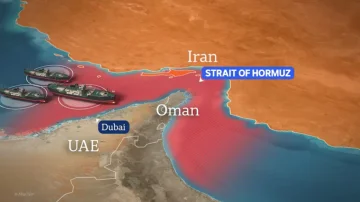
No accounts are missing from Albania. If you carefully look at the map that has published “The Guardian” notes that our country is also marked by circle. This means that there are even accounts of persons from Albania, Kosovo and Northern Macedonia in this bank, the pencil quotes.al. Foreign media reporting the news have not yet revealed all the names to see who Albanians are who deposited money in this bank.
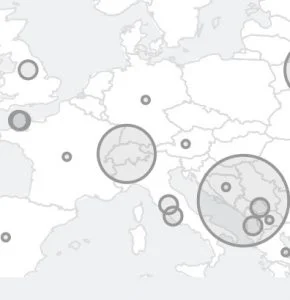
Extracting these data is considered one of the biggest failures of Credit Suisse, despite its repeated promises over the decades to remove suspicious customers and illegal funds.
The Guardian” says the Swiss bank repeatedly opened or held bank accounts for a group of high-risk clients worldwide.
Among them is a human trafficking in the Philippines, a boss of the Hong Kong Stock Exchange imprisoned for bribery, a billionaire who ordered the murder of his beloved, Lebanese pop star and executives robbing Venezuela's state-owned oil company, and corrupt politicians from Egypt in Ukraine.
Another account is owned by the Vatican that was used to spend $350m in an alleged investment as property fraud in London. No criminal proceedings against several defendants have been opened on this issue, including a cardinal.
The Swiss bank's database was discovered by an anonymous signal to the German newspaper “Süddeutsche Zeitung”
I believe Swiss banking secret laws are immoral. The pretext of protecting financial privacy is just a fig leaf covering the shameful role of Swiss banks as collaborators of fiscal drivers” he said in a statement to the newspaper after revealing identity.
The Credit Suisse himself replied that the strict laws of the Swiss banking secret prevent him from commenting on claims concerning individual clients.
The Bank insists that the files discovered by journalists are based on <x0 selective information taken out of context, resulting in biased business interpretations carried out by bank”, the pencil quoted.al.
This month, Credit Suisse became the first major Swiss bank in the country's history to face criminal charges (which she denies) in connection with claims it helped clear money from the cocaine trade on behalf of the Bulgarian mafia.
Swiss financial institutions manage some 7.9 trillion CHF (6.3 trillion pounds) in assets, nearly half of which belong to foreign customers.
Credit Suisse scandal sheds light on one of the world's largest financial centres, which is used to operating in the shadows. It reveals how convicts or money launderers are able to open bank accounts, or keep them open for years after the discovery of their crimes. This reveals how the famous laws of Switzerland's banking secret help alleviate the robbery of countries in the developing world like Albania, the pencil quoted.al.
There are more than 90 countries, most of which remain in the dark when wealthy taxpayers hide their money in Swiss accounts.
This situation enables corruption and keeps developing countries hungry where much needed tax revenues. So these are the ones that suffer most of Switzerland's tricks” The scandal beacon said.
The dentist acknowledged that documents issued by the bank also contain accounts that were legitimate and declared by customers in their tax authority.
I am aware that having a Swiss bank account does not necessarily mean tax evasion or any other financial crime. However, it is likely that a considerable number of these accounts open with the sole aim of hiding their owner's property from fiscal institutions and/or to avoid paying taxes on capital gains” unjustly, the denounciator said.