3 minutes ago
30 Years From Treaty That Makes Way for European Union Creation
Periskopi(4 years ago)
(4 years ago)On February 7, 1992, the Maastricht Treaty was signed, which paved the way for the creation of the European Union. The Maastricht Treaty is best known as the European Union Treaty, for with it the route would take in 2002 to the introduction of the common European currency ʹ Euros. Negotiations for [...]
On February 7, 1992, the Maastricht Treaty was signed, which paved the way for the creation of the European Union. The Maastricht Treaty is best known as the European Union Treaty, for with it the route would take in 2002 to the introduction of the common European currency ʹ Euros.
Negotiations on the Maastricht treaty arose with the will to be realised among Community member states, an integration into the economic policy sector, through a strong economic compliance of member states, through the release of a single European currency.
The Maastricht Treaty is not only important because it marks the first concrete step towards the Economic and Monetary Union, but because through it it was crossed into the European Community and the European Union, co-operation among member states in the field of foreign policy was strengthened and achieved in the concept of European citizenship.
In June 1992, through the referendum, Denmark told “O” the ratification of the Maastricht Treaty. While in France, the Maastricht Treaty, laid down for the referendum, receives only 50.4 per cent of the vote: half a victory and a preventative blow for Europe. But despite these difficulties, the Maastricht Treaty moved ahead, political solutions were sought based on the results of the Danish referendum, and, by little, the French's “yo” was overcome.
The Maastricht Treaty was officially signed by the foreign affairs ministers of member states on 7 February 1992, in a small town in the Netherlands, from which it received and named, near the border with Germany and Belgium. But the Maastricht Treaty, immediately after its signing, did not have an easy life. Just because it marked an important step forward in the European integration process, some countries did not welcome it well.
Of the importance he had and the bases he laid off, it could be said that he went far beyond the economic goal, which he originally determined the Community. It marked a new stage of the process “of a continuing closer union among the peoples of Europe”, thus wearing the economic goal with a political spirit.
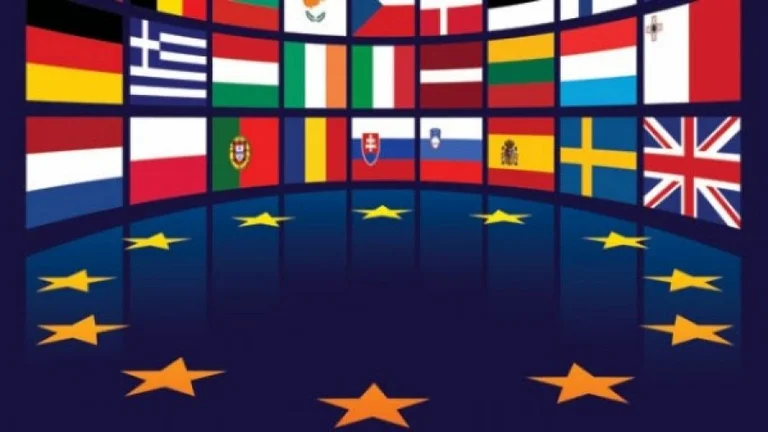
With its entry into force on November 1, 1993, the European Union was established with 12 Community member states, which were: Belgium, Denmark, France, Greece, Germany, the Netherlands, Ireland, Italy, Luxembourg, the United Kingdom, Portugal and Spain. The number of members was to reach 15 in 1995.
In its entirety, the Maastricht Treaty can be summed up into three main elements or three pillars
First, the European Community's (which replaced the European Economic Community), with broad supernational competence;
Second, co-operation in the field of a common foreign and security policy;
Third, cooperation in the field of domestic relations and justice.
A European citizen, the Maastricht Treaty, recognises European citizenship to any person who has the citizenship of a European Union member state. In this way, European citizenship is conditioned by national citizenship, but in addition, it provides several additional new rights:
The right to circulation and free standing in community countries;
The right to be protected, abroad, by embassy or consulate of each member country;
The right to vote and to be elected to the residence, for European and municipal elections, under certain conditions;
The right to petition before the European Parliament; the right to complaint with the European Mediator concerning problems in the functioning of the communitarian administration. An Economic and Monetary Union
The decision to create a common currency on 1 January 1999, under the direction of the European Central Bank, was the final step of economic and monetary integration into the common market's bosom. The economic and monetary union was realised in three stages:
First, liberalisation of capital movements, etap, which ended on December 31, 1993.
Second, co-ordination of the member countries' economic policies, with the aim of reducing inflation, interest rates and exchange courses, as well as limiting the deficit and debt of member states.
Establishing these criteria, known as the “crimes of the Maastricht”, was the precondition for ensuring the convergence of the member states economies, which in turn is the necessary condition for transition to a common currency. That's why the standard Maastricht criteria are also called <x2).
The transition to the common currency was prepared by the European Monetary Institute, the predecessor of the central European bank.
Three, and finally, the creation of a common currency on January 1, 1999, and the Central European Bank.
Enhancing Community Powers
With the Maastricht Treaty, communitarian competencies extended to other areas such as education, professional formation, culture, public health, consumer protection, trans-European networks, industrial policies. Enlarging these competencies was based on the principle of subsidaryness, which means these competencies were expanded to the extent that the envisioned goals could not be fully realised by member states at the national or local level. So the communitarian initiatives were not meant to replace the initiatives of each member state on the national level, but were considered a complement of the latter.
With the Maastricht Treaty, social policy also becomes part of the community field. The social protocol, although not signed by the United Kingdom, was included in the Treaty Anexes. Thus, joint provisions regarding working conditions were adopted from all member states (with the exception of the United Kingdom), with equality between husband and wife, with the integration of persons expelled from the job market, with social insurance, etc. Foreign Policy and Common Security
The second pillar of the Maastricht Treaty, which relies on the institutionalised political co-operation mechanism with the Unik Act, concerns the drafting of a common foreign and security policy. This policy would enable joint action in the area of foreign policy.
In this regard, decision-making should be unanimous, while accompanying measures approved by the majority of votes.
The policies undertaken by the EU in the security field are aimed at mutual protection, relying on the unification of Western Europe. Always in this view, member states can act on their own, but provided their actions do not conflict with the decisions adopted together. Internal Affairs and Justice.
The third pillar of the Treaty was conceived to facilitate and ensure the free movements of individuals among EU countries.
Here again, decisions are made in unanimous; they cover the following areas:
) rules of crossing the external borders of the Community space and strengthening controls (from 1996, visa-related measures must be approved by majority of votes; however, a country can adopt necessary provisions aimed at internal security and public order);
The fight against terrorism, crime, drug trafficking and international fraud;- co-operation in the field of criminal and civil justice;
The establishment of the European Police Office (Europol) equipped with a exchange system among member states police;
The fight against illegal migration;
Common asylum policies.
Treaty Review
Its revision, primarily in terms of community institutions, is also predicted in the Treaty in terms of enlargement. The intergovernmental conference, meeting in 1996-97, was finalised with the government signing of member states of another Treaty, the one in Amsterdam, which was the continuation of areas and competencies envisioned in the Maastricht Treaty.