16 minutes ago
Serbian writer: Kosovo recognition from Serbia to happen, sooner or later
Periskopi(4 years ago)
(4 years ago)Although there is no policy of recognising Kosovo in Serbia, it is necessary for Serbian society to confront this issue, they said. RTK-some of the authors of the new edition of “Bulettin Stanar”, which deals with the subject of Kosovo, analyzing whether the word recognition can be heard in Serbia without fear and in accordance with [...]
Kosovo's formal recognition from Serbia will happen sooner or later, says writer Dejan Atanakovic in an interview for RTK. As he emphasises, Kosovo has its own parliament, government and executive power on the entire territory, and with consent to Serbia, a set of signed agreements, talking about a matter of officially resolved status.
The question is not that we should recognise Kosovo's independence, but to recognise Serbian reality and part of that reality is that Kosovo is an undisputed state. What is especially important for Serbian society is the moment of formal recognition, something that will definitely happen sooner or later, and it is not insignificant who will make formal recognition and in what way”, Atanackovic says.
Atanackovic is one of the authors of the latest edition of “Bulettin Stanar”, of the Strategic Policy Group, dedicated to a theme considered undesirable in Serbia: “Is it possible to think about recognising Kosovo if you are Serbian?”
According to Atanackovic, Serbia must understand that Kosovo's independence is the logical result of Serbian catastrophic politics of the 1990s.
The “is a policy which Serbian society has never fully faced and whose actors are still in power today”, he points out, adding that it is necessary to consolidate forces gathered about the truth in Serbia, to explain Serbia's citizens why it is important to stop policies of populism.
He has estimated that no political war is under way regarding Kosovo, “but that the regime in Belgrade is committing terror against Serbs in Kosovo”, and that Kosovo's north is “fuces for criminal operations”.
“Opositor in Serbia must play an active role in providing public support to Serbs from Kosovo, in supporting political forces working for the integration of the Serb population into Kosovo institutions, and in the end this should be a message to the public in Serbia”, says Atanackovic.
According to him, it is necessary for political actors to be aware of reality, and that, according to him, is with the majority of opposition parties.
There is no one who believes in fairy tales about Kosovo's return to the constitutional and legal framework of Serbia, we just have to stand before the citizens with the truth, because we want or don't want the truth is here, and sooner or later it will reach us, to its full extent, it's only important how we as a society will face it. So, I think that in general it is really crucial that the civic, European and democratic opposition stop with the policy of avoiding reality”, says Atanackovic.
As he emphasises, it is of key importance that politics towards Kosovo be based on common interests, such as European integration.
It is important to support Kosovo's entry into international institutions, such as Interpol and the UN, because it is in the interest of all the people living in Kosovo, and then it should be stressed why it is important to build good relations, work for reconciliation, for joint entry into the EU, because it is one of the greatest common interests of Kosovo and Serbia”, Atanackov points out.
Branislav Dimitrijevic, art historian and one of Bulletin's authors, says about RTK that this publication speaks of relations between Serbia and Kosovo, Serbs and Albanians, beyond what is the official policy and the inherited model of Serbia's continued policy towards Kosovo.
Dimitrijevic points to the omnipresentness against Albanians and the need to understand what led to this reality in the past.
The biggest problem is in some way denying the existence of Albanians in general, rather than thinking that in that territory Serbs and Albanians must live in coexistence. Today, patriotic circles are turning to the idea of Kosovo's return to Serbia. We're going back to something that was the cause of all of this, which is institutional and police depression, after which something that is independent state”, explains Dimitrijevic.
According to him, there is fear in Serbia to say something that is not in line with official politics.
“The states can either know each other or not, it's not a matter of recognition, it's a matter of relationships, we should start talking about that taboo. Many people see it very dangerous and avoid saying what they really think. It's a dangerous situation, terrible tensions that hold this country captive and this society”, Dimitrijevic says.
“A word spoken a little bit differently means that you may fall a brick to your head”, he said, adding that the situation will normalise when a dialogue on this topic is started, and when different opinions are heard.
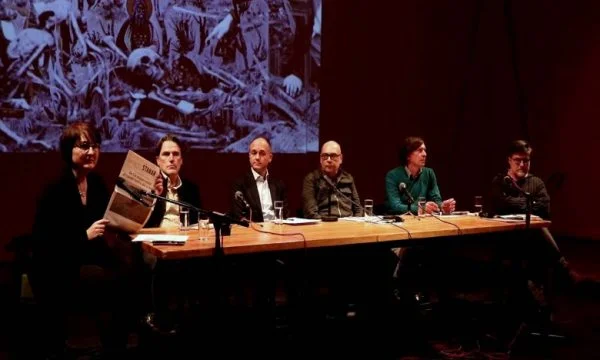
Otherwise, on November 28th in Belgrade, a conference was held that presented “Buletini Stanar” with the title “A is possible to think of recognising Kosovo if you are Serbian”. Participants stressed that in Serbia it is important to face facts and to allow free expression of thoughts about Kosovo and that are different from official politics.