25 minutes ago
2500 euros in debt to buy KKUK's missing drug
Periskopi(4 years ago)
(4 years ago)Keytruda Immmocytherapy Illicie Pembrollizumab, which serves to treat certain types of cancers, has been absent from the Oncology Clinic at the University Clinical Centre in Kosovo (QKUK). No one shows when refueling will be possible, nor how can patients get through [...]
No one shows when refueling will be possible, nor can patients do so in time.
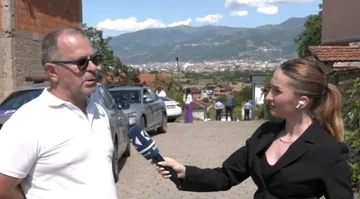
Peter Zeqiri, in his 60s, uses this drug at least once a month for treatment of skin cancer.
This therapy is not in Oncology”, he tells Free Europe Radio.
Zeqiri, who comes from the Cline municipality and serves as a member of the Kosovo Police, says he has had to borrow money to secure the medicine privately.
I've just been through Turkey to find this drug. I bought the 2.565 euro”, he relates.
The 200-milligram dose, Zeqiri says it only needs one use.
This month's “24 is my next date. I don't know how I'm going to do”, Zeqiri says, adding that if you don't take the dose in time, there will be consequences in health.
Medication of clinics at QKUK is done by the central medicine of this institution.
The supply operator is selected by the Kosovo Clinical Hospital Service and University University.
SHSKUK has not responded to Radio Europe's interest in why this drug is missing and when it will be secure.
The task of Oncology Clinic Director Arben Bislimi says the lack of medicine is due to inadequate planning.
According to him, the drug Pembrolizumab has been used for several diseases in 2021, and from this year it has begun to be recommended for others.
“appears a little out of schedule that more has been spent. It means, for example, it's only planned for malomas [kin disease], but it's now being made for other pathologists, lungs, and esophagus [problems in] esophagus, and so on”, Bislim says of Radio Free Europe.
He adds that Pembrolizumabi enters the category of high-cost purchase drugs.
Currently, according to him, there are about 30 patients at KKUK who need this therapy.
In Radio Free Europe's question whether the Health Ministry has a chance to help patients obtain immun therapy drugs, the institution has briefly answered in writing that these drugs “have been included in the list of essential drugs since 2019”.
The list of essential drugs is created on the basis of requests made to hospitals, while the supply is USKKUK's competence.
Since the postwar in Kosovo, public hospitals have never met 100 percent of the essential list mainly because of lack of resources. As a result, there has been a constant shortage of drugs, and patients have been forced to buy them themselves during treatment.
Immunosis against cancer has started applying to Kosovo since 2021. It is a treatment of disease through substances that stimulate immune response.
Free Europe Radio has found out by employees that other medications for treating cancer patients are missing at the CKUK Clinic. Some 30 percent are missing from the essential list of drugs that clinics should have.
Hercept HER2+, which is used for breast cancer treatment, is one of the missing ones.
Consequently, patients try to provide for themselves, regardless of the cost.
Can organizations help?
From the organisation “Life Vita” in Kosovo, which deals with the support of cancer-affected women, say they do not have funds to help secure therapy.
According to the leader of this organization, Nafije Latifi, these drugs are very expensive and, she says, the Ministry of Health should make solutions to citizens when there is a shortage.
We don't have donations and tools to provide them and direct them to the Ministry of Health. There have always been shortages because of wrong health policies. The barriers to fighting cancer are very expensive, and patients are conditioned to find themselves”, Latifi says.
According to health officials, from the beginning of this year until the end of September, more than 1,120 new cancer cases have been identified in Kosovo. In just one day, the Oncology Clinic serves some 250 patients.
The Oncology clinic at QKUK has no statistics on how many patients lose their battle with cancer within a year.
According to data from the World Health Organization, the most frequent cases of death are patients with lung cancer, intestines, liver, stomach, and breast cancer.