25 days ago
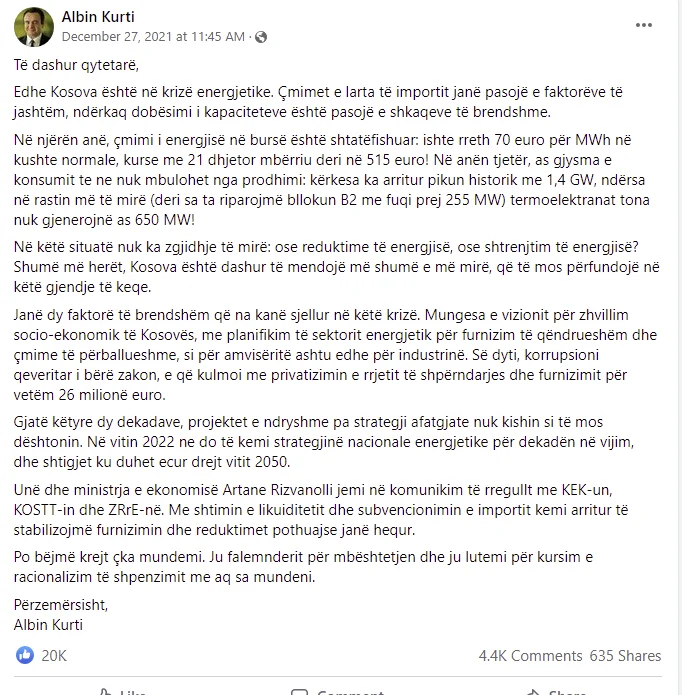
Reducing or expensive electricity? Kurt asked us pretty well last month what we want.
Periskopi(4 years ago)
(4 years ago)Yesterday was warned of rising energy prices. After that, numerous reactions have begun. There are some who reason on the warning of a decision to expensive the current already among the voices, and there are others who view the price of electricity as absurd. Reducing or expensive electricity also warned Prime Minister Albin [...]
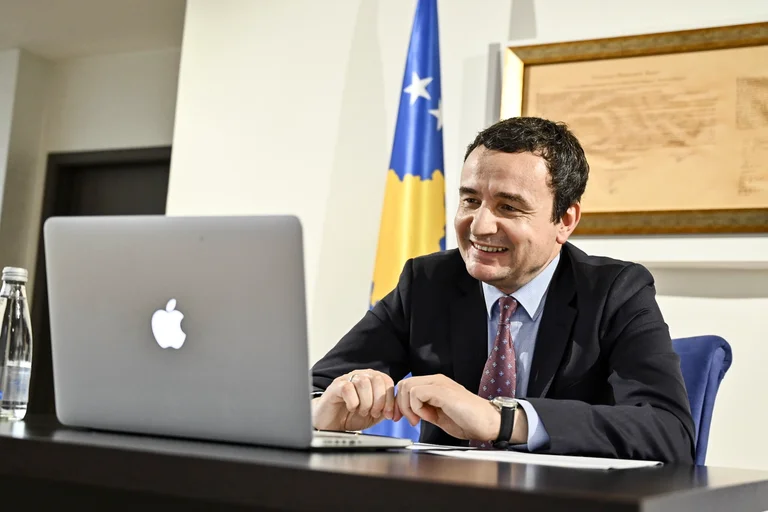
Yesterday was warned of rising energy prices. After that, numerous reactions have begun. There are some who reason on the warning of a decision to expensive the current already among the voices, and there are others who view the price of electricity as absurd. Reducing or expensive electricity also warned Prime Minister Albin Kurti at the end of the year we have just left behind.
“In this situation there is no good solution: either energy reductions, or expensive energy?”, set down the prime minister's question-shaped dilemma, which naturally required the answer.
Shit.
The power supply and return of the blockades are just a few requirements the Energy Regulatory Office in Kosovo (ZRRE) is considering for the new tariff structure.
In December, this institution ʹ following the requirements of the operator of the Displacement System (KEDS) and the Kosovar Power Supply Company (KESCO) has begun to conduct extraordinary review of electricity tariffs. Z RHRE announces that the tariffs to be determined in this review will apply in a year.
For the price of electricity, Kurti had also warned in December of last year, which had said that” would have reduced or expensive energy”.
“High import prices are due to external factors, meanwhile, weakening capacity is the result of internal causes. In this situation there is no good solution: either a reduction of energy, or a price of energy? Much earlier, Kosovo had to think more and better, not to end up in this bad situation”, Kurti said on December 27th last year.
Z proposal The RRE is that electricity prices rise for consumers who spend over 600kWh a month, while those who spend up to 800 kWh or more will not help either the government's subsidy.
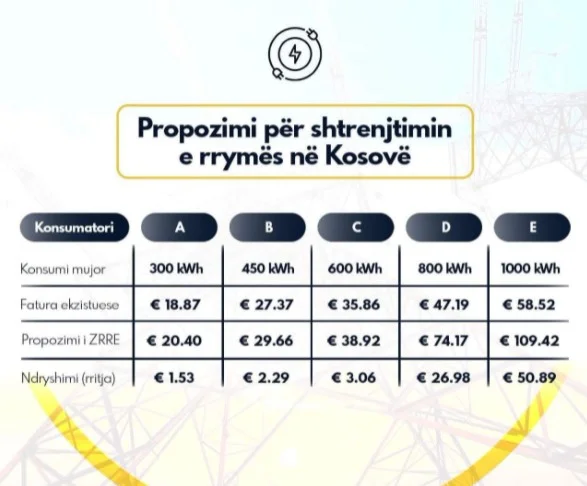
We remember that Kosovo consumers currently pay 6.75 cents per kilowat per hour.
This award will be until April 1st 2022, if KED and Universal Power Service Providers do not require extraordinary reviews of electricity tariffs from the Energy Regulatory Office <x0) in Kosovo.