16 minutes ago
About 6 thousand unenacted addresses, Mustaf: Albania, Kosovo saw Valley strategy

Periskopi(4 years ago)
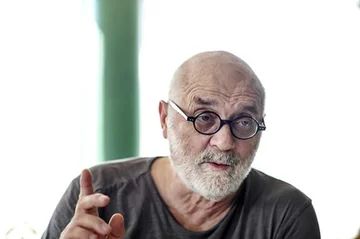
(4 years ago)In Presevo, Bujanoc and Medvedja have been having about six thousand addresses, considered discriminatory and anti-unconstitutional action by the Belgrade government. Albanian National Council Chairman Ragmi Mustafi declares that Kosovo and Albania have no strategy for handling the issue of residents of the Presevo Valley. In the Kosovo interview, Mustafi says three [...]
In the interview for Kosovo Preress, Mustafi says three municipalities have the highest poverty in Serbia and are the least developed countries.
Mustaf: The valley must be part of a possible final solution
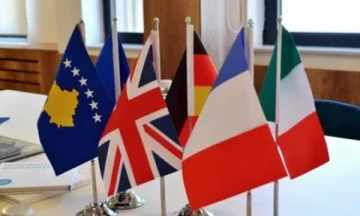
Kosovo and Serbia have resumed negotiations. After the government has addressed some of the issues in the dialogue, we are considering that unless it should be the topic at the Brussels table between Kosovo and Serbia, (The Presevo Valley) should also be part of a possible comprehensive final solution between Kosovo and Serbia”, he says.
As for the passive display of addresses, he declares it to be a discriminating and anti-unconstitutional move by Serbia's Ministry of Internal Affairs.
Mustaf: There are about six thousand unvised addresses in the Presevo Valley
“According to estimates by nongovernmental organisations and some intellectuals are about six thousand addresses of Albanians who have been unvisited throughout these years. And the more it has hit the Medvedja municipality, where there are even fewer Albanians there. Passing addresses comes from addressing the issue of the Presevo Valley within the Kosovo-Serbia dialogue. The numberless reduction of Albanians in Medvedja, especially in Medvedja and the Presevo Valley, comes due to the need to resolve the Presevo Valley issue. In this way a kind of symmetry of Serbs in Kosovo” is tried, Mustaf adds.
In the two progress reports for Serbia, the problem of unvisiting addresses in the three municipalities has also been mentioned.
Mustaf points out that the lack of perspective in the Valley is due to the abuse of fundamental rights of Albanians. In the absence of economic development, a large number of residents have also been displaced.
Mustaf: The valley-divided budget is flawed
“After the government of Serbia has a concrete plan and there is an institution that handles 24/7 with Kosovo, and this is the Co-ordination Centre for Kosovo, where 96 people work. As long as the Kosovo government, but also Albania has no action plan, no strategy, no institution, which is dedicated to addressing the issue of residents of the Presevo Valley. [...] This is a major step that, for the first time, budgetary support and support for Albanians in the Presevo Valley, but we consider it to be flawed as long as there is no fund from the Republic of Albania”, he says.
In communications with the Government of Kosovo, KKS leader Ragmi Mustaf emphasises that there is a need for economic investment in Medvedja, education investments in Bujanoc and media approaches in Presevo.
The Mustaf for Kosova Prees also speaks of the non-recognition of Kosovo diplomas from Serbia, despite the agreement reached between the two states, which is very difficult the lives of the Valley Albanians who continue their schooling in Pristina.
Mustaf: This is a flagrant violation of human fundamental rights
“Today, diplomats from the Kosovo Universities are completely unknown because of Kosovo's non-recognition from Serbia and are faced with problems and cannot register (know) diplomas from Albania and Northern Macedonia. [...] I consider this to be a flagrant violation of the most fundamental human rights, because the Republic of Serbia cannot reason that I am not familiar with its citizens by arguing that the University of Pristina is not being recognised in Kosovo. With the reason that Kosovo does not recognise a university in northern Mitrovica, it does not recognise its citizens to diplomat”, he concludes.
The agreement on mutual recognition of diplomas between Kosovo and Serbia was reached on July 2nd 2011. This agreement was redisputed, and a new agreement was reached on September 29, 2015, which was confirmed once again on January 19, 2016. This agreement included all university levels such as Bachlor, Master and Doctorate, high school diplomas, professional education, as well as the fifth level of qualifications under the European framework of qualifications.