5 minutes ago
James Rubin: New leaders don't see willingness to resolve Kosovo's international recognition
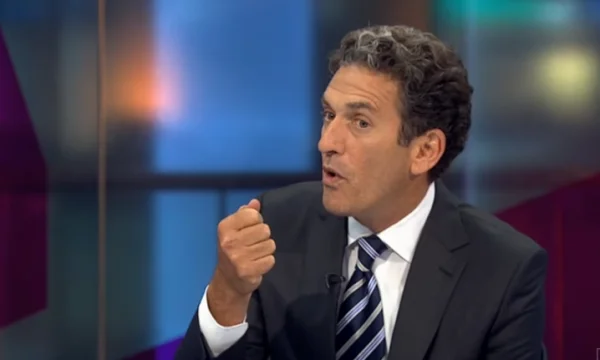
Periskopi(5 years ago)
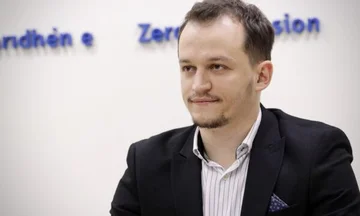
(5 years ago)James Rubin, Assistant Secretary of State in the administration of Bill Clinton, the US diplomat who was among the main protagonists in reaching the Ramboullet Agreement, in an exclusive interview for Democracy. com has expressed pride in American aid to the people of Kosovo at the time he was part of the US State Department. Kosovo's future today [...]
Kosovo's future today is in the hands of the political leadership, which has decided to light only “motorin” of internal changes and not deal much with external factors such as recognition, mutual recognition with Serbia, membership in the United Nations, notes James Rubin and adds that because of this, Kosovo evolution in the near future will not depend on who is in the White House.
The diplomat, described as the former right arm of Secretary Madeleine Albright, calls Kosovo good luck that now in the White House is a president and a Secretary of State, whose Balkans are one of the determining moments of their commitment to foreign policy, where the American leadership was crucial and when the victims were assisted and the aggressor was sanctioned.
Former U.S. State Department spokeswoman for Democracy.com says that as long as the people and Kosovo leaders stand behind democratic principles and tolerance, these principles that have made the West intervene, there is no reason why the White House and the State Department do not view Kosovo as a friend and country with which they continue to be proud of helping.
Democracy.com: How did you learn about Kosovo, how did you start dealing with Kosovo?
James Rubin: When I was learning about international relations, issues like gun control, the Soviet Union, or Communism in Eastern Europe, I never dreamed I'd deal with Kosovo. I didn't know about Kosovo, about Albanians. It is an example of how ironic life is, how random things can be that a place I learned about later became the place with which I now have a unique relationship.
My first trip to the region was in 1992, during the war in Croatia. The Bush administration was not very interested in the region, but I as part of the Commission for Foreign Relations delegation had the chance to visit all six republics of Yugoslavia and meet their leaders. I met Milosevic, Tudjman, Izetbegovchi.
In Serbia we went from Dubrovnik, where we witnessed the shelling of the old city and war threats. There for the first time, I saw how big the difference between warring parties was. On one hand, there were armed civilians, while on Serbian artillery hills. It was real war and I felt terrified. I started thinking about what we could do to stop the war. I began to think about how brutal and pointless this was happening in a country in Europe. When we arrived in Serbia, we met Milosevic and heard his explanations of why war should take place. There I began to understand everything better.
We were also sent to Pristina. What I remember clearly is the meeting with Ibrahim Rugova at his party headquarters. We had a regular conversation. But he convincingly told his reality, so from him you broke up by saying " <x0..." It was intellectual, just, inspiring conversation.
But I was even more inspired to stay at the Hotel “Grand” and to meet there with a man who seemed to work for an international organization. He was an Albanian of Kosovo and was willing to meet with American officials and tell of life in conditions similar to those of Apartheid. There, on the other side of the room, was Sheshel. And to see the fear in the face of this man speaking to us, to see how he spoke to me in fear, then I saw in him the things we had read in the books and heard about the dissidents during the cold war, of followers of freedom and human rights, these heroes of that time, that they were inspired by power and people of power.
Then I took care of Bosnia. There the war was beginning. People were scared. Sarajevo, a city so alive, but now people talked about what was coming. On the one hand, they talked about democratic tolerance, multiethnic society, coexistence, and the other side about what war would do to those values. And no one knew how to avoid war. I would deal with Kosovo later.
In 1993, I brought Senator Beden, for whom I was then working, to Bosnia. I made a report and told him how important it was for him to come. I worked for Senator Biden for five years. At that time, family causes did not allow him to travel much. But, he came to the region and visited Croatia, Bosnia, Serbia. We did not come to Kosovo, but it was a time when the war in Bosnia was at its peak. He filed a report for the American president and secretary of state, strongly seeking air strikes. Then life took me to the Clinton administration that was already in power. Madeleine Albright was known as one of the only voices that wanted something more concrete, and I, as someone who wanted something more, asked to work with him. She hired me and traveled with her to Bosnia. When she became Secretary of State, Kosovo was back in the agenda. It was the time after Dayton, 1998. From there things are known to everyone.
Democracy. com: So you have learned about the region, about the suffering of the peoples of the region, about Kosovo more slowly. Where does Kosovo enter your personal career? You have played an important role in the Kosovo issue. Why did this happen?
James Rubin: There's nothing unusual about me here. I was raised an American Jew who always thought about what was in people's minds in the Department of Defense and the State Department in the 1940s. I was used to judging people, not on the basis of ethnic or religious affiliation, but on their character. So when I saw what was happening in Bosnia, Kosovo, all the time I thought about what I would do if I were in a position of responsibility and was in a position to do something. In Bosnia, I did what I could, but at that time Albright was ambassador to the United Nations. At the time the Kosovo issue surfaced, it was Secretary of State and could do more. So she and I worked very closely on this particular matter. She gave me a bigger role than the spokesman.
As early as the beginning, Kosovo is not like Bosnia, but it is similar. What was the same as in Bosnia was the aggressor, Milosevic and the Serb forces. Hence, we should not lose years of sanctions and diplomacy that had no meaning but see what we can do to prevent genocide before it happens. And not react when it does. I believe that if there has been a threat to genocide and has reacted to preventing it, where the American leadership has played a crucial role, this is Kosovo.
Democracy. com: The war ended more than two decades ago. Kosovo has been a country for 13 years. How do you view Kosovo today?
James Rubin: I have visited Kosovo several times after I completed my service in the American government. Every time I come, I have to be honest, Kosovo has seemed unpleasant, not as physically and spiritually attractive. Pristina still did not look like the other Balkan capitals. But, the more lines, I began to see that it is not much different from other Balkan capitals. The houses were now built, the streets were clean, there was no fear in the streets. And he didn't notice many of the other places. Slovenia and Croatia are truly richer, Montenegro and Macedonia were slightly different, but in the eyes of an American, they all looked similar.
I remember that I had been criticized by members of the American foreign service and by journalists, that we had all placed “basites” in the KLA and Hashim Thaci. There were those who said we were making a big mistake, that we had to support Rugova. But the answer that I again say was that we or I co-operated with Hashim Thaci, because the Kosovo delegation chose that delegation leader. I didn't choose it, they did. While we had the strategy to unite Europe against Serbia, convincing Kosovars to say “Po” and Serbia to say “Jo”. And that strategy only worked because Hashim Thaci was wise enough to sign the Rambouillet Agreement and Serbs did not. It could easily have been done. It could easily have caused the whole thing to collapse.
Later, after the war, I heard the same words: why are you going to the conference before reporters, after the KLA's debilisation? I had the same answer again. NATO wanted the KLA to be demobilised. And, KLA leaders were not afraid to hand over their weapons, even though they were victorious. Never, in any rebellion, had the rebel army ever given up arms. Again Hashim Thaci was the one who signed the agreement. He contacted me, consulted me, and I told him not to wait, but to finish this job so that we could finish it successfully. So again it was the KLA that chose him to sign it.
Thus developed a relationship of faith with him. I began to see him as a man of my word. I did not judge him on the basis of the gossip of European Cynics and skeptics who said not to listen to him. So I judged him, not on the basis of prejudice, but on the basis of cooperation with him. And in the years that followed, he witnessed a real politician, as someone who has supported democratic development. People may not like everything he has done. No politician can do that. But look at the situation today, when he and his government have built these extreme war crimes proceedings, which no one has ever done. He himself has submitted to these procedures. The idea of something bad in it was wrong.
I will continue to judge him according to my experience with him. I've never seen evidence of his responsibility for crimes that certainly happen in war, of a population suffering such a great attack. But to connect it to these, without facts, is “guilt by association” and this is wrong.
Democracy. com: Where is Kosovo today?
James Rubin: Things don't develop fast. Only during the time I've known her, Kosovo has passed from the time of that man to Hotel “Grand” that was afraid to speak, to the removal of the Serbian threat to the declaration of independence, which has been accepted by most states. But it's frustrating, and there are two obstacles from which there's no telling which comes first, which is the second.
Some say the first problem is that Kosovo's development is hampered by the lack of international recognition. And others say that this is just the reasoning for a stalled political system. It seems that this time Kosovo voters have given priority to the latter, and want to prove it. I do not see the new leaders willing to resolve the issue of Kosovo's international recognition. New leaders seem to have other priorities. These are the people who didn't even agree with Rambouille, without whom all the rest would not happen.
These will try to solve problems within themselves and will not see the lack of international recognition and membership in the United Nations in NATO, the EU, as the reason why Kosovo's development is limited.
It remains to be seen if they are right. I hope they do. I hope things can be fixed. Even so, for now, I do not see that there are leaders in Kosovo and Serbia who are determined to resolve open issues and achieve peace. That's a pity, but it's a fact.
Democracy. com: What's the role of the new American administration? President Biden has visited the region several times, you mentioned it yourself. Secretary of State Blinken knows the region well. You know Kosovo, since it's dealt with it earlier. How will this reflect in Kosovo and the region?
James Rubin: The future of Kosovo, at this stage, given what we said earlier, is in the hands of the political leadership that has decided to turn on only “motorin” of internal changes and not deal much with external factors as recognitions, mutual recognition with Serbia, membership in the United Nations. This doesn't seem to be their priority. So I don't believe that Kosovo's evolution in the near future will depend on who is at the White House. That would be important if there was a desire to reach the final peace agreement. Fortunately for Kosovo, you have a president at the White House and a Secretary of State who has the Balkans as one of the determining moments of their commitment to foreign policy, when the American leadership has been crucial, when the victims have been assisted and the aggressor has been sanctioned. I don't think Beden and Blinken are gonna forget this. Beden considers his work in Bosnia to be one of the greatest achievements of the time as a senator. I don't think he'll forget who's on which side he was on at the time.
And as long as the people of Kosovo and the leaders of Kosovo stand behind democratic principles and tolerance, principles that have made the West intervene, there is no reason why the White House and the State Department do not view Kosovo as a friend and country that we are proud to have helped.
Democracy.com: Can we expect Washington's greater co-operation with the European top centres on the Kosovo and Western Balkans issue in general?
James Rubin: The immediate response is “PO”. The previous administration was not interested or capable of co-operating with NATO partners. He placed low priority in co-operation with European diplomacy. She wasn't interested in that. If he succeeded in reaching the final agreement, that would be interesting, but they failed. They didn't even start. It's not like I'd mind not getting misunderstood. If a solution could be found that would bring mutual recognition with Serbia, I don't see why the United States would say “we're not happy with that, to seek a better accord”. That doesn't make sense. But that did not happen.
Now we're in a situation where the European road has slowed down, not to say it's marginalized as politics. There are big problems in Bosnia and Herzegovina. There are major dangers in Kosovo. I believe it would be better for the administration to choose to co-operate with Europeans and I believe it will do so and play a bigger role in Kosovo and the region. Recently, America has withdrawn, which is understandable because Kosovo is in Europe. The danger of a new war is small. So it is more appropriate for neighbors to play a bigger role. So there will be co-operation or better say, there will be a level of synchronization.
Democracy.com: Do you think this is the key to success in dialogue?
James Rubin: I don't believe the key to success in dialogue is in the hands of foreign actors. I think the key to success in dialogue is in the hands of leaders in Kosovo and Serbia. Issues should not be subjected to outside pressure, forced to recognise another country, to make a state forget all the consequences of war. This is not in the hands of Western countries. We believe that even small countries have the same rights and are equal to us. No one can tell you what to do. This is only Putin's Russia and Xi China actually. They say we're a great state and we can tell others what to do”.
It's in the hands of the states themselves to decide what to do. Should we help them, should we offer them incentives? The answer is “but”. But should we be a decisive factor? No, we shouldn't be. If there are leaders who are willing to do the hard and necessary work, we should be willing to help them. But if this seems too heavy and too hard for them, we cannot help.
Democracy.com: Can we expect you to have a role in Kosovo and the region as part of the new administration?
James Rubin: The work I've done in Kosovo and contact with my friends there is a job I'm most proud of when I worked in government. I'm proud that people like President Clinton, like Secretary Albright and I were able to make real changes for people. I'm proud of that. I'm proud of how Kosovo grew up, even though it's not perfect, it's not without difficulty.
Will I have a future role? In our system this is not up to me. It would be a trick to say I don't care about government work. I care. I worked for President Biden for four years when he was a senator. I know the Secretary of State very well. And if they ask me to help diplomatically in Europe, I'd be honored. If they ask me to do something important in Asia, I will accept that too. But I don't know. I hope, no matter how, I can help.
Democracy. com: What would be your message to Kosovo and Kosovars now in these circumstances described?
James Rubin: Let's hope that people in Kosovo and their leaders will be honest with themselves about what needs to be done to move forward. In democracy we've learned this in Trump's period it's easy for leaders to promise everything and achieve nothing, as Trump has done with promises of international relations. When leaders promise that everything will be easy and everything will be resolved, they are usually wrong.