25 days ago
Goat, dogs, cats: Why These and Other Animals Changed Mankind Forever

Periskopi(5 years ago)
(5 years ago)People have been living with animals for so long that it's hard to imagine there's ever been a time when we haven't had “ ” ” with fur or feathers, which helped us one way or the other. Although the number differs depending on how we define their “extend”, science has identified 30-40 species, which we have either completely tamed, or with which [...]
People have been living with animals for so long that it's hard to imagine there's ever been a time when we haven't had “ ” ” with fur or feathers, which helped us one way or the other.
Although the number differs depending on how we define their “extend”, science has identified 30 to 40 species, which we have either completely tamed, or with which we have created at least some connection to mutual benefits. Whatever the criteria, the domestication of these animals was by no means a simple or linear process.
It has been through gradual adaptation, and it begins many millenniums ago, at different times and places around the globe. But once their butt began, we changed not only the animals we brought into our lives. They changed us.
Mankind would look very different today, and it would probably not have developed to the extent we know of without the help and support of domestic animals, which have helped us to hunt, carry various burdens, provide food and materials for clothing and tools, and much more than that. Here are some of the most important creatures that we've made part of our lives.
Dogs (14,000-450,000 years ago)
There is still much debate about the time when people first tried to tame dogs. But archezoologists and geneticists do not object to the claim that <x0 man's best friend” was also our first friend from the animal kingdom.
The relationship, which some describe as a co-evolution between two species, began at the time when our ancestors were hunter-gathering nomads, so long before we invented agriculture or build some kind of civilization. Beneficial for hunting, protection, control of the pests, and companionship, dogs may have given early people a developmental advantage that enabled them to defeat Neanderthals.
Goat (110,000-111,000 years ago)
Some scholars claim that goats are perhaps the first animal species to be tamed by man. The oldest known DNA discovered in Iran belonged to a goat and dates back to about 8,200 BC, when people were passing from being hunters to farmers and shepherds.
Instructed by various terrain, wild goats evolved, being suitable for breeding. Unlike dogs, goats provided a ready source of food (milk and meat) and other useful materials, including wool, skin, bones, and so on. Their waste was also useful, for it was used as fuel.
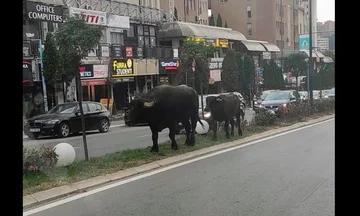
Cows and bulls (110,000 years ago)
As people began settling in a permanent settlement, they were hunting less and growing more. So many of the cows and bulls were seduced. Recent studies have revealed the existence of a small herd tamed 10,500 years ago. They offered a much better food safety level. Even if they did not feed us, they could plow fields or transport various goods.
Horses (6000 years ago)
We know from cave art that dates back 30,000 years, that the earliest relationship between man and horse was that between predator and prey. Wild horses were hunted for food. Early efforts to tame them are believed to have taken place by people living in the western Eurasian steppe
But data shows that people also viewed horses as more than just a food source or animals. Archaeological research has found signs of a horse armor used 5,500 years ago, suggesting that powerful horses were saddled by humans.
The horse's strength and speed provided mankind with advantages that the faithful dog could not afford. The horses provided much greater opportunities for transport, trade, communication, and unfortunately war.
Cats 4000 years ago)
A study of the DNA of 9000 or more years ago of cats ( feral and domesticated) shows that they have lived close to humans for centuries, without even being tamed. Wild cats were attracted to humans because early agriculture generated resources and food shortages.
The latter remove parasites, and parasites attract cats. We finally managed to tame them, and we put them in our homes for company. The earliest evidence that cats had become domestic animals comes from Egyptian art dating back 4,000 years. /bota.al/