8 minutes ago
INDEP: Disturbing gas, disturbing and nontransparency of Kurti Government · Global Voices
Periskopi(5 years ago)
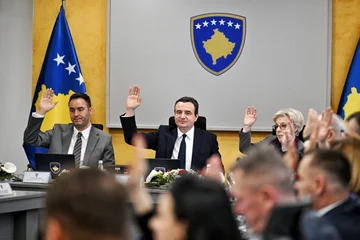
(5 years ago)The Institute for Development Policy has reacted to the Kosovo government's decision to reject the gas project. INDEP's response says that the government has made the MCC programme without alternative rejection and the lack of transparency for this process and other options are indication of the immediate need for change [...]
INDEP's response says that the government has made the MCC programme and the lack of transparency for this process and other options are indication of the immediate need for a change of approach by the Government.
They have also called on the Kosovo government to urgently clarify all the circumstances and reasonings of this refusal and review it in the context of discussions on the way to defuelisation
Kosovo has not yet approved the National Energy and Climate Plan and the new Energy Strategy. Moreover, there is still no strategy for getting out of coal. The Kosovo government, with its refusal to make the gas option, must clarify what the next exit route to use coal will be. Eliminating from the table of transitional gas option is a major step. Minimically, the Government should not take this step without open and broad social consultation, even conveying it with a regular process of public consultation where options could be faced. ”, said in their response.
Read the full reaction:
On behalf of the Institute for Development Policy (INDEP) is conveying our response to the Government's decision to reject the gas project.
The Institute for Development Policy (INDEP) sees with concern rejection, and especially the way the Government of Kosovo has rejected the gas project and therefore the Washington Agreement. The unautomatic rejection that Government has made to the MCC programme and lack of transparency for this process and other options are indication of the immediate need for government access change. Before any rejection of this project, the government would have to offer the public and MCC partners the option Kosovo has chosen. We ask the Government to urgently clarify all the circumstances and reasonings of this refusal and to review it in the context of discussions on the way to designisation.
Without approval of the Energy Strategy and the National Energy and Climate Plan, without guidance on escape from coal and no defuelisation guides, the government has removed one of the possible options from the table on the energy transition route. The introduction of gas infrastructure from 2030 or 2035 would be a good asset for reducing anti-climate emissions and for completing gas infrastructure.
Kosovo has not yet approved the National Energy and Climate Plan and the new Energy Strategy. Moreover, there is still no strategy for getting out of coal. The Kosovo government, with its refusal to make the gas option, must clarify what the next exit route to use coal will be. Eliminating from the table of transitional gas option is a major step. Minimically, the Government should not take this step without open and broad social consultation, even conveying it with a regular process of public consultation where options could be faced.
Finally, we consider that decision-making in energy issues cannot be taken without considering regional factors on the issue. All neighbouring states except Kosovo have developed the gas infrastructure and consider it a possible window on the road to transition. If Kosovo, unlike the region, is getting cheaper and less polluting than gas, it should testify with precise calculations and a clear exit strategy from coal.
We ask the Government and the Ministry of Economy to make full transparency of the process, including consultation, deadlines, responses and monitoring documents that have led to this decision. The government must follow this decision with a clear exit strategy from coal and a plan to transform our energy system. One plan for lack of calculators cannot be rejected without another option and at calculated cost. There's no alternative to getting away from coal and completely affordable defuelling.