16 minutes ago
DW: The US is putting pressure on them, they are forced to solve the Kosovo problem- Serbia
Periskopi(6 years ago)
(6 years ago)The U.S. is pushing. The main politicians of both countries in the conflict -- Kosovo and Serbia -- have been invited to Washington. They have to reach a solution for this ongoing wave of crisis. The American calculator is clear: After the American president faced several failures in foreign policy, he now wants to shine another [...]
The U.S. is pushing. The main politicians of both countries in the conflict -- Kosovo and Serbia -- have been invited to Washington.
They have to reach a solution for this ongoing wave of crisis. The American calculator is clear: After the American president faced several failures in foreign policy, he now wants to shine on foreign policy once more before the presidential elections, which he hopes to win and present a historic success.
Diametrically opposed sides
It remains unclear, what will be negotiated in Washington:
The head of the Kosovo delegation, Prime Minister Avdullah Hoti, awaits mutual recognition. But nobody believes Serbia will take that step, not even Hoti coalition partner Ramush Haradinaj. For this, the Serbian president has warned in advance: In the event of a Kosovo recognition request, he will refuse meeting with the American president.
Serbia's president, Aleksandar Vuciq, wants to speak as negotiating director only for his country's economic co-operation with its unwanted neighbour, Kosovo. The subject can be mentioned here as much disputed between the two countries, the Trepca mine, or the important strategic point of Lake Waterman.
Some Serbian political leaders and experts expect the US to propose an enhanced autonomy of the Serb minority in the north of Kosovo, according to the model of borderless passage of Serbs in Bosnia and Herzegovina. In return for that, Belgrade will recognise Pristina.
Serbian opposition politician Sasa Jankovic made a proposal a few days ago: Belgrade will no longer block Pristina's membership in international organisations, as recently as Interpol and U NESTO. A formal recognition of Kosovo remains further open. In return, Serbian churches and monasteries in Kosovo enjoy the right to extraterritority. This means that they are self-adminisced and no longer dependent on the justice system in Kosovo.
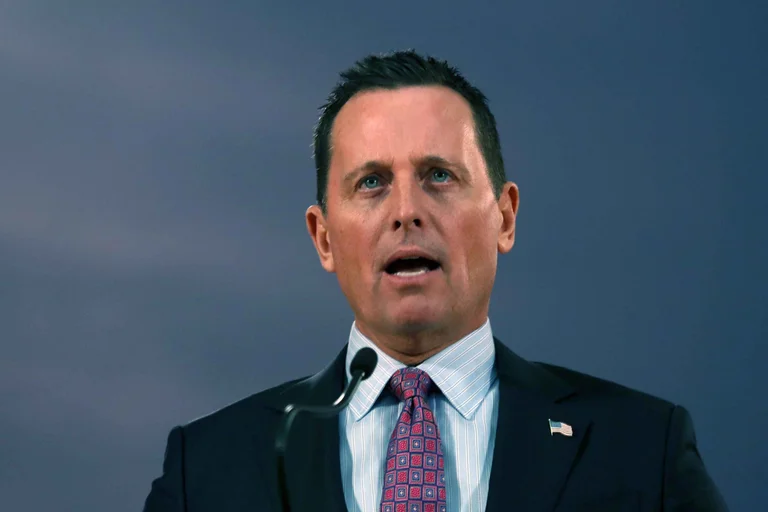
Richard Greenell, American hand in solving the Kosovo conflict- Serbia
The United States wants with its instruments of power, they're the main power for more than two decades and the international body of protection, KFOR, to tell successful Europeans so far, how crisis management works in the Balkans, when it is oriented towards the goal. The focus of these American efforts is the former American ambassador to Berlin, Richard Green. He was appointed as Trump's personal charge for the Balkans.
And immediately he presented within a few weeks some concrete successes: In January, Belgrade and Pristina signed an agreement under American pressure envisioning the resumption of flights between Belgrade and Pristina, interrupted since the late 1990s. The Eurowings branch was chosen as a neutral carrier for this. A month later the two countries in the conflict agreed under Yerell's direction to build a highway across borders. At the same time, a third deal predicted the resumption of suspended railway transport between the two countries.
Agreements Without Practical Implementation
But although all sides raised agreements like “deal historical”, in their concrete implementation no step has been taken, nearly half a year later. No specifics in practice have been made known. With this experience, you may have the doubt that a deal that contains more than its essence will be reached at the new round of negotiations in Washington. Because neither in Kosovo nor in Serbia has a majority supporting any agreement between the two countries.
Serbia's president, despite the significant victory of the recent parliamentary elections, does not have a two-thirds majority behind him. Because the opposition, boycotting parliament, is more nationalistic than nationalist Vuciq himself. In Kosovo, however, Prime Minister Hoti is ruling in majority by only one deputy. Even here, there is no question of a two-thirds parliamentary majority in parliament, which could ratify an agreement with Serbia.
And finally: Leading politicians in Kosovo, as well as in Serbia for decades, have strengthened their power position with the regularly fuelling of the Kosovo-Serbia conflict. You don't think it's logical that they drop this instrument of securing their power through conflict resolution. / DW