5 minutes ago
A report by the Pomology nurse who cares for 30 patients with COVID-19: We don't even have gloves.
Periskopi(6 years ago)
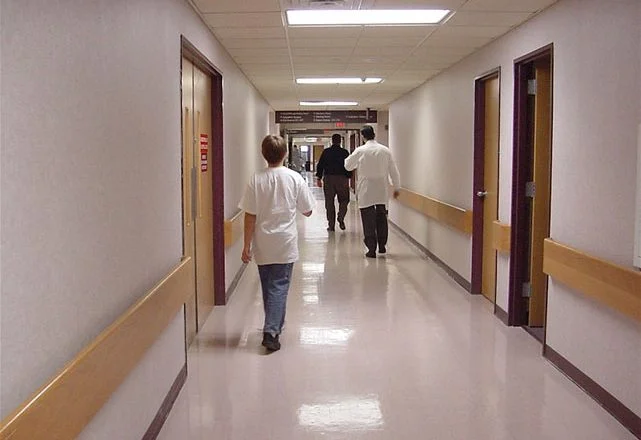
(6 years ago)Nurse Ariana takes care of 30 patients with COVID-19, the disease that triggers the Coronavirus, at the Pulmology Clinic in Pristina. Patients are in oxygen therapy. Ariana also cares for them when there is a shortage of protective material and when the number of medical personnel infected with coronarys is increasing. There are 31, 32 patients and [...]
Patients are in oxygen therapy. Ariana also cares for them when there is a shortage of protective material and when the number of medical personnel infected with coronarys is increasing.
There are 31, 32 patients, and for them, during a change, only two technicians or nurses should care. This is very difficult”, Ariana tells Radio Free Europe.
If the night shift starts to deliver therapy at 7:00 p.m., it doesn't end until after 2:00 a.m., while there are times that you should be standing next to”, Ariana shows.
The hands are missing. What we have is either small or large numbers, and it interferes with our work. We have [even] lack of protective cloaks”, she says.
Furthermore, Ariana says, the support staff that has been displaced from other clinics in Pulmology, has nowhere to change clothes and get ready to enter the clinic.
There are times when technicians dress in their cars. The rooms of doctors or sisters (infermies) are closed to them, Ariana says.
It is understandable to him that both the Pulmology Clinic and the University Centre of Kosovo is not taking more care of the increase in medical staff, especially in Pulmology.
From the Kosovo Health Union Federation, it has revealed that over 700 health workers are infected with coronarys.
The chairman of this federation, Blerim Syla, told Radio Free Europe that the situation in the health system is not good.
I only talk about active cases [day 30.07. 2020. The number of coronarys, among medical personnel, is more than 700. This does not account for doctors who have passed the disease, I'm only talking about active cases”, Syla said.
According to him, there is no proper co-ordination of institutions and government to change the situation to QKUK. He said that this institution no longer has adequate capacities and no places for patients.
We have no real co-ordination between government and health professionals. You see there are some committees being made and there is no rule that is defined. And when you ask about difficulties, your capacities are full. There are no more sites in the Infective, no more seats in the QKUK”, Syla said.
On Friday, Kosovo Prime Minister Avdullah Hoti visited QKU. He thanked the staff for the work he does and said facing the pandemic “is a national mission”.
I know they're tired, because they've been facing this situation for six months now. I'm here today to show our appreciation for the work they're doing and to listen to their assessments of the situation we're going through, forecasts for the weeks and for the coming months and preparations we have to make in this direction. The situation is serious”, Hoti said.
The National Institute of Public Health in Kosovo (IKSHPK) has reported on Thursday for 16 people dead as a result of the Coronavirus. With that figure, the highest in one day so far, the total number of victims from COVID-19 in Kosovo has reached 212.
The total number of coronary infected by Thursday was 8,104.
Kosovo Hospital Service and University Clinic Director Valbon Krasniqi's duty to Kosovo has said that the coronary situation in Kosovo is too heavy and has acknowledged that there are serious difficulties in reorganisation of health personnel.
If this large number of infected continues this way, we will face challenges very, very serious, as far as beds are concerned, but medical personnel, which will be available to treat these patients”, Krasniqi said in an interview for Radio Free Europe.
According to him, authorities have only been prepared for a three-month period and not for such spreading of the virus.
Even in spite of those planning, the number of cases has increased dramatically and it has been impossible for all the time, in turn, to pass this number with all the needs needed for these patients, including the other”, Krasniqi said.
Three anesthesiologists have quit their jobs Monday at the University Clinical Centre in Kosovo (QKUK), and their decision is said to have affected hard work during pandemic time and low wages.
In the public sector, the doctor's monthly salary is about 600 euros a month, while nurses are paid for their work at about 400 euros.
The Kosovo government has decided this week that medical personnel treating patients with COVID-19 in August, in addition to the monthly salary, receive another 300 euros in compensation.