3 minutes ago
After the War, Crime and Prison, Campaigning to Enter the Congregation
Periskopi(6 years ago)
(6 years ago)As at the current meetings of Serbia's Parliament, following the upcoming elections, individuals convicted of war crimes wanted by international judicial bodies could be part of parliament. Elections in Serbia at all levels are scheduled on 21 June. To participate in them, the necessary signatures are [...]
As at the current meetings of Serbia's Parliament, following the upcoming elections, individuals convicted of war crimes wanted by international judicial bodies could be part of parliament.
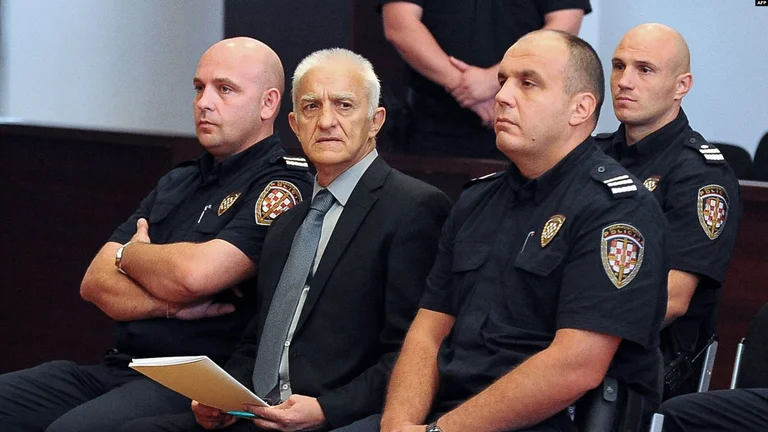
Elections in Serbia at all levels are scheduled on 21 June. To participate in them, the necessary signatures are currently being collected by Dragan Vasiljkovic, known as Captain Dragan, convicted of war crimes who subsequently served the sentence was released on March 28th from Lepoleva prison in Croatia.
Dragan Vasiljkovic was sentenced to 13 and a half years in prison, according to the war crimes verdict in Knin and Gline, where he served as commander during the war in Croatia from 1991 to 1992.
Less than two months after being released from prison, Vasiljkovic has announced he will try to win a seat in Serbia's Parliament.
“I have promised Serbs I left in prisons who were sentenced to many years in prison, against which there is no single verified evidence, that I will be their voice,” Vasiljevic told reporters in Kragujevc on May 23rd.
He irritated the public by a statement he made for a Belgrade painting that he would seek bail for Milorad Ulemek and Zvezdan Jovanovic, both sentenced to 40 years in prison for organising and carrying out the assassination of Serbian Prime Minister Zoran Djindjic on 12 March 2003.
Seshel- condemned and MP
“In my view, this thing is completely unacceptable, but it's something that doesn't surprise me”, told Radio Free Europe, Ivan Djuric, programme director of the Youth Initiative for Human Rights (YIHR).
The participation of war criminals or war crimes suspects in the political life of (Serbia) has been occurring for years”, says Djuric, whose organisation deals with issues of reconciliation and treatment of the past.
During the last parliamentary session, Y organisation The IHR has demanded that Serbian Radical Party leader Vojislav SESHel remove the MP's mandate following his conviction for war crimes, inciting persecution, deportation and deportation of Croats to the village of Vojvodina in Hrtkovci in 1992.
However, Serbia's Parliament's Administrative Board never considered its dismissal (Sheshel), and he is still running in the upcoming election as host to his party's list, the Republic Election Commission has announced on 9 March.
Who today speaks of war crimes in Serbia?
One of the few participants in the upcoming election that publicly speaks of war crimes during the election campaign is attorney Aleksandar Olenik, leader of the opposition Civic Civic Forum (GDF), and MP candidate on the United Serbia Democratic List.
“This topic has been hidden since war crimes and genocide”, Olenik told Radio Free Europe.
Any conversation during the campaign on war crimes would be a kind of confrontation with the past and war crimes, especially those war crimes that were committed in our name”, Olenik said.
“Pasted war crimes, we cannot move towards the future and build lasting peace with all our neighbours in the Balkans, nor can we move successfully and rapidly towards the European Union, and this is the first and fundamental goal of the opposition Democrat Civic Forum and United Democratic Serbia List”, Olenik said.
According to Ivan Djuric of the Youth Initiative, the topic of dealing with past and war crimes is a closed story for Serbia's ruling political elite, which they do not want back in.
The Youth Initiative protested when Veselin Sljivanqan, who was serving his sentence after his plea for crimes at Ovqara near Vukovar, had spoken at the Serbian ruling Progressive Party's stand-up in Beska in Vojvodina in January 2007, as well as when Serbia's Defence Ministry published a book by General Nebojsa Pavkov, who is serving a prison sentence in Finland based on an act of The Hague tribunal against Albanians in Kosovo during 1999.
They also raised their voice when Serbian Socialist Party activists (SPS) demanded that a monument be set up for party founder Slobodan Milosevicq, who died in custody at The Hague on 11 March 2006 while being tried for genocide and war crimes.
“As far as the opposition is concerned, the anti-war public we are weak. We're not able to reach them. In our midst, policymakers who may have a stronger voice do not have the strength to reopen this” theme. Says Djuric.
Why is dealing with the past not an election subject?
Bojan Klaqar, executive director of the Centre for Free Elections and Democracy, an organisation that monitors election processes in Serbia, tells Radio Free Europe that war crimes and the topics of handling the past do not belong to building the election outcome.
There are two reasons, the first is that this subject does not belong to the citizens' own priorities. They say their priority is socioeconomic themes, a trend that has been followed since 2014. Unemployment and poverty are two-thirds of the problems people talk about, and after that come, corruption, youth problems and health...
The other reason is that we now have a completely different thematics.
Because of the crisis as well as the strengthening of socio-economic priorities, we have emerged from a change for example from 2000 to 2008, as well as in part until 2012, this is a pro-European, conservative anti-modernes” national, Klaqar says.
What are the chances of being elected?
Bojan Klaqar believes that war crimes convicts, such as Dragan Vasilkovovic, have no great chance in the upcoming elections, for him, found the motive and belief that underground in Serbia is currently appropriate for right-wing ideas and organisations.
When I say underground, I mean the fact that we live in some kind of economic and security crisis, which is somehow generated by the rightist. At the same time, it combines with a kind of political adventure of these people trying to take advantage of such” themes, Klafer says, redexing that there are few chances of expecting more serious results from the extreme right.
In addition to Vasiljkovic and SESHel, the MP's seat is being targeted by Vjerica Radeta and Petar Jojiq, members of the Serbian Radical Party, who are being sought by the past-left international mechanism for the criminal courts (the President of The Hague) due to the threat of witnesses in the proceedings against Sheshel.
Also on the Serbian Radical Party's list of becoming deputy is Bozidar Delic, commander of the 549th Brigade of the Yugoslav Army during the 1999 war in Kosovo.
The Fund for Humanitarian Law has established two criminal charges against it for war crimes against Albanians in Kosovo (first in 2008 and second in 2013). In the first case, it refers to crimes in the village of Trnje, which was prosecuted, but Delic did not participate as accused but as witnesses, let Free Europe from the Fund for humanitarian law reported Radio.
In the second case submitted by this Fund, it is a crime case in the village of Landovica in Kosovo in March 1999, and they are still awaiting examination of this subject.
In March 2018, this Fund has also filed a war crimes report in Bosnia and Herzegovina against the candidate for MP from the right-wing list of the opposition “Aleksandar Shapiq-Wand for Serbia”, Svetozar Andric. The Fund said they have no information about whether or not this case has been reviewed.
My “My hair is about what is being prepared behind us,” has said representative of the Youth Initiative for Human Rights Ivan Djuric.
What surprises me is that this is not the subject of most people or even of the media”, ending Djuric.
According to MP Aleksandar Olenik, avoiding the war crimes theme has led to a situation in which the Assembly Hall is likely to divide if it enters, with those convicted of such crimes.