10 minutes ago
Krusians protest in Prizren, demand sentence of Serb war crimes suspect
Periskopi(6 years ago)
(6 years ago)Today at the Constitutional Court in Prizren, the final word is expected to be held in the case of war crimes indictee Darko Tasic. He is being charged by the Special Prosecutor of the Republic of Kosovo (PSRK), that during wartime in Kosovo, he has committed war crimes against the village's civilian population of Krusha e Vogel. Regarding this occasion, [...]
He is being charged by the Special Prosecutor of the Republic of Kosovo (PSRK), that during wartime in Kosovo, he has committed war crimes against the village's civilian population of Krusha e Vogel.
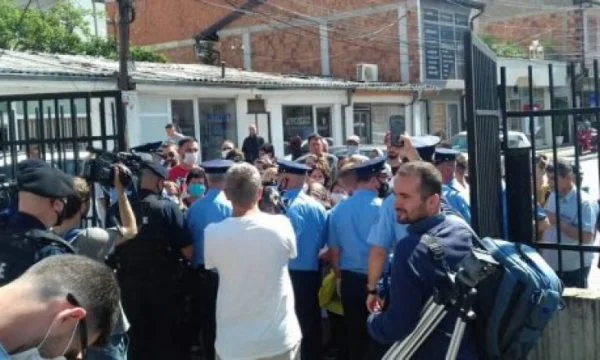
In this case, Prizren citizens are protesting in front of the above-mentioned court, demanding the conviction of accused Tasic, reports “Justice bet”.
“Where are our sons? ”, “113 killed, 145 orphan children, 68 still missing”, “D due to justice”, are just a few of the words written in the banners that protesters are holding in their hands.
Otherwise, this case is held on the basis of the SPRK indictment, with which accused Darko Tasic, is charged that during March 1999, he committed war crimes against the civilian population of Krusha e Vogel village of Prizren's municipality.
According to the indictment, Tasic is accused of initially burning houses during the 15th March 1999 period, taking part along with Serbian police and military forces, to plunder and destroy civilian population assets, burning houses, taking in agricultural vehicles and other valuable items of peasants in general, and the Hajdari family in particular.
The PSRK Act charges accused Tasic with both desecration of lifeless bodies, burning corpses along with other police and paramilitary forces and throwing corpses into the Drin River, a place outside the village of Krusha e Vogel.
According to the indictment, the accused by his actions has carried out a brutal assault on human dignity and is required to be punished according to the current law by no less than 5 years in prison or long - term imprisonment or by previous law, with no less than 5 years or up to 20 years in effective prison.