Haradinaj accuses Kurti of energy failure: Where are thermal power plants and strategic investments?
 10 minutes ago
 (6 years ago)
Europe is taking a major step towards a new normality as many countries are opening borders for Europeans after three months of deadlocking measures because of the Coronavirus, but although Europeans love their summer holidays, it is not clear how many Europeans are ready to travel again. Right now, [...]
For now, tourists from the United States, Asia, Latin America and the Middle East will just have to wait.
European Union Home Affairs Commissioner Ylva Johansson told member states last week that “should open as soon as possible” and suggested Monday was an appropriate date.
Many countries are doing so, allowing travel by the EU, Britain and the rest of Europe that usually moves without passports within the Schengen area, including non-EU countries, such as Switzerland.
The pace of Europe will not be a repeat of uncoordinated border closures in March, which caused traffic jams that spand miles. It's a complicated job, however, with a combination of different rules. And although tourist regions are counting on openings, many Europeans may decide to stay close to home this summer.
This is something that Mediterranean tourism-dependent countries like Greece try to avoid. Prime Minister Kyriakos Mitsotakis acknowledged on Saturday that “too much will depend on the fact that people feel calm to travel and if we can design Greece as a safe destination”.
Greece has stressed its pandemic management. There were only 183 deaths in the country. In general, Europe has seen more than 182,000 virus-related deaths this year, according to a report by Johns Hopkins University that also shows that Europe has had 2.04 million out of 7.8 million infections in the world.
Spain, which is not ending restrictions on domestic travel for another week and will fully resume foreign tourism on July 1st. The country is allowing thousands of Germans to fly to the Balatric Islands for a two-week test starting Monday, thus suspending the measure of 14-day quarantine for the group.
Border controls in some countries have already disappeared. Italy opened its borders on 3 June and cities at the German-Polish border celebrated in the early hours of Saturday, while Poland opened its gates. At midnight, mayors of Goerlitz, Germany, and Zgorzelec, Poland cut off the chains of a fence that had divided the two cities.
Germany, like France and others, is removing the remaining border controls Monday and canceling the criterion for people who manage to prove they have a good reason to enter. In addition, the country is facilitating a worldwide warning against non-shortial travel to disfellowshipped European countries, except perhaps Finland, Norway and Spain, where travel restrictions remain, and Sweden, where the level of new cases of connovirus infected is highly regarded.
Many German regions have again filed a quarantine request for incomings from Sweden, whose strategy of the virus avoided isolation, but produced a relatively high death rate.
Czech authorities will urge travelers from Sweden to show a negative result of testing for COVID-19 or self-curantination ) along with travelers from Portugal and Poland's Silesia region.
Austria is opening on Tuesday for neighbouring European countries other than Spain, Portugal, Sweden and Britain, and is holding a travel warning for Italy's most hit region, Lombardine. France is urging people from Britain to quarantine themselves for two weeks.
Britain recently presented a 14-day quarantine requirement for most of the travellers arriving in the country, thus shocking its tourism and aviation sectors, which say the move would greatly damage the visitors' level towards Britain this summer.
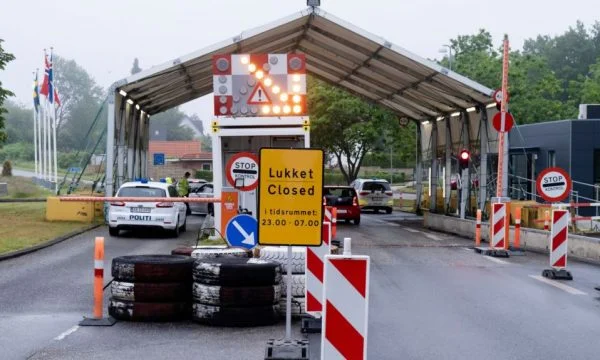
Denmark is opening for tourists from Germany, Norway and Iceland alone and only if they can prove they will stay at least six nights. Norway is also keeping closed its long land border with Sweden.
I understand this is a huge disappointment. But restrictions are based on objective criteria that are the same for all”, Norwegian Prime Minister Erna Solberg said. If we open too fast, the infection can be out of control. ”
With air flights increasing only gradually, nervous about new waves of infection abroad, uncertainty about social distance in tourist countries, and many people facing unemployment or pay cuts, this may be a good summer for local tourism.
German Chancellor Angela Merkel and Austrian Chancellor Sebastian Kurz are planning to rest in their countries this year.
The recommendation is still, if you really want to be sure, to take a holiday in Austria,” Austrian Foreign Minister Alexander Schallenberg told ORF television, recalling efforts in March to return thousands of tourists as the borders closed. “In Austria, you know you don't have to cross a limit if you want to go home, and you know the infrastructure and health system”.
The German government, which helped with air flights to return 240,000 people as the pandemic steadily grew, also is unwilling to repeat that experience.
My “Appel for all those travelling: Enjoy your summer holidays, but enjoy it with caution and responsibility,” said German Foreign Minister Heiko Maas. “During summer holidays, we want to make sure the virus doesn't spread to Europe again. “ / AP
 4 hours ago