2 minutes ago
Wuhan's writer, whose diaries for coronavirus angered China
Periskopi(6 years ago)
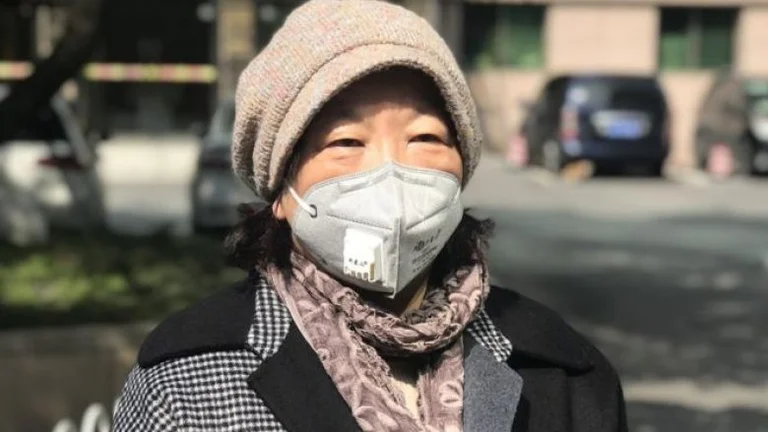
(6 years ago)A journal written by a Chinese award-winning author who documents her life in Wuhan in the first days of the coronavirus explosion is now translated into English. Fang first started publishing stories of her experiences in the city in January, while it was still believed [...]
Fang first started publishing online stories of her experience in the city in January, while it was still believed to be a local crisis.
Access to the 65-year-old diary was widely read offering a rare description in the town where the virus first appeared, writes BBCHe's following in on Telegrafie.
Earlier this year, Wuhan became the world's first country to enter a state of complete deadlock that was then unprecedented but has now become widespread.
The city was essentially separated from not only China but also the rest of the world.
As the closure continued, Fang's popularity grew. The publishers then announced that they would collect their notes and publish in several languages.
But Fang Fang's growing international recognition is not equally appreciated in China with much anger over her reporting, even calling her a traitor.
What was her journal for?
At the end of January, after China set up a deadlock in Wuhan, Fang Fang, whose real name is Wang Fang began documenting events in the city on the Chinese social media site Weibo.
In her journal's notes, she wrote about everything from the challenges of everyday life to the psychological impact of forced isolation.
Editor HarperCollins says it “gave voice to fear, frustration, anger and hope of millions of its fellow citizens”.
It notes that it also speaks against social injustices, abuse of power and other problems that prevented response to the epidemic and is involved in online controversy because of it”.
In a letter published by the Sunday Times, she details an example in which she went to pick up her daughter from the airport, records Telegrafi.
There were no cars or pedestrians on the road. These few days were when panic and fear were at their peak in the city. We both had face masks”, she said.
How did it come to international attention?
During a time when the news was being widely filtered and independent news newspapers were few, Fang Fang soon appeared as a reliable source of information.
Its reputation, as well as its words, spread quickly and did not pass long before they found their way out of China.
Why did China attack?
Cyber nationalism is common in Chinese social media. Thousands of angry Internet users stand ready to defend the country whenever China is criticized, humiliated, or subject to some form of foreign insult. And Fang is far from being the first Chinese writer to face online reactions.
In this case, after the virus continued to spread worldwide, people began to become more critical of China's response to the explosion. Heavy control and criticism mean that many went into defense.
And just in this climate it became known Fang's works were to be sold in the West.
According to the special news page “what is in Weibo”, this was when public opinion turned against this, because “became known that an international edition of its diary was in pre-species through Amazon”.
“In the eyes of many Chinese users, a translation version of Fang's critical confessions of the Wuhan explosion would offer China's opponents only more ammunition”, the report says.
She was soon seen not as a bearer of truth but, rather, a traitor of China, with some saying that she was capitalizing on her fame and perhaps even through tragedy.
“It is catching this time of national crisis and taking advantage [of it]”, said a user in Weibo. This is depreciated”.
Anger against her comes even at a time when the United States and China are in the midst of diplomatic conflict.
Chinese state media have also very clearly clarified their position on Fang.
Its global growth promoted by foreign media has sounded the alarm for many people in China that the writer could have become only a useful tool for the West to sabotage the efforts of Chinese people”, a part of the Global Times said.
Its “diaries only expose the dark side of Wuhan while ignoring the efforts local people made and the support extended across the country”.
How was her book accepted?
It is difficult to say that after the book became available only last Friday.
New The York Times has assessed its raw honesty, saying “it can live quietly during the impasse, but it writes bold” sentences.
However, in Amazon, the book has been fulfilled with a host of negative estimates, one of which called the book “completely false”formations.
However, one reviewer appreciated the book, saying its journal “provided a window into what was like living in a city that was looking at the whole world”.