15 minutes ago
German doctors: This is not a scary virus, many patients die of thrombosis
Periskopi(6 years ago)
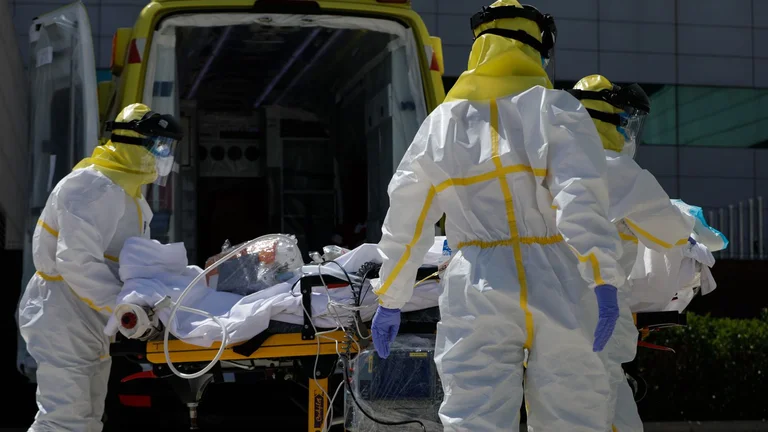
(6 years ago)In the fight against coronobius, doctors continue to face new symptoms of viral disease. According to Bild, about 190 patients, Covis-19 dead, have been examined at the Institute of Legal Medicine at the Hamburg-Eppendorf University Hospital in the past weeks. Doctors discovered fatal trombones and pulmonary embole. In a first deep assessment, 12 persons were [...]
According to Bild, about 190 patients, Covis-19 dead, have been examined at the Institute of Legal Medicine at the Hamburg-Eppendorf University Hospital in the past weeks.
Doctors discovered fatal trombones and pulmonary embole. In a first deep assessment, 12 people who passed away were examined in more detail and found that seven of them had these clinical images.
Four out of 12 patients died directly from pulmonary embolia. Before they died, there was no doubt among the affected.
Professor Klaus Pjeschel and Professor Stefan Kluge see this as confirmation of blood - thining therapies.
Klaus Pjeschel points out that the problem of coagulating blood and forming a trumpet should be addressed specifically.
Greater precautions must be taken not to form thrombosis and emboles”. Doctor Stefan Kloge says we have seen in the daily clinical practice that Covid-19 has resulted in thrombosis and pulmonary emboli in patients in an unusual number of cases. The autopsy of the deceased confirmed this. We will transfer this important information to treat the patients with the koroa, to consider whether patients can be treated with blood thinr”, says Stefan Kloge.
Dr. Pjeschel calms people down: “This is not a killer virus, he says, but a particular form. We need not fear that mankind will die because of this virus. I want you to calm down, not to be afraid. The lesson we learn from these results, including those who are part of the danger group, is that we should not be afraid. Most, even in nursing homes, survive the disease”.
A study in the Netherlands showed that out of 184 patients, Covis 19 treated in intensive care, 31 percent created blood clots, even though they were regularly given anticoaglans to prevent the trombone.
The most common anchors occurred in the lungs, bringing pulmonary emboli as well as trumpets into deep veins or smaller arteries.
“A rate of 31 per cent, regardless of the trombone profile, is extremely high for patients with intensive care,” reports Fredericks Clok from Leiden University.
Researchers at Strasbourg University Hospital also found acute emboli in pulmonary vessels of many of the 106 patients in serious condition.
This rate of 30 per cent is much higher than normal for chronically ill patients without Cold-19,” said doctors.