10 minutes ago
Some U.S. companies are surviving, even blooming during the coronary crisis
Periskopi(6 years ago)
(6 years ago)When Coronavius hit the United States last month, 22-year-old entrepreneur David Zamari knew his company would soon need a plan B. As the economy essentially closed, the demand for its stain - resistant clothing was certain to fall. So Zamir decided to [...]
So Zamanin decided to change his DetraPel company, starting producing disinfectants to help combat the spread of the virus. Within weeks, “completely changed our” system.
Sales of the DetraPel company's disinfectant have been strong, Zaman said, adding that he expects to produce cleaning products even after the health crisis has passed.
I don't want this to be a temporary thing. I don't want to use this to make money for a short term”, he said.
COVID-19's pandemic has been an epic disaster for American business. Economic activity has almost frozen. The shops are empty. Sales have dropped while people are in proselytizing, do not spend on vehicles, other equipment, do not go to stores to buy food, attend restaurants and cinemas.
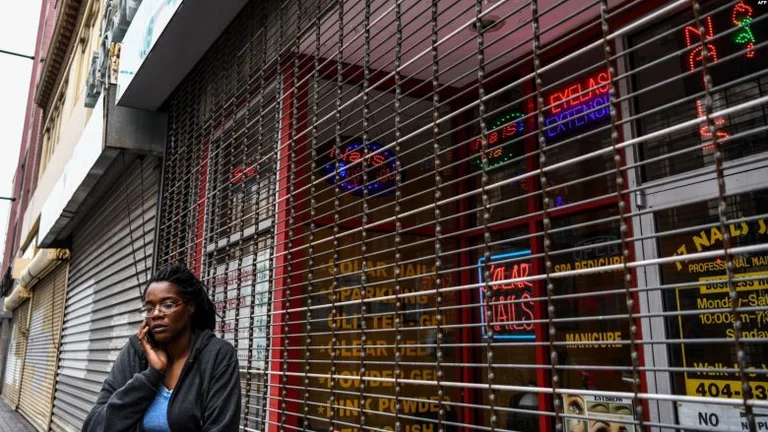
Many retail stores are facing great difficulties.
GAP a clothing store warned that it could quickly run out of cash. Neiman Marcus and J. C. Penn may be on their way to bankruptcy.
However, because of circumstances, skills, or mere fate, some companies are in a better position and are resisting, even prospering in this time of crisis. Among the most fortunate businesses, mainly protected by economic consequences are pharmacies. Some businesses are also benefiting from an increase in remittances for food items, pizzas, online film broadcasts and cleaning products.
Some companies have been very cautious, increasing savings and credit lines for emergency situations. And other companies have been clever like DetraPel, finding other opportunities between chaos.
This is a once-in-a-life thing, hopefully so. People who are accustomed to uncertainty and experimenting with new things will like this situation and adapt to it”, Andrew said. Corbett from the Babson College Institute for Freedom of the Company.
He cited the example of the company Bauer, a sports equipment producer who handles the production of transparent masks for hockey players' helmets, which is now producing protective equipment for health sector workers. This drastic setback is not possible for most companies.
It's hard to change business patterns. It's like trying to change tires while the car is moving at a speed of 160 miles per hour”, said Gregg Lemos-Stien, who is in charge of analyzing companies valued by S&P Global.
For most companies, the key to survival is keeping enough money to continue business until the economy begins to recover. Some businesses, Lemos-Stein said, have exhausted their credit lines in an effort to cope with a period of income loss.
Ready money is a king. Maintain what you have and get more money when you have the opportunity to help you pass and survive the” crisis, Robert Kaplan from Harvard University Business School said in a video-seminar on Coronavirus threat to companies.
United Airlines is trying to raise $1 billion through stock offering. The Darden Restaurants company, owner of the Olive Garden restaurant and other chain restaurants, is offering shares worth $400m.
The government has intervened to secure small credit businesses, most of which will not be obliged to pay if they use it to keep current employees at work. The Federal Reserve has poured money into financial markets to ensure that companies can maintain access to short-term vital loans for financing their daily operations.
But government money can help to a certain point where companies whose business has collapsed.
“ [government money] They don't make people travel by plane or go back to the” shopping center, Lemos-Stein from S&P company said.
I haven't yet talked to a business director who thinks the government will be their rescue of”, said Rich Lesser, director general of the Boston Consulting Group company.
Although the health crisis has hit purchases hard for most goods and services, consumer appetite for other offers has been sparked. Netflix is taking advantage of a surge in entertainment requirements through online services. The Amazon company shares are on the rise due to increased internet purchases. The Clorox company is taking advantage of the panic-led purchases for its cleaning products. Zoom and other companies offering video conference services have filled a growing need of employees who now work from home.
The Womply data firm found that food stores had a 40 percent increase in revenues earlier this month compared to the same period last year. Weapons shops had a 120 - percent increase, and alcoholic beverages marked a 60 - percent increase.
However, millions of businesses have closed at least temporarily. According to reports from Womply Company, 71 percent of shoe stores, 77 percent of the items used, and 68 percent of antique salesmen. Forty-two percent of restaurants are closed. Restaurants offering delivery services have continued to work. Only 21 percent of pizzas and 17 percent of chicken restaurants have been closed.
“Businesses are being re-organized, providing services outside buildings for telephone orders or via internet”, said Brad Plothow, marketing chief at Womply Company.
With the massive closures of shopping malls and shops, the pandemic is putting many retail clothing vendors at risk while increasing the dominance of large shops that remain open because they sell essential products for food and household items. Walmart, Amazon and other similar companies are employing large numbers of people and are offering bonuses or pay hikes.
But even these companies are facing pressures. They are spending more on online jobs and operations. Some are seeing smaller profits because buyers are spending only small - margin food items, avoiding items with higher margins like clothing. The Amazon company has faced difficulties in meeting the growing demand for essential articles, disappointing many of its Prime service customers, who pay $1129 a year and are used to receiving remittances within two days.
The crisis risks intensifying what many consider a disturbing trend: increasingly focused trade on larger companies, as smaller firms are failing, thus reducing competition.
The Open Trade Institute, which campaigns against monopolies, has called for the ban on purchases by companies with annual revenues of over $100m or large investment firms.
Lynn Barry, executive director of the institute, notes that many large companies swallowed up the smaller rivals in the financial crisis and the Great Recesion, sometimes in government-mediated deals.
He's worried about a repeat of history.
“We have companies like Apple, Google and Amazon with large amounts of cash, Saudis and others with lots of money, and the rest half bankrupt and paralyzed”, Barry said.